


TL;DR:
- Art curation involves intentionally selecting and arranging artworks to reflect personal style and create emotional depth. Proper placement considers space, light, and furniture to enhance every piece’s impact and cohesion. Buying directly from independent artists or platforms like Artify supports authentic artistry and affordable, meaningful collections.
Curating art for home is the intentional practice of selecting, arranging, and displaying artworks to create a living space that reflects who you are. Unlike decorating with whatever fills a wall, true art curation, the same discipline applied in galleries and museums, builds a cohesive visual narrative across your rooms. Done well, it transforms a house into an environment with genuine emotional weight. Artify works with independent artists to make that process accessible, whether you start with a single print or build a full curated collection over years.
How to curate art for home: start with your personal style
The first step in building a curated art collection is understanding what you actually respond to, not what looks good in a magazine. Spend time in galleries, museums, and art fairs before buying anything. Experts recommend spending months exploring before acquiring artwork. That patience pays off in a collection with genuine depth rather than a wall of impulse purchases.
Ask yourself what emotions you want a room to hold. A bedroom calls for different energy than a home office. Your answers shape everything: medium, color palette, subject matter, and scale. Visiting a local gallery or browsing a curated online collection like Artify’s gallery gives you fast exposure to a wide range of styles without committing to a purchase.
Once you have a sense of your preferences, establish a unifying theme. That theme does not need to be rigid. Color harmony works well: a collection built around warm earth tones reads as cohesive even when the subjects vary wildly. Narrative themes, such as urban architecture or botanical forms, also hold a collection together across different mediums and sizes.
- Mix mediums deliberately. Pair a large oil print with a smaller watercolor or a photograph. Contrast in medium creates visual interest without breaking cohesion.
- Balance bold and subtle. One strong statement piece per room prevents visual fatigue. Support it with quieter works that complement rather than compete.
- Set a budget range early. Limited edition prints from independent artists offer entry-level access to original art at a fraction of the cost of one-of-a-kind works.
- Document what you love. Screenshot artworks, save Instagram posts, and build a reference folder. Patterns in your saved images reveal your real preferences faster than any style quiz.
Pro Tip: Visit the same gallery twice before buying anything from it. Your reaction on the second visit, without the novelty factor, tells you whether a piece has lasting power for you.
What does your space tell you about the art it needs?
Your room is not a neutral backdrop. Its dimensions, light, and layout actively shape which artworks will succeed there. Successful home art curation requires strategic placement at eye level to ensure visual flow, with artwork centers sitting at approximately 57–60 inches from the floor, the standard used in most professional galleries.
Start your space assessment with these four steps:
- Measure your walls. Note the width and height of each display surface. A large canvas on a small wall overwhelms the room; a small print on a vast wall disappears. Scale is the single most common mistake first-time collectors make.
- Track natural light through the day. Natural light affects art color and mood and can cause real damage over time. A wall that receives direct afternoon sun is a poor location for photographs, watercolors, or any work on paper.
- Consider temperature and humidity. Bathrooms and kitchens present preservation challenges for sensitive materials. Canvas prints and metal prints handle humidity better than works on paper or unprotected photographs.
- Map your furniture layout first. Art placement that ignores furniture creates visual disconnects. A painting hung too high above a sofa floats; one that sits just 6–8 inches above the back of the sofa anchors the seating area.
“Art placement should consider emotional impact and functional use. Intimate or unexpected spaces can host personal pieces, creating moments rather than decor filler.” — Ask the Expert: How to Hang, Buy and Curate Art
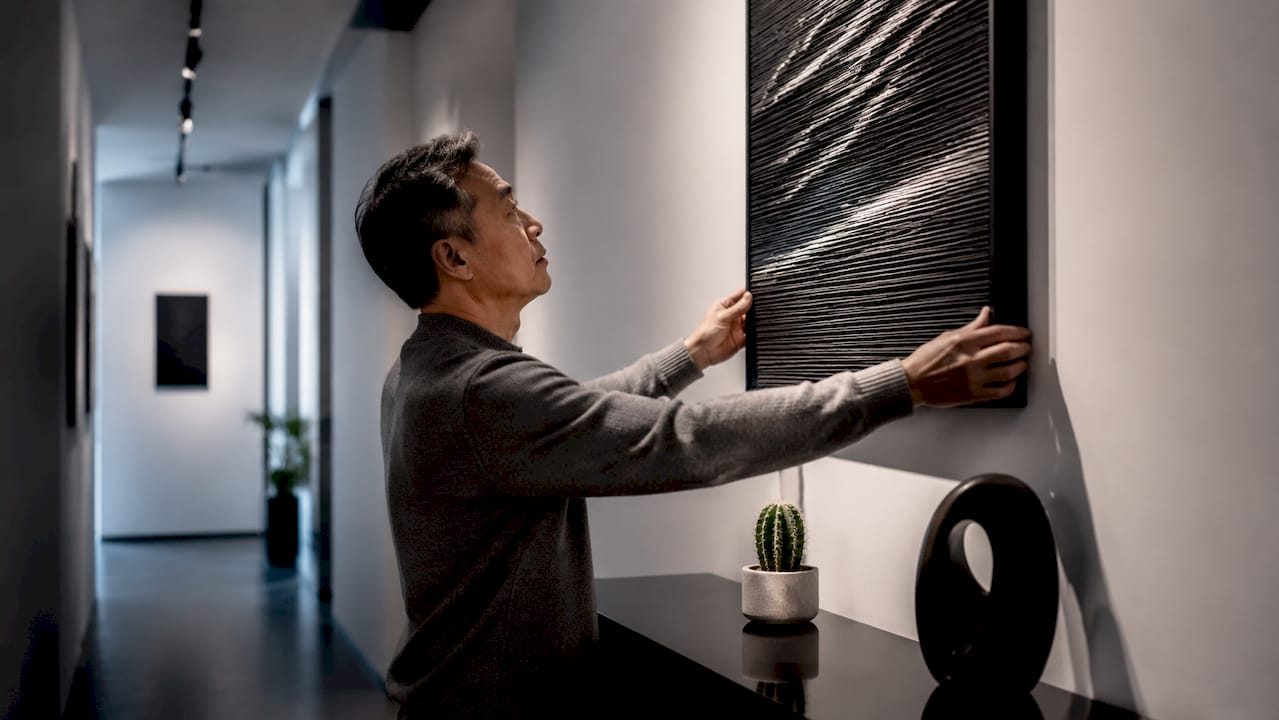
A powder room, a stairwell landing, or a narrow hallway alcove can hold a single powerful piece that stops people in their tracks. These unexpected placements create the kind of memorable moments that a predictable living room gallery wall rarely achieves.
Pro Tip: Use UV-protective glazing on any framed work that hangs near a window. It blocks the wavelengths that fade pigments without distorting color perception from normal viewing distances.
Where should you source meaningful, affordable artwork?
Sourcing art well means knowing where to look and what you are actually buying. The art market offers originals, limited edition prints, and open edition prints, and each category carries different implications for price, rarity, and long-term value.
| Art type | Typical price range | Rarity | Best for |
|---|---|---|---|
| Original work | High | One of a kind | Investment collectors |
| Limited edition print | Mid-range | Numbered, finite run | Personal collectors |
| Open edition print | Low to mid | Unlimited | Entry-level curation |
| Custom photo art | Variable | Personalized | Emotional resonance |
The sourcing options available to you are wider than most people realize:
- Local galleries and art fairs give you direct access to artists and gallerists. Building a relationship with a gallerist is one of the most underrated moves in art collection. They remember your preferences and alert you to new work before it goes public.
- Online platforms like Etsy and Artify connect you directly with independent artists. Artify specifically focuses on supporting independent artists through on-demand printing, which means your purchase directly funds a creator’s practice.
- Art advisory services offer professional sourcing, negotiation, and installation. Professional art advisory services start from approximately $5,000, which makes them most relevant for collectors building larger or investment-grade collections.
- Provenance documentation matters. Material integrity and provenance documentation are key to preserving artwork value. Keep certificates of authenticity, receipts, and any artist correspondence in a dedicated folder. Losing this paperwork can reduce both the financial and historical value of a work.
The ethical dimension of sourcing is real. Buying directly from independent artists, rather than through resellers or mass-market retailers, puts money where the creative work happens. Artify’s model is built on this principle: every sale on the platform supports the artist who made the work.
Techniques for effective art placement and display
Placement is where curation becomes visible. The 70/30 rule offers a practical starting point: 70% of your wall space should remain open, with art occupying the remaining 30%. This ratio prevents the cluttered look that undermines even a strong collection.
Planning for art placement early, including tailored accent lighting, integrates artworks permanently into home design and reduces future disruption. If you are renovating or decorating from scratch, tell your designer or electrician where you plan to hang major pieces before the walls are finished. Dedicated picture lights or recessed accent lighting installed at the right angle makes a significant difference in how a work reads in the room.
Framing is an underestimated tool in art display. A well-chosen frame does not just protect a work; it connects the artwork to the room’s materials and palette. A raw oak frame reads differently than a black metal one, even around the same print. Artify’s framed art guide walks through how to match frame materials to both the artwork and the room’s existing finishes.
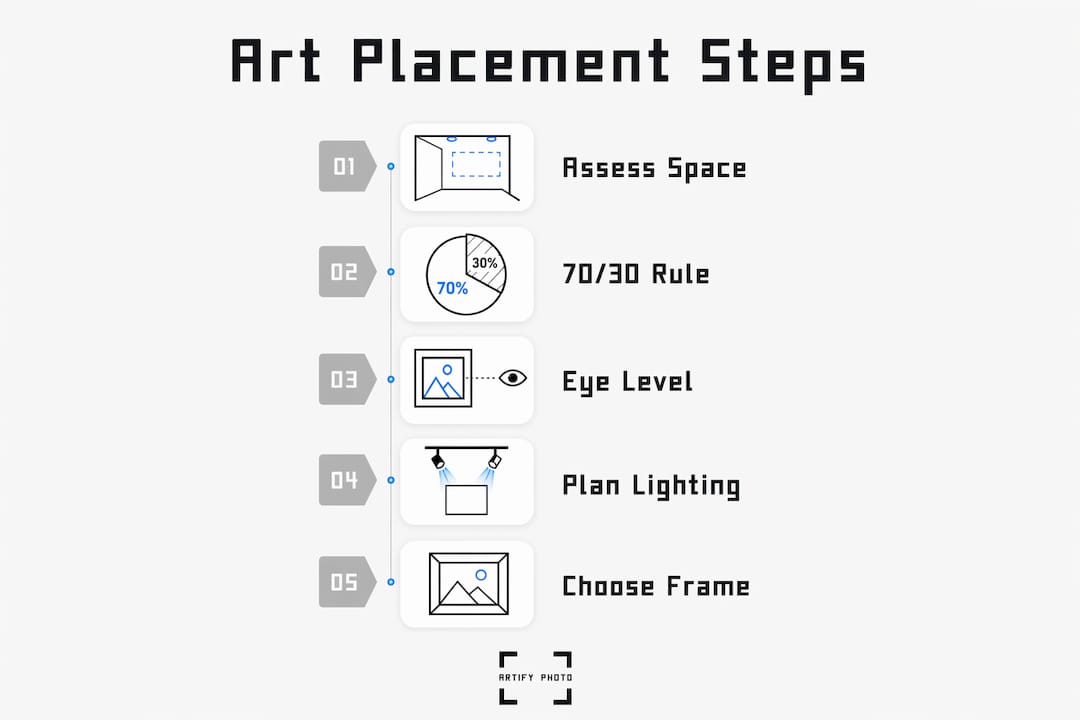
| Placement principle | Application |
|---|---|
| Eye level center | Hang artwork centers at 57–60 inches from the floor |
| 70/30 wall ratio | Keep 70% of wall space open to avoid visual clutter |
| Accent lighting angle | Position lights at 30 degrees from vertical to minimize glare |
| Grouping spacing | Maintain 2–3 inches between pieces in a gallery wall arrangement |
Pro Tip: Before putting a single nail in the wall, cut paper templates of each piece and tape them up. Live with the arrangement for a day. You will catch proportion and spacing problems that are invisible on paper.
Placing highly personal works in intimate or unexpected spaces creates memorable moments rather than just filling space. A small, meaningful photograph in a hallway niche lands harder than the same image scaled up and hung above a sofa. Scale your ambition to the space, not the other way around.
Key takeaways
Curating art for home succeeds when personal connection, spatial awareness, and thoughtful placement work together rather than separately.
| Point | Details |
|---|---|
| Start with exploration | Visit galleries and fairs for months before buying to identify what genuinely resonates. |
| Assess your space first | Measure walls, track light, and map furniture before selecting any artwork. |
| Know what you are buying | Understand the difference between originals, limited editions, and open editions before committing. |
| Plan placement early | Integrate lighting and hanging positions into your room design before walls are finished. |
| Support independent artists | Buy directly from creators through platforms like Artify to fund the work at its source. |
Why I think most people approach home art curation backwards
Most people buy art after a room is finished and then try to make it fit. That approach almost always produces a collection that looks added on rather than built in. The rooms that genuinely feel like curated environments share one quality: the art was considered alongside the architecture, not after it.
Collections built around emotional connection and patience result in richer, more meaningful display environments than collections assembled quickly around trends. The trend-chasing approach produces rooms that look dated within a few years. A piece you bought because it stopped you cold in a gallery in 2019 still stops you cold in 2026.
The other thing most guides skip: activating a collection through curatorial work, such as documentation, essays, and thoughtful arrangement, adds value beyond acquisition. Art historian Dr. Dora Derado Giljanović makes this point directly. The act of contextualizing your collection, even just writing down why you chose each piece, transforms a group of objects into something with narrative and legacy.
Viewing the home as an evolving gallery with complementary pieces enhances narrative continuity and elevates overall aesthetics. Your collection should grow with you. Pieces you loved at 30 may not fit who you are at 45, and that is fine. A curated collection is not a finished product. It is a living record of your taste, your experiences, and the artists you chose to support.
— Artify
Start building your curated collection with Artify
Artify makes the first step easy without making it feel small. The platform’s pre-made collections are built around themes, from pop culture to contemporary abstraction, and every piece is produced by an independent artist. You get a curated starting point without the months of gallery visits required to build one from scratch.
For those who want something more personal, Artify’s custom art service lets you transform your own photographs into gallery-quality prints in a range of artistic styles. The room-by-room art guide on the Artify blog helps you match pieces to specific spaces. Whether you are filling one wall or building a collection across your entire home, Artify connects you directly with the artists making the work.
FAQ
What does curating art for home actually mean?
Curating art for home means intentionally selecting and arranging artworks to create a cohesive, meaningful environment that reflects your personal style. It applies the same principles used in professional galleries to a domestic setting.
How do I find my personal art style?
Visit galleries, museums, and art fairs over several months and document what you respond to emotionally. Patterns in your saved images and reactions reveal your real preferences more reliably than any style quiz.
How high should I hang artwork on a wall?
Hang artwork so the center of the piece sits at approximately 57–60 inches from the floor. This matches the standard used in professional galleries and keeps art at a natural eye level for most adults.
Is it expensive to build a curated art collection at home?
No. Limited edition prints from independent artists offer genuine art at accessible prices. Platforms like Artify connect buyers directly with creators, removing the gallery markup that makes original art feel out of reach.
How do I protect artwork from light damage at home?
Avoid hanging sensitive works, especially photographs and watercolors, in direct sunlight. Use UV-protective glazing on framed pieces near windows, and track how natural light moves through a room before choosing a display location.