


TL;DR:
- Digital printing transforms gallery art production by enabling on-demand, limited-edition works with faster turnaround times. It supports hybrid workflows that reduce production time by 62% and offers sustainable, flexible options for artists and collectors. Proper protocols and edition management ensure the long-term value and authenticity of digital artworks.
Digital printing is defined as the direct transfer of digital files to physical substrates, and its role in galleries now shapes how art is produced, exhibited, and collected. The technology has moved well beyond simple reproduction. Today, galleries use digital printing techniques to produce limited editions, large-format works, and hybrid pieces that blend photography, painting, and 3D modeling. The digital print market is projected to reach $48.4 billion by 2030. That figure signals a fundamental shift in how galleries and artists approach digital art production at every scale.
How has digital printing changed art production workflows?
The role of digital printing in galleries begins with workflow. Over 70% of professional digital artists have adopted hybrid workflows that combine 3D modeling, AI-assisted shading, and manual detailing. That adoption rate reflects a real change in how galleries source and commission work.
A typical hybrid workflow moves through four stages:
- Concept and base modeling. The artist builds a 3D structure or photographic base, establishing composition and spatial depth before any color or texture is applied.
- AI-assisted shading and rendering. AI tools apply lighting and tonal gradients, reducing the time spent on repetitive technical tasks and freeing the artist for creative decisions.
- Manual detailing and color correction. The artist refines textures, corrects color profiles, and prepares the file for large-format output at gallery resolution.
- Digital print output. The finalized file goes directly to a wide-format inkjet or UV LED press, producing a print ready for framing, mounting, or exhibition.
Hybrid workflows reduce visual turnaround time by 62% compared to traditional production methods. For gallery owners, that speed means tighter exhibition timelines and faster response to collector demand.
Pro Tip: Calibrate your monitor to the ICC profile of your print lab before finalizing any file. Color shifts between screen and print are the most common reason gallery-quality work falls short on paper.
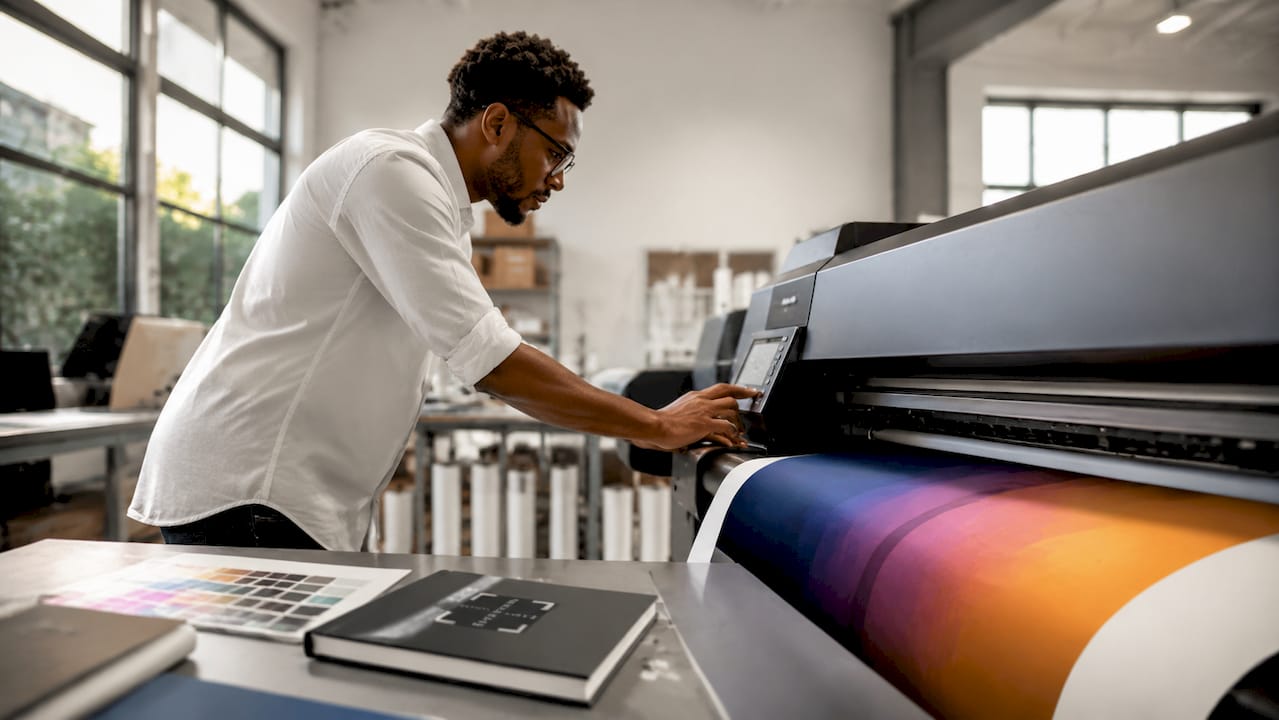
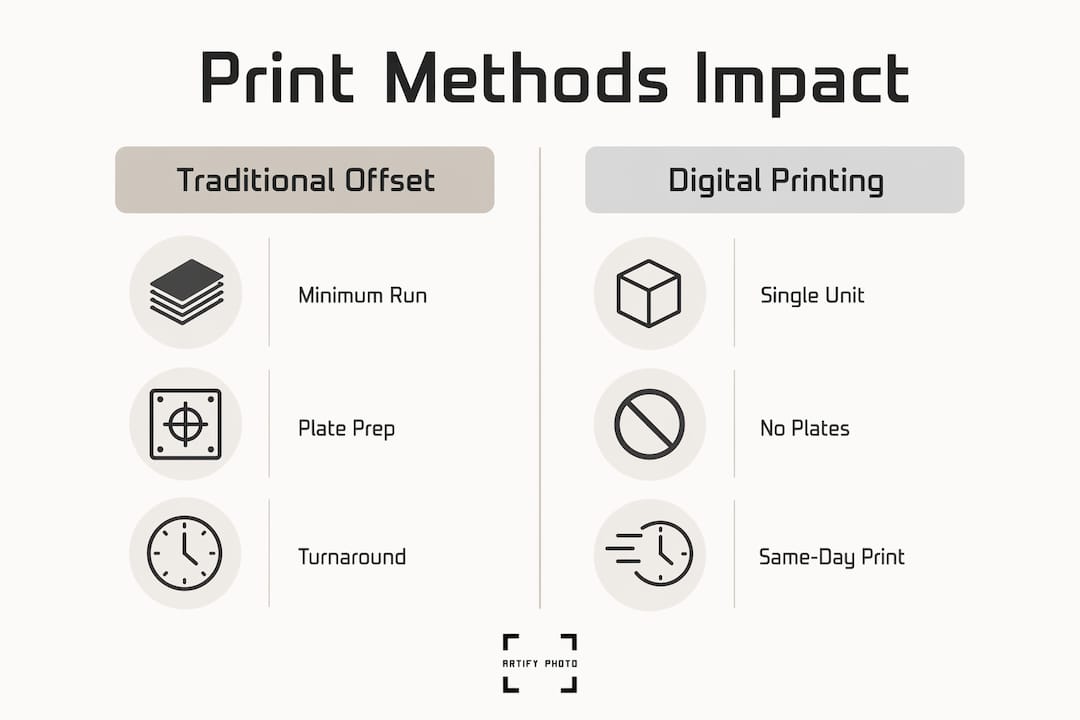
Digital printing also eliminates plate origination and compresses make-ready time, enabling same-day or next-day turnaround for art prints. That speed gives gallery owners a real logistical advantage when preparing for openings or rotating exhibitions.
What are the market and economic impacts on gallery art production?
The economics of digital art production have shifted decisively away from offset printing for short-run and fine art work. The digital print market is forecast to grow from $48.4 billion by 2030 to $251.1 billion by 2035. That trajectory reflects demand from galleries, publishers, and retail art platforms alike.
| Economic factor | Traditional offset | Digital printing |
|---|---|---|
| Minimum viable run | 500+ units | 1 unit |
| Setup cost | High (plate origination) | Low to none |
| Turnaround time | Days to weeks | Same day to next day |
| Personalization | Not practical | Standard capability |
| Edition flexibility | Fixed at print run | Adjustable at any point |
On-demand printing removes the financial risk of overproduction. A gallery can commission a single artist proof, test collector response, and then produce a numbered edition without committing to inventory. That model protects cash flow and keeps edition sizes small, which directly supports perceived value in the collector market.
The growth of digital print platforms expands audience reach and artist visibility, but it also requires careful management to preserve artistic value. High-volume, low-cost print runs can erode the scarcity that collectors pay for. Gallery owners who set clear edition limits and document production protocols protect both the artist’s reputation and the work’s long-term market value.
Pro Tip: Set your edition size before the first print ships. Retroactively limiting an edition after sales begin damages collector trust and can affect resale prices.
What technological innovations support sustainability and gallery quality?
UV LED curing systems reduce energy consumption by 50–80% compared to conventional mercury-vapor curing. They also eliminate ozone generation and reduce heat transfer to substrates. For galleries printing on delicate materials like fine art paper, canvas, or acrylic, lower heat means fewer substrate distortions and more consistent color.
Sustainability in gallery printing now covers several interconnected areas:
- Energy use. UV LED presses consume a fraction of the power required by traditional systems, reducing the carbon footprint of each print run.
- Ink chemistry. Water-based and UV-curable inks have largely replaced solvent-based formulas, cutting volatile organic compound emissions in print studios.
- Substrate choices. Recycled papers, FSC-certified stocks, and reclaimed canvas options are now standard offerings from professional print labs serving galleries.
- Waste reduction. Digital printing produces no plate waste and generates minimal make-ready spoilage, unlike offset runs that discard hundreds of sheets during setup.
Preserving print quality after production requires equal attention. UV-protective acrylic glazing and careful environmental control prevent fading and surface damage in gallery display conditions. Direct sunlight degrades pigment-based inks faster than any other factor.
Pro Tip: Request a light-fastness rating from your print lab before committing to a substrate. Pigment inks on archival paper typically carry an 80–100 year rating under museum display conditions, while dye-based inks on standard stock may fade within a decade.
How does digital printing influence art curation and exhibition formats?
Curation of digital prints requires a different set of criteria than traditional works on paper. Professional galleries differentiate digital print art by assessing whether the artist is thinking digitally or simply reproducing an existing work through a digital process. That distinction drives pricing, placement, and long-term collection value.
The curatorial question is straightforward: did the digital medium shape the work’s concept, or was it just the delivery mechanism? An artist who builds a composition specifically for large-format inkjet output, exploiting the technology’s color range and resolution, produces a fundamentally different object than one who scans a watercolor and prints it on canvas. Galleries that conflate the two categories undermine both.
Edition documentation, studio involvement, and certificates of authenticity all contribute to a digital print’s legitimacy in the collector market. Collectors value works where the artist controlled the production environment, approved the final output, and signed a numbered certificate. For gallery owners, building those protocols into every edition release is not optional. It is the baseline for serious collector engagement.
Exhibition formats also adapt to digital prints’ physical characteristics. Large-format works printed on aluminum composite or acrylic face-mount panels carry differently than framed paper prints. Lighting design matters more, since high-gloss surfaces reflect ambient light in ways that matte fine art paper does not. Curators who understand these material differences produce exhibitions that serve the work rather than fight it.
You can explore how custom art shapes gallery spaces to understand how digital editions fit within broader curatorial frameworks.
What practical benefits does digital printing offer photographers and gallery owners?
Photography enthusiasts gain the most direct benefits from digital printing’s quality and personalization capabilities. Modern wide-format inkjet presses reproduce photographic detail at resolutions that exceed what the human eye can resolve at normal viewing distances. That means a photograph printed at 60 inches wide retains the same tonal depth and sharpness as a small darkroom print.
For gallery owners, the practical advantages stack up quickly:
- Flexible stock management. Print on demand eliminates the need to hold physical inventory. A gallery can offer hundreds of works without storing a single print until a sale is confirmed.
- Rapid turnaround for exhibitions. Digital printing’s compressed make-ready time means replacement prints for damaged works or last-minute additions to an exhibition can arrive within 24 hours.
- Hybrid merchandise creation. Galleries can produce artist-branded merchandise, from greeting cards to tote bags, using the same digital files as the exhibition prints, without additional photography or design work.
- Personalization at scale. Collectors can request specific sizes, substrates, or framing options without the gallery commissioning a new edition. The digital file accommodates variation that a traditional print run cannot.
Photographers building a limited edition print series benefit from digital printing’s ability to maintain color consistency across an entire edition, regardless of when individual prints are produced. That consistency is impossible to guarantee with darkroom or offset methods across time.
The 2026 wall art trends reflect growing collector appetite for large-format photographic works and mixed-media digital pieces, both of which depend on digital printing’s technical capabilities to exist at gallery scale.
Key Takeaways
Digital printing is the defining production technology for contemporary galleries, enabling on-demand editions, hybrid workflows, and sustainable output that traditional methods cannot match.
| Point | Details |
|---|---|
| Hybrid workflows dominate | Over 70% of professional digital artists use hybrid methods, cutting turnaround time by 62%. |
| Market growth is substantial | The digital print market is projected to reach $48.4 billion by 2030, driven by short-run art demand. |
| Sustainability is built in | UV LED curing reduces energy use by 50–80% and eliminates ozone, benefiting gallery print studios. |
| Curation requires distinction | Galleries must differentiate artists who think digitally from those who simply reproduce work digitally. |
| Edition protocols protect value | Certificates of authenticity, numbered editions, and studio oversight are baseline requirements for collector markets. |
Artify’s take on digital printing’s real role in galleries
The conversation around digital printing in galleries often gets stuck on technology specs. Printers, substrates, resolution numbers. Those details matter, but they are not where the real decisions happen.
What I have seen, working with artists and gallery contexts through Artify, is that the galleries doing this well are not the ones with the most advanced equipment. They are the ones who treat the print as a curatorial object, not a production output. They ask hard questions about edition size before the first print ships. They involve the artist in substrate selection. They document everything.
The risk on the other side is real. Artistic innovation must be carefully distinguished from marketing innovation. High-volume, low-cost digital runs can flood a market and devalue an artist’s entire body of work within a single season. I have watched it happen. The technology makes it easy to print a thousand units. The discipline is in choosing not to.
The galleries that will matter in five years are the ones building collector trust now. That means smaller editions, better documentation, and a genuine commitment to the artist’s intent. Digital printing gives you the tools. The judgment about how to use them is still entirely human.
— Artify
Gallery-quality digital prints, ready for your space
Artify brings together independent artists and gallery-quality digital printing in one place, making it straightforward for collectors, gallery owners, and photography enthusiasts to find work that belongs on a wall.
Artify’s pre-made collections feature curated digital print art across contemporary, photographic, and pop culture styles, each produced through the same on-demand workflows described in this article. Artists on the platform control their edition parameters, and every print ships ready to display. If you are an artist looking to reach gallery audiences without managing your own print production, the artist collaboration program connects your work directly with collectors who value documented, limited-edition digital prints.
FAQ
What is the role of digital printing in galleries?
Digital printing enables galleries to produce on-demand, limited-edition artworks with consistent quality and fast turnaround. It supports hybrid artist workflows, flexible exhibition formats, and sustainable production practices.
How do collectors evaluate digital prints?
Collectors assess whether the artist conceptually engaged with digital media, whether the edition is documented, and whether a certificate of authenticity accompanies the work. Studio oversight and controlled production settings increase perceived value.
What types of limited edition prints work best for galleries?
Pigment-based inkjet prints on archival paper or fine art canvas are the gallery standard, offering light-fastness ratings of 80–100 years under controlled display conditions. You can find a detailed breakdown of print types for collectors to compare substrates and edition structures.
How does digital printing support sustainable gallery production?
UV LED curing systems reduce energy consumption by 50–80% and eliminate ozone generation compared to traditional mercury-vapor systems. Water-based and UV-curable inks further reduce the environmental footprint of each print run.
Can photography enthusiasts sell digital prints through gallery channels?
Yes. On-demand digital printing removes the minimum run requirements that previously made gallery distribution impractical for individual photographers. Platforms like Artify connect photographers directly with collectors through documented, limited-edition print programs.