


TL;DR:
- Gallery-quality artwork services produce museum-standard prints with archival inks, cotton-rag papers, and professional finishing. These include calibrated color workflows, various substrates, and installation-ready packaging, ensuring longevity and visual fidelity. Artify offers end-to-end services, from file upload to framing and delivery, with curated collections and real-room previews for artists and collectors.
Gallery-quality artwork services deliver museum-standard reproductions built on archival pigment inks, cotton-rag papers, calibrated color workflows, and professional finishing. If you’re an artist or collector looking to produce prints that hold up in a gallery or museum context, here’s what that actually means in practice:
- Giclée pigment prints on cotton-rag or fine-art paper substrates
- Calibrated color managed through embedded ICC profiles and soft-proofing
- Archival substrates rated for decades of light-stable permanence
- Finishing options including gallery wraps, float frames, acrylic face-mounts, and conservation glazing
- Installation-ready packing with corner protection, climate buffering, and declared-value shipping
For most artists producing limited-edition fine-art prints, a specialized fine-art print provider gives you tighter color control and substrate choice than a general commercial lab. When you want end-to-end convenience, from upload through framing and delivery, Artify is a strong option: museum-grade giclée, framing, 3D room previews, and a curated catalog of pre-made collections, all in one platform.
Table of Contents
- What print types should you choose for gallery work?
- Which papers, inks, and archival standards actually matter?
- How do you prepare files and manage color for gallery printing?
- How does the ordering process work, and what drives price?
- What finishing and framing options make prints exhibition-ready?
- How should gallery prints be packed, shipped, and installed?
- What certifications and proofing policies should you verify before ordering?
- How do you choose the right gallery-quality printing service?
- Why consistency across a collection is harder than a single great print
- Key Takeaways
- The part most artists skip until it’s too late
- Artify brings museum-grade printing within reach
- Useful sources
- FAQ
What print types should you choose for gallery work?
Not every substrate suits every artwork. The table below maps the main gallery print formats to their best use cases.
| Print Type | Process | Best For | Key Trait |
|---|---|---|---|
| Giclée on cotton rag | 12-color pigment inkjet | Fine art editions, museum display | Archival longevity, painterly texture |
| Gallery-wrap canvas | Pigment inkjet on canvas | Large-scale painterly works | Frameless display, gallery-standard depth |
| Acrylic face-mount | Print bonded behind acrylic | High-gloss color photography | Vivid depth, contemporary look |
| Metal / aluminum | Dye-sublimation on aluminum | Commercial installs, bold graphics | Lightweight, moisture-resistant |
| Photographic paper | Silver-halide or inkjet | Portraiture, fine photography | Smooth tonal gradation |
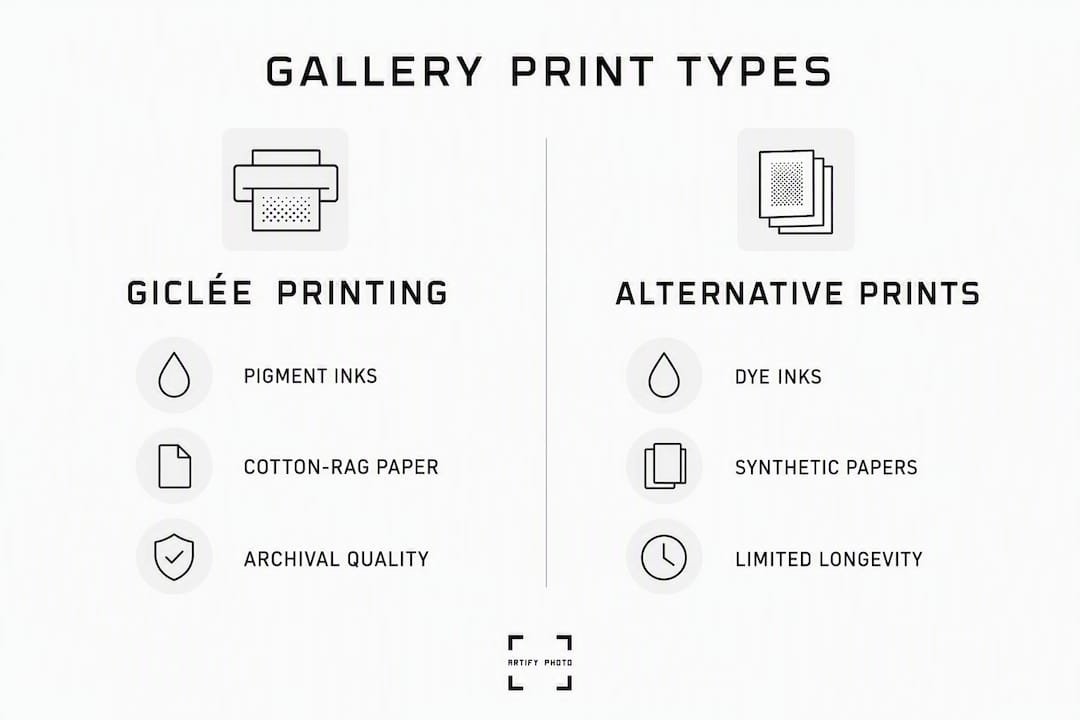
Giclée on cotton-rag paper remains the default for museum and gallery contexts because the combination of pigment ink and acid-free cotton content produces the most faithful color and the longest archival life. Canvas gallery wraps work well for large painterly pieces where a frame would compete with the image. Acrylic face-mounts deliver a contemporary, high-gloss presence that suits bold photography and graphic work, though they require careful handling and spacers to prevent moisture trapping. Metal prints are durable and lightweight, which makes them practical for commercial installations, but they lack the textural warmth most fine-art collectors expect. Photographic paper, whether silver-halide or inkjet, excels at smooth tonal gradation for portraiture and documentary photography.
Finishing and framing choices follow from substrate. Giclée prints typically float-frame with archival backing and conservation glazing. Acrylic face-mounts use standoff hardware or float in a shadow box. Canvas wraps hang unframed or in a simple float frame that reveals the wrapped edge.
Which papers, inks, and archival standards actually matter?
Pigment inks and dye inks are not interchangeable for gallery work. Dye inks produce vivid color but fade faster under UV exposure. Pigment inks bind to the substrate surface at a molecular level, which is why professional 12-color pigment systems can achieve archival permanence rated in decades, with some manufacturer and media combinations indicating longevity up to approximately 200 years under ideal display conditions.
Paper matters just as much. Cotton-rag papers with no wood pulp are acid-free by nature, which prevents the yellowing and brittleness that destroys prints over time. Hahnemühle is the benchmark brand to ask for by name: their Photo Rag and German Etching lines are widely used in museum reproduction and carry documented archival ratings. Canson Infinity is another respected option. When a lab cannot tell you the specific paper brand and weight they use, that’s a signal to keep looking.
For color accuracy, the standard QA metric is Delta E00. Aim for an average Delta E00 below 2 for gallery-grade reproduction; below 1 is the target for museum-level work. Ask any lab you’re considering to share spectrophotometer reports that document their Delta E performance on your chosen substrate.
Pro Tip: Request the lab’s ICC profile for your specific paper and printer combination before you submit your final file. A lab that cannot supply a substrate-specific ICC profile is not running a color-managed workflow.
How do you prepare files and manage color for gallery printing?
Color surprises between screen and print almost always trace back to file prep, not the printer. Follow this checklist before you submit anything:
- Set final output dimensions at native resolution. Work at 300 DPI at the intended print size. For very large formats (over 40 inches), 150–200 DPI at final size is acceptable, but confirm with the lab.
- Work in Adobe RGB (1998) or ProPhoto RGB. sRGB clips the color gamut available on wide-gamut inkjet systems. Convert to the lab’s requested profile only at the final export stage.
- Embed or convert to the lab’s ICC profile. Ask for the substrate-specific ICC profile, load it in Photoshop or Lightroom, and soft-proof before exporting.
- Save as 16-bit TIFF. JPEG compression introduces artifacts that become visible in smooth gradients and shadow areas at large sizes. Deliver a flattened TIFF for production; keep your layered master separately.
- Avoid destructive sharpening before proofing. Apply output sharpening only after the proof is approved and you know the final substrate. Over-sharpening on textured papers creates halos that look nothing like the original.
- Soft-proof under D50 or D65 viewing conditions. Calibrate your monitor with a hardware colorimeter (X-Rite i1Display or Calibrite ColorChecker Display) at least monthly. A soft proof on an uncalibrated screen is worse than no proof at all.
- Request a test strip or scaled proof on the final substrate. Never send a final file for full-sized printing without first evaluating a test strip on the actual substrate and under gallery lighting. This single step catches color shifts, banding, and texture mismatches before they cost you a full print.
For large-format reproductions of physical originals, use a raking-light capture pass to reveal surface texture and apply detail recovery only where it matches the original medium. Inventing texture through AI upscaling or aggressive sharpening produces details that were never in the original work.
Pro Tip: Keep a version log: filename, date, substrate, ICC profile used, and proof approval date. When a collector reorders six months later, you’ll know exactly which file and profile produced the approved result.
How does the ordering process work, and what drives price?
A typical gallery-quality print order moves through six stages, each with its own time cost:
Account and file check (1–2 days): Most labs require an account and a file review before quoting. They check resolution, color space, and any obvious artifacts. Artify’s how-it-works page walks through this clearly for new customers.
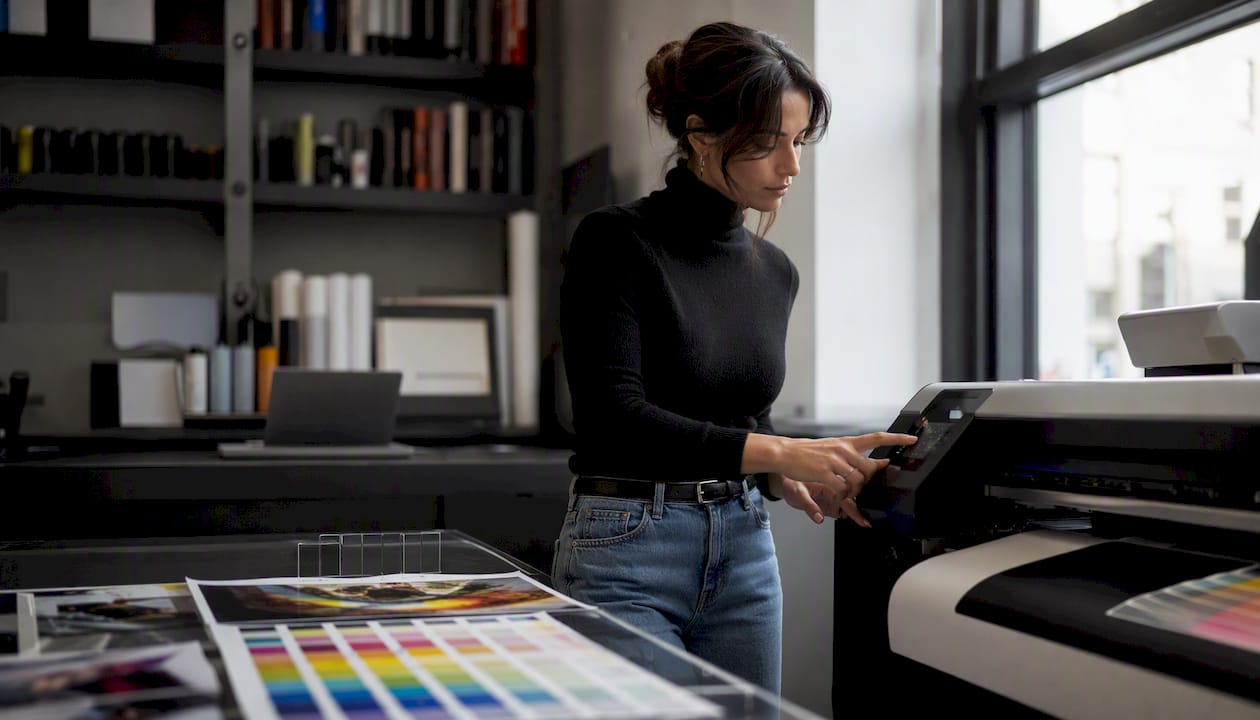
Soft and hard proofing (2–5 days): Soft proofs are digital; hard proofs are physical test prints on your chosen substrate. Making a 1:2 or 1:4 scaled proof on the final substrate and letting the print rest 24 hours before final evaluation is standard practice at quality labs.
Production (2–7 days): Actual print time depends on size, substrate, and queue. Rush fees typically add 25–50% to production cost.
Finishing (1–3 days): Mounting, framing, varnishing, and glazing add time. A framed, museum-grade giclée with conservation glazing costs significantly more than an unframed open-edition print on the same paper, reflecting the materials, labor, and hardware involved.
Shipping (1–5 days): Domestic ground for flat prints; freight for large framed works.
Pricing drivers beyond substrate and size include: custom ICC profiling for unusual media, number of copies (edition size), rush production, and white-glove installation services. Always ask for an itemized quote and a written turnaround SLA. Vague estimates like “a few weeks” are a red flag for large or time-sensitive orders.
Cloud proofing and branded client portals provide traceable sign-off records, which matters when you’re managing a licensed edition or a multi-piece gallery install with documented approval at each stage.
What finishing and framing options make prints exhibition-ready?
Finishing is where a technically correct print becomes a gallery-ready object. The choices you make here affect perceived color, texture, and conservation life.
- Varnishes and coatings: Gloss varnish intensifies color saturation and perceived depth; matte varnish reduces reflections and gives a fine-art feel; satin sits between the two. Lustre coatings on photographic papers offer a similar middle ground. For textured papers, a light satin or matte varnish preserves the paper’s tactile quality better than gloss.
- Mounting: Archival dry mounting on acid-free board stabilizes flat prints. Diasec (acrylic face-mounting) bonds the print directly behind acrylic for a contemporary, high-gloss presentation. Both require acid-free materials throughout.
- Conservation glazing: Museum glass with UV filtering blocks the wavelengths that fade pigment inks fastest. Anti-reflective coatings improve viewing in bright gallery spaces. Standard picture glass is not acceptable for archival work.
- Float frames and archival backing: A float frame reveals the print’s full edge, which suits borderless giclée editions. Archival foam-core or Coroplast backing keeps humidity from warping the substrate.
- Spacers for acrylic face-mounts: A small air gap between the print and the acrylic prevents moisture condensation that can cause delamination over time.
Finishing changes how color reads. A gloss varnish on a matte cotton-rag print will shift perceived contrast and saturation, so proofing must include the final finish whenever possible. Don’t approve a bare print and assume the varnished version will look identical.
Pro Tip: For textured impasto or heavily worked surfaces, discuss varnish viscosity with the lab before application. A high-viscosity gloss varnish can flatten texture peaks and permanently alter the surface character of the print.
Artify’s framing options and finish guide cover the specific materials and conservation-grade choices available through the platform.
How should gallery prints be packed, shipped, and installed?
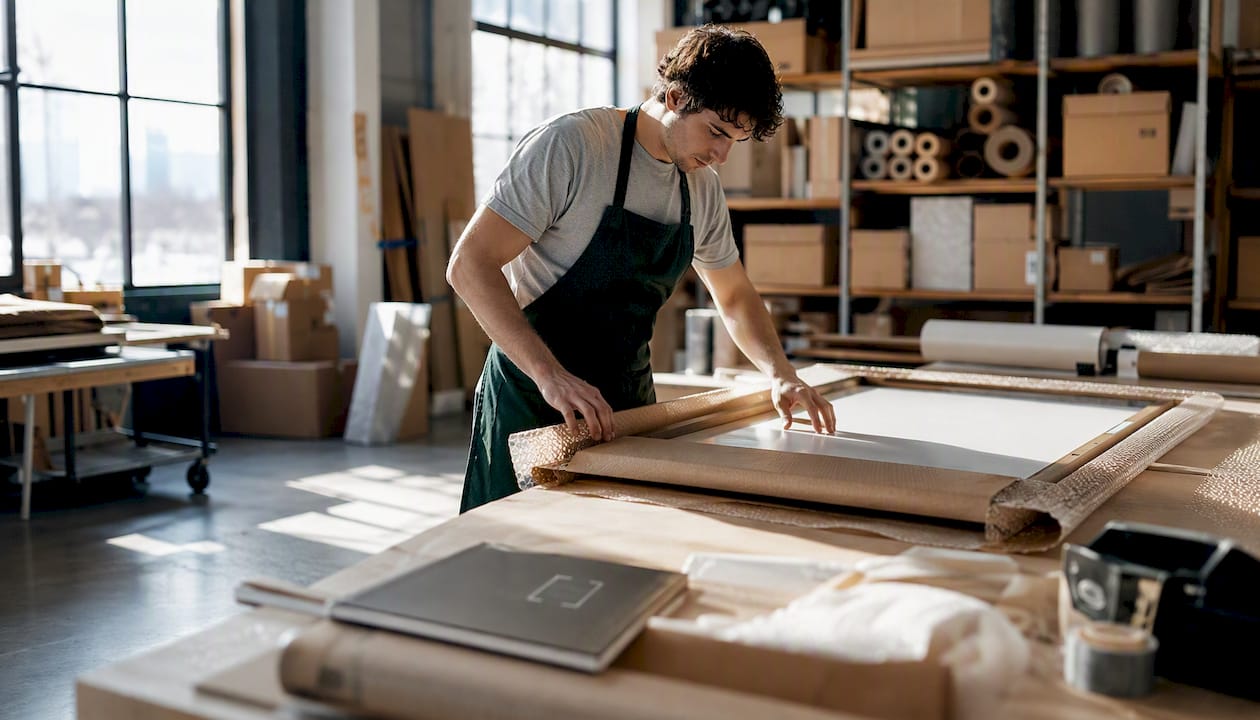
High-value prints require packaging that treats them as the objects they are. Large-scale installations demand end-to-end white-glove services: file prep, proofing, production, packaging, fulfillment, and installation. For smaller editions, the standard still applies.
Packaging checklist to require from your lab before they ship:
- Corner protectors and foam padding on all framed works
- Climate-buffered wrapping (silica gel packets, polyethylene barrier) for humidity-sensitive substrates
- Rigid crates or double-walled corrugated boxes for framed pieces over 24 inches
- Returnable packaging for touring or loan exhibitions
- Printed condition report and packing list inside the crate
- Declared value on the bill of lading matching the insured value of the work
Insurance and transit coverage: Request that the lab declare the full replacement value on the bill of lading, not the production cost. Fine-art transit insurance covers the market or replacement value of the work, not just materials. For high-value works, ask for a separate fine-art rider or confirm the carrier’s liability limit in writing before shipping.
Installation: White-glove installation services include delivery, unpacking, hanging hardware installation, and onsite leveling. For multi-piece gallery installs, require the installer to bring a laser level, the approved hanging plan, and the condition report from shipping. Confirm that hanging hardware specs (D-rings, French cleats, or security hangers) match the wall type at the venue.
Interior designers and gallery owners working on trade projects may also find value in programs like the designer trade program for coordinating professional installations.
What certifications and proofing policies should you verify before ordering?
A lab’s quality claims are only as good as the documentation behind them. Here’s what to ask for and what to look for:
Certifications and documentation to request:
- Hahnemühle Certified Studio status (confirms the lab uses genuine Hahnemühle media and meets their quality standards)
- Substrate-specific ICC profiles for your chosen paper and printer combination
- Spectrophotometer Delta E00 reports from recent production runs
- Proof retention policy: how long does the lab keep physical and digital proof records?
Proof types and when to use each:
- Soft proof: Digital simulation of the print on your calibrated monitor. Use it for initial color review and to catch obvious gamut issues before spending on physical proofs.
- Test strip: A narrow physical print on the final substrate. Mandatory before any full-size production run.
- Scaled proof (1:2 or 1:4): A proportionally reduced print on the final substrate. Let it rest 24 hours before final evaluation to allow inks to fully oxidize and stabilize.
- Full-size hard proof: Reserved for high-value editions or when scaled proofs reveal issues that need full-size verification.
What to look for in service guarantees: a lab that documents its color-control process in writing, retains proof records for at least 12 months, and offers a reprint policy for production errors is operating at a professional standard. Verbal assurances are not enough for archival work.
How do you choose the right gallery-quality printing service?
The right lab for a single fine-art edition differs from the right lab for a 40-piece commercial install. Use this checklist when evaluating any provider:
Questions to ask in your initial inquiry:
- What paper brands do you stock, and can you print on Hahnemühle Photo Rag or German Etching?
- Do you provide substrate-specific ICC profiles for download before I submit files?
- What is your proof policy: test strips, scaled proofs, or hard proofs only?
- Can I see portfolio examples or client references for work similar to mine?
- What are your turnaround SLAs for standard and rush orders?
- How do you handle color-control documentation and proof retention?
Red flags that should stop you from ordering:
- Cannot provide test strips or physical proofs on the final substrate
- Vague turnaround estimates with no written SLA
- No archival substrate options (only standard photo paper or canvas)
- Unclear or absent warranty, reprint, or insurance policy
- No ICC profile support or color-management workflow
Minimum standards for fine-art editions:
- Pigment ink on acid-free, cotton-content paper
- Delta E00 average below 2 (request documentation)
- Hahnemühle or equivalent archival substrate available
- Written proof approval process with retained records
For selecting museum-grade prints and understanding what distinguishes gallery-ready work from standard printing, Artify’s guides provide a useful reference alongside your lab evaluation.
Why consistency across a collection is harder than a single great print
Single-print quality is the entry requirement. Consistency across a collection is the real test. Experts advise planning collections to ensure cohesive installations rather than treating each print as an isolated unit. When white points drift between pieces, or paper finish changes from matte to satin across a run, the installation reads as disjointed regardless of how good each individual print is.
Gallery-quality reproduction is iterative: capture, profiling, and testing are not a single automated export. Professional printmakers treat the final print as an interpretation that requires manual adjustment per medium. That means the workflow looks like this:
- Capture (or file delivery) with consistent lighting and color reference targets
- Profile the specific printer and substrate combination
- Produce a test strip and evaluate under the gallery’s intended lighting
- Adjust and produce a scaled proof; let it rest 24 hours
- Approve and lock the profile and settings for the full run
- Document every decision: paper, profile, Delta E result, approval date
A multi-piece project where a lab used consistent profiles and retained proof records across all pieces produces an installation where every work reads as part of the same visual language. When those records are absent, reprints for damaged or sold pieces rarely match the originals.
Pro Tip: Schedule a single proofing session for all pieces in a collection. Locking color and finish decisions in one sitting prevents the drift that accumulates when pieces are proofed weeks apart on slightly different substrate batches.
For a deeper look at how digital printing fits into gallery contexts, Artify’s editorial covers the workflow and market considerations worth knowing.
Key Takeaways
Museum-grade gallery printing requires archival pigment inks, cotton-rag substrates, calibrated ICC profiles, and a documented proof workflow to deliver consistent, exhibition-ready results.
| Point | Details |
|---|---|
| Archival materials are non-negotiable | Request Hahnemühle or equivalent cotton-rag paper and 12-color pigment inks for longevity rated in decades. |
| Delta E00 is your quality benchmark | Ask labs for spectrophotometer reports; gallery-grade work targets average Delta E00 below 2. |
| Test strips before full production | Always evaluate a physical test strip on the final substrate under gallery lighting before approving a full run. |
| Collection consistency matters | Match white point, paper finish, and profile across all pieces; proof the full collection in a single session. |
| Artify for end-to-end service | Artify offers museum-grade giclée, framing, 3D room previews, and curated pre-made collections for artists and collectors. |
The part most artists skip until it’s too late
The conversation in fine-art printing tends to focus on the single hero print: the right paper, the right ink, the right frame. What gets less attention is the operational discipline that makes a body of work hold together, and that’s where most artists run into trouble.
A Delta E00 report from one production run doesn’t guarantee the next batch will match if the lab has swapped substrate lots or recalibrated their printer without telling you. Proof retention policies matter precisely because reprints happen, and a lab that can’t reproduce your approved color six months later is a liability for any serious edition.
The other thing worth saying plainly: the most technically correct print in the world still fails if it’s approved under the wrong lighting. Gallery lighting is almost always warmer and more directional than a studio or home office. A print that looks neutral on your calibrated monitor under D65 can read warm or flat under the tungsten-heavy track lighting common in commercial galleries. Evaluating test strips under the actual installation lighting, or as close to it as possible, is the one step that separates artists who are satisfied with their prints from those who are perpetually adjusting.
Artify’s museum-grade workflow guide and gallery selection guide are worth reading alongside the technical steps covered here.
Artify brings museum-grade printing within reach
Most artists spend weeks researching labs, chasing ICC profiles, and coordinating proofs across multiple vendors before a single print ships. Artify consolidates that process: museum-grade giclée printing, professional framing, 3D room previews, and a curated catalog of pre-made collections—all accessible from one platform without the back-and-forth of a traditional lab relationship.
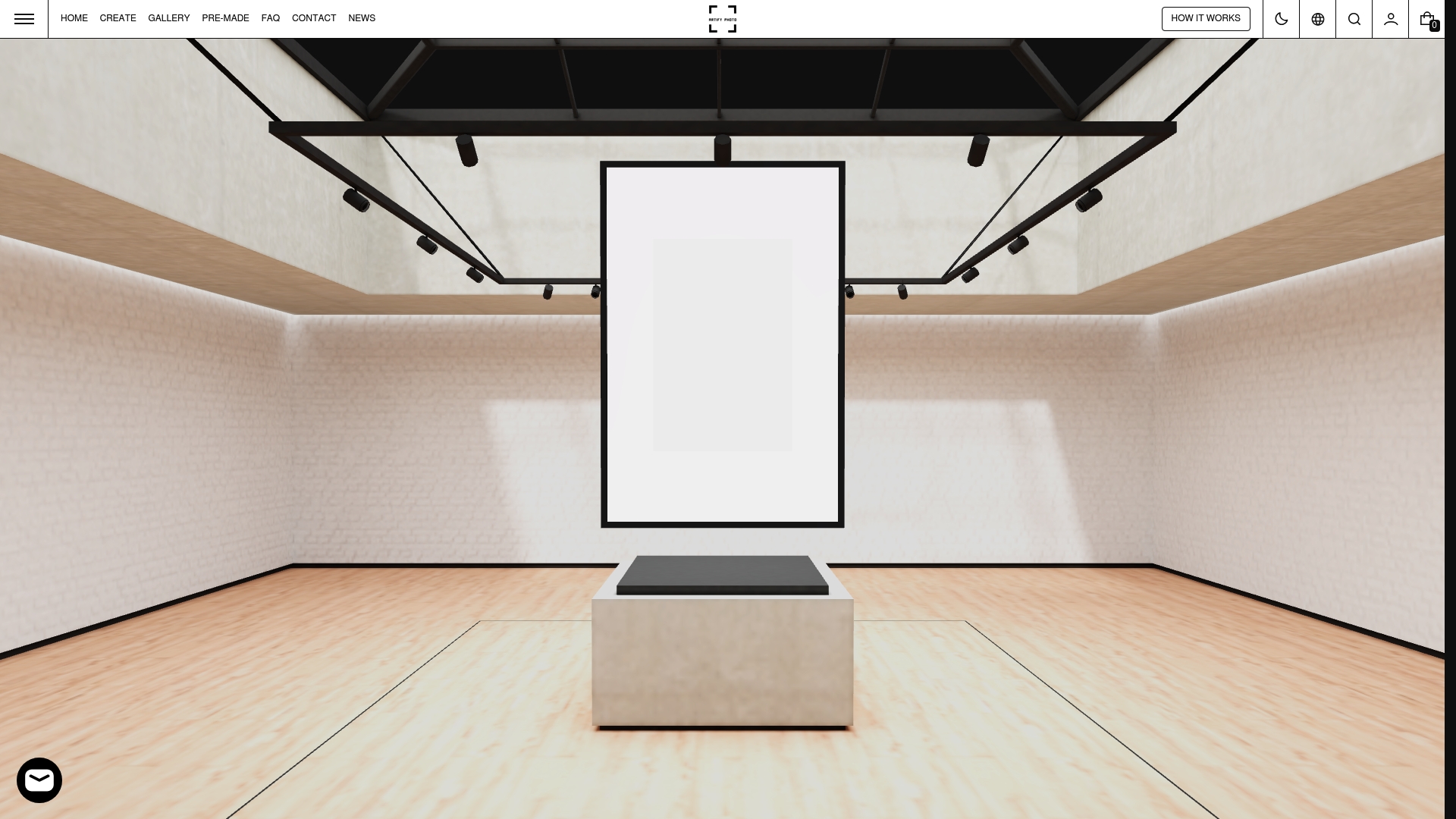
The platform is built for artists and collectors who want gallery-standard results without managing a production workflow from scratch. You upload your file, choose your substrate and finish, preview the result in a real room context, and approve before anything goes to print. Pre-made collections are available for buyers who want ready-to-order museum-grade work, and the collaboration program supports custom commissions and artist partnerships.
Browse Artify’s pre-made collections or start a custom order to see how the platform handles your specific print needs.
Useful sources
- Gallery-Quality Large Format Printing & Color Management — practical guidance on Delta E targets, scaled proofing, and iterative reproduction workflows
- How to Get Gallery-Quality Fine Art Prints with the Canon PRO-2600 — pigment ink longevity and professional printer performance
- Prep a Faded Original for Gallery Printing | Art Reimagined — raking-light capture and texture-preserving reproduction techniques
- Gallery-Quality Fine Art Printing at Scale | SuperGraphics — white-glove installation and large-scale fine-art production
- Services | Qube Artis — collection-level planning and cohesive installation standards
- Art Print Finishes Explained: Choose the Right Look — Artify’s guide to archival papers and finish choices
- Museum-Grade Art Workflow: A 2026 Artist’s Guide — Artify’s deep-dive on file prep, proofing, and production
- How to Choose Art for Galleries: A 2026 Expert Guide — curation and selection criteria for gallery-ready work
FAQ
What does “gallery-quality” mean for fine-art prints?
Gallery-quality prints use archival pigment inks, acid-free cotton-rag paper (such as Hahnemühle), and a color-managed workflow with ICC profiles and Delta E verification. The result is a print rated for decades of light-stable permanence that meets museum display standards.
What resolution do I need for gallery-quality printing?
A high resolution at the final print size is the standard for most gallery work. For very large formats, a somewhat lower DPI at final size is generally acceptable, but confirm the minimum with your lab before submitting files.
How do I know if a lab is truly archival?
Ask for the specific paper brand and weight they use, substrate-specific ICC profiles, and spectrophotometer Delta E00 reports from recent production runs. A Hahnemühle Certified Studio designation is a reliable third-party signal that the lab meets documented archival standards.
Does Artify offer museum-grade giclée printing?
Yes. Artify provides museum-grade giclée printing with professional framing options, 3D room previews, and a curated catalog of pre-made collections, all available through a single platform without managing a separate lab relationship.
How long does a gallery-quality print order typically take?
From file submission to delivery, expect about a week or more for a standard framed giclée, depending on proofing rounds, finishing, and shipping distance. Rush production is available at most labs for an additional fee, which increases the production cost.