


TL;DR:
- Art transforms spaces by influencing emotion through color, rhythm, and texture. It shapes atmosphere and personal identity when chosen intentionally and placed with purpose. Proper lighting enhances art’s impact by revealing textures and colors to create a unified, meaningful environment.
Art transforms spaces by reshaping the emotional, sensory, and functional experience of every room it enters. A bare wall does not just look empty. It feels empty. The right artwork changes how a space reads, how people feel inside it, and how long they want to stay. Whether you are decorating a home or designing a commercial interior, understanding the role of art in spaces gives you one of the most powerful tools in design. This guide draws on 2026 research and expert interior design strategies to show exactly how that transformation works and how you can apply it.
How art transforms spaces through sensory experience
Art changes atmosphere primarily through its sensory elements: color, rhythm, texture, and light. These are not abstract qualities. They trigger measurable biological responses in the people who encounter them.
Emerging research shows that slow, steady visual rhythms and specific color wavelengths influence hormonal and neural responses, producing calming effects without medication. That finding has direct implications for how you choose and place art at home or in a workplace. A large, slow-moving abstract with soft blues and greens does not just look peaceful. It actively works on the nervous system.
Wide-field immersive art engages peripheral vision, which the brain associates with safety and openness. This is why a large landscape or panoramic print in a narrow hallway does not just add color. It makes the hallway feel less confining. The brain reads the visual field and adjusts its threat response accordingly.
Color fields and diffraction film installations take this further by refracting natural light into shifting hues throughout the day. Visitors experience varying intensities and colors as sunlight moves, making the space feel alive without any structural change. That is a remarkable amount of transformation from a single surface treatment.
Pro Tip: Choose art with slow visual rhythms, such as soft gradients or gentle curves, for bedrooms and reading rooms where you want the nervous system to settle.
Key sensory factors that shape how art changes atmosphere:
- Color temperature: Warm tones advance visually and create intimacy; cool tones recede and open a space.
- Scale: Oversized works command attention and anchor a room; smaller pieces invite close inspection and create a sense of discovery.
- Texture: Raised surfaces, layered media, and tactile finishes add depth that flat walls cannot replicate.
- Rhythm: Repeating patterns and flowing lines guide the eye and regulate the pace at which a viewer moves through a space.
Practical strategies for using art in interior design
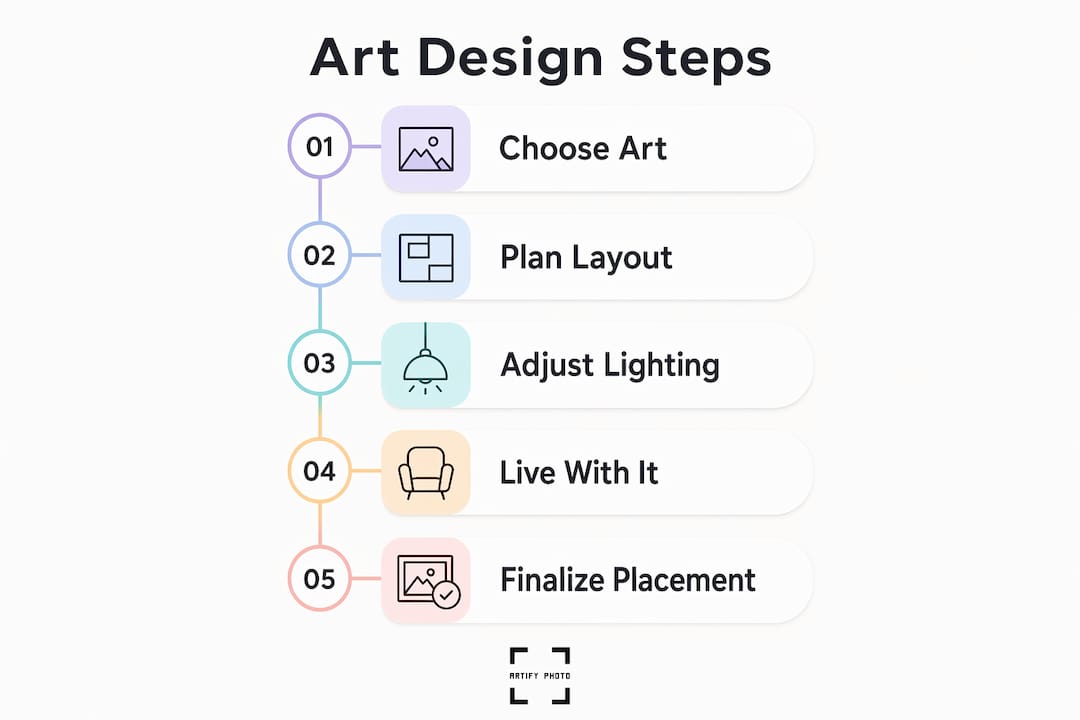
Treating art as a primary design element early in the process, rather than adding it after furniture is chosen, produces more cohesive results. Art can define sightlines, influence furniture arrangement, and anchor color decisions. When you start with a piece you love, the rest of the room builds around a clear emotional center.
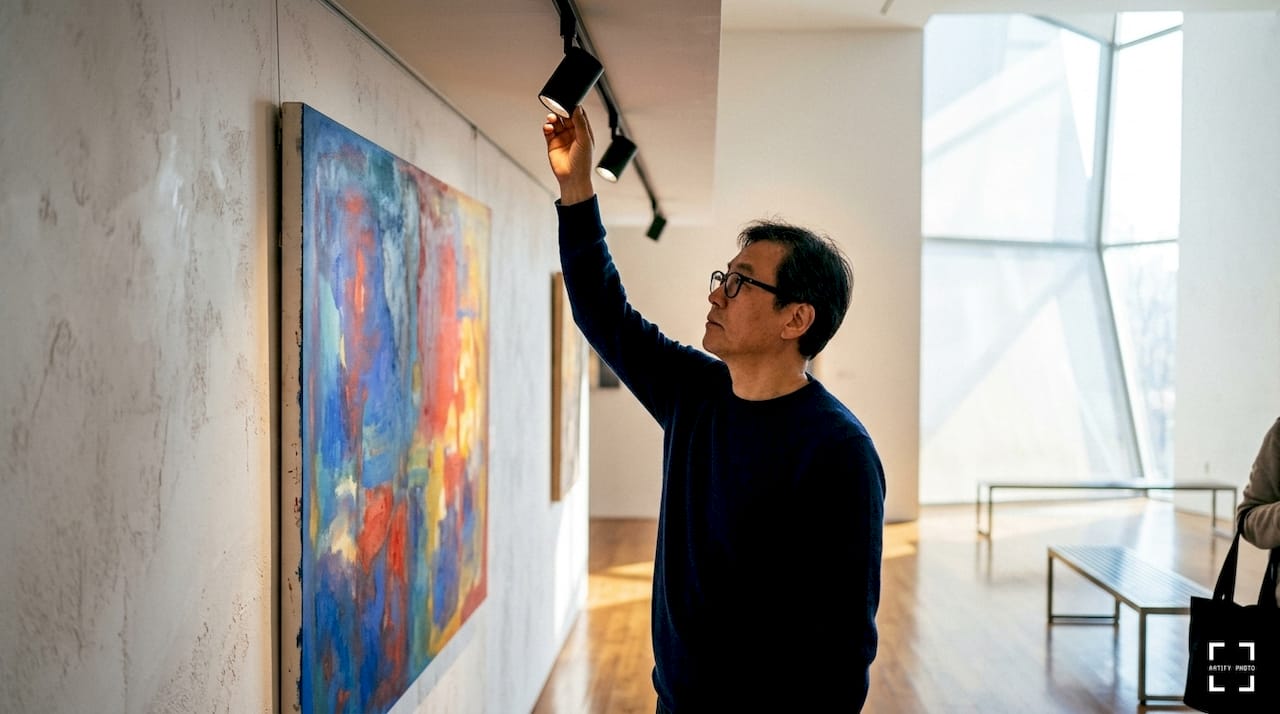
Scale and placement are the two most underused tools in residential design. A single large work hung at eye level on a focal wall makes a room feel more resolved than a cluster of small prints scattered across multiple walls. Conversely, a gallery wall of varied sizes creates energy and movement, which suits social spaces like dining rooms and living areas.
Here is a practical sequence for integrating art into any room:
- Identify the emotional tone you want. Calm, energized, nostalgic, bold. Let that guide your selection before you think about color matching.
- Choose scale relative to the wall, not the furniture. Art that is too small for its wall looks timid. A general rule: the artwork should cover roughly two-thirds of the wall width above a sofa or bed.
- Use art to set the color palette. Pull one or two accent colors from the artwork and repeat them in cushions, rugs, or accessories. This creates visual coherence without making the room feel designed by committee.
- Place art in transitional spaces. Hallways, bathrooms, and work areas gain enormous character from art. These spaces are often ignored, but they shape the cumulative experience of a home or office more than people realize.
- Create tension with contrast. A bold abstract in a minimalist room, or a classical portrait in a modern kitchen, generates the kind of visual interest that makes a space memorable.
Pro Tip: Before you hang anything, hold the piece against the wall and live with it for a day. Your gut reaction after 24 hours is more reliable than any design rule.
For a room-by-room breakdown of placement strategies, the art styling guide from Artify covers specific approaches for living rooms, bedrooms, kitchens, and offices in practical detail.
How does lighting shape the impact of art in a space?
Lighting is not a finishing touch. It is the mechanism through which art delivers its full effect. Dynamic lighting adapts the perception of textures and colors throughout the day, keeping spaces alive and engaging in ways that fixed lighting cannot.
Natural light changes the mood of an artwork hour by hour. A painting that looks warm and intimate in morning light can feel cool and contemplative by late afternoon. Positioning art where it catches indirect natural light, rather than direct sun, preserves color integrity while allowing this daily shift to work in your favor.
Artificial lighting requires deliberate placement. The key principles:
- Angle of incidence: Position picture lights or track lighting at a 30-degree angle from the wall to accentuate texture and depth without creating glare.
- Color rendering index (CRI): Use bulbs with a CRI of 90 or above to render art colors accurately. Lower CRI bulbs flatten and distort pigments.
- Layered lighting: Combine ambient, accent, and task lighting so art is not competing with overhead glare. Accent lighting directed at a focal artwork creates hierarchy in the room.
- Dynamic options: Dimmer switches let you shift the mood of a room and its art from daytime energy to evening intimacy without changing a single piece.
For broader lighting design strategies that complement art in interiors, CrystalPlace’s 2026 guide covers ambient, accent, and task lighting in depth.
Can art tell stories and build identity in a space?
Art’s deepest function in a space is narrative. It communicates who lives or works there, what they value, and what kind of experience they want to create for others. This is where the impact of art on environment moves beyond aesthetics into meaning.
Mixing traditional and modern art styles creates a balanced, intriguing aesthetic that feels contemporary and fresh. Interior design experts note that combining Old Masters with minimalist modern interiors produces a “cool” quality that neither style achieves alone. The contrast creates dialogue between periods, and that dialogue gives a room its character.
Art also carries environmental and social narratives. Small art interventions outperform large infrastructure projects in community engagement and drive sustainable behavior changes. That principle applies at the domestic scale too. A print that references a landscape you care about, or a custom piece made from a personal photograph, does more than decorate. It anchors memory and identity to a physical place.
“There are no fixed rules for art placement. Emotional response should guide selection and arrangement for authentic personalization.”
This is the principle that separates spaces that feel genuinely personal from spaces that look like catalog pages. Choosing art for emotional resonance rather than color coordination produces unique spaces that reflect the occupant’s identity and intrigue visitors. The role of art in personalization is something Artify explores directly, with guidance on how personal photographs and custom prints create spaces that no one else can replicate.
Narrative art works across scales. A single portrait in a corporate lobby communicates values. A series of prints in a child’s bedroom builds a world. A custom landscape in a home office connects daily work to something larger. The art and spatial dynamics shift because the story shifts.
Key Takeaways
Art transforms spaces most effectively when it is chosen for emotional resonance, placed with intention, and lit to reveal its full depth.
| Point | Details |
|---|---|
| Art as a design foundation | Choose art before finalizing furniture and color to build a cohesive, emotionally grounded room. |
| Sensory elements drive mood | Color, rhythm, scale, and texture each trigger specific psychological and physiological responses. |
| Lighting multiplies impact | A CRI of 90 or above and a 30-degree lighting angle reveal texture and color accurately. |
| Overlooked spaces matter | Hallways, bathrooms, and work areas gain character and cohesion when treated as display spaces. |
| Emotional resonance over matching | Art chosen for feeling, not color coordination, creates spaces with genuine identity and depth. |
What I’ve learned about art as a design foundation
The most common mistake I see is treating art as the last item on a design checklist. People finish a room, look at the empty walls, and then go searching for something that matches the sofa. That approach produces what designers call “decorator art.” It fills space without adding meaning.
The rooms that genuinely stop people in their tracks share one quality: the art was chosen first, or at least chosen with the same seriousness as the architecture. When a piece carries real emotional weight for the person who lives with it, that weight radiates outward. The furniture, the lighting, and even the way people move through the room all respond to it.
I also think designers underestimate transitional spaces. A well-placed print in a hallway changes how a home feels from the moment you walk in. A piece in a bathroom creates a moment of unexpected delight. These are not wasted placements. They are the details that make a space feel considered rather than assembled.
The other thing worth saying directly: style contrast is not a risk. It is the point. A contemporary abstract next to a classical piece does not create confusion. It creates conversation. The most memorable interiors I have encountered are the ones where the art refuses to be predictable.
— Artify
Artify’s collections for spaces that deserve better walls
Every insight in this guide points toward the same conclusion: the art you choose matters more than almost any other design decision.
Artify’s pre-made collections cover a wide range of interior styles, from bold contemporary prints to understated fine art photography, so you can find pieces that match the emotional tone you are building toward. For something entirely personal, art generation credits let you create custom pieces from your own photographs, turning memories into gallery-quality wall art. Every piece is printed on demand and backed by independent artists. Browse the Artify gallery to see what is possible before you commit to a single wall.
FAQ
How does art change the atmosphere of a room?
Art changes atmosphere through color, scale, texture, and visual rhythm, each of which triggers specific emotional and physiological responses. Research shows that slow, steady visual patterns and particular color wavelengths actively calm the nervous system.
What is the best way to use art in interior design?
Choose art before finalizing furniture and color palettes, then use the artwork as the anchor for all other design decisions. This approach creates cohesion and ensures the space has a clear emotional identity.
Does lighting really affect how art transforms a space?
Lighting is one of the most powerful variables in how art reads in a room. Bulbs with a CRI of 90 or above render colors accurately, and positioning lights at a 30-degree angle from the wall reveals texture and depth.
Can art work in small or functional spaces like hallways and bathrooms?
Art in transitional spaces like hallways and bathrooms transforms them from purely functional areas into emotionally rich parts of a home. Design experts argue these overlooked spaces gain the most character per square foot from a well-chosen piece.
Should art match the existing decor in a room?
Choosing art solely to match existing decor limits emotional connection and produces generic results. Art chosen for personal resonance, even when it contrasts with the surrounding decor, creates more distinctive and memorable spaces.