


TL;DR:
- Gallery selection in 2026 prioritizes artistic quality, theme fit, coherence, and sales viability for successful exhibitions.
- A professional artist portfolio includes 10 to 15 works in a single PDF with clear captions, an artist statement, and a CV.
What actually determines great gallery art selection
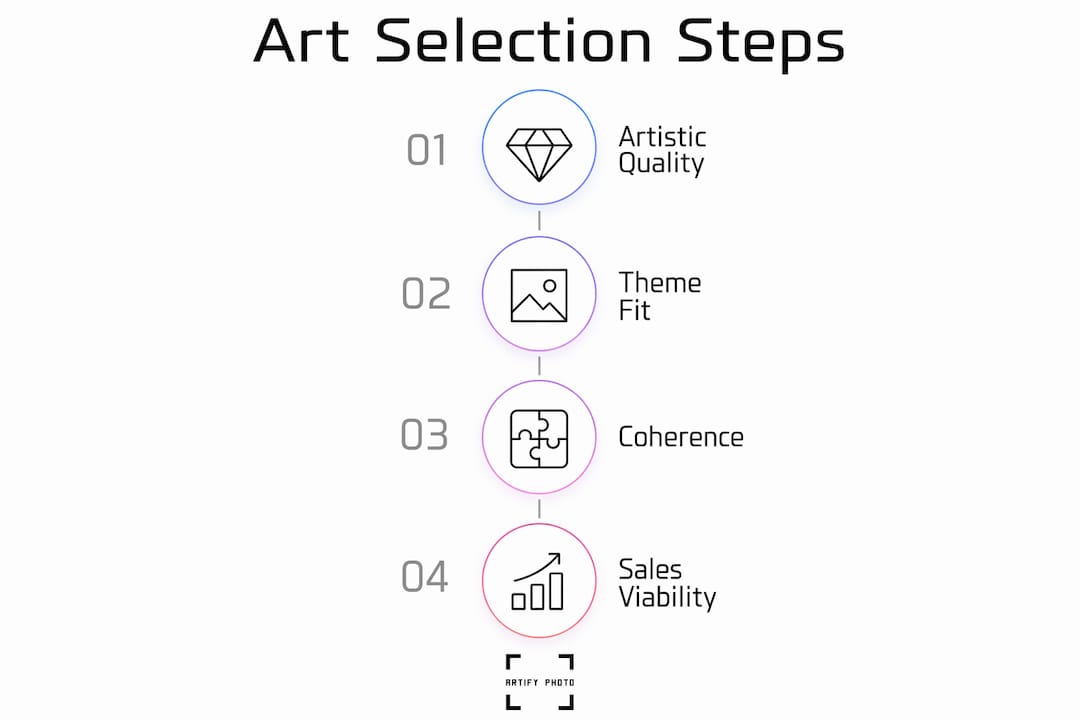
The four criteria that drive gallery selection in 2026 are artistic quality, theme fit, coherence, and sales viability. Get all four right, and you have a show that works on every level: aesthetically, narratively, and commercially.
- Artistic quality: Technical skill matters, but so does a mature artistic voice. Jurors ask whether the work shows sophistication and whether the artist has solved visual or conceptual problems deliberately.
- Theme fit: Every piece must authentically engage with the exhibition’s thesis. A beautiful work that only tangentially relates to the theme weakens the whole show.
- Coherence: Works should share visual language, subject matter, or conceptual concern. A submission that looks like five unrelated best-of pieces signals poor self-assessment.
- Sales viability: Galleries survive on commission. Work needs an identifiable audience and a sustainable price point, not just critical merit.
Balancing these four keeps both your audience and your bottom line satisfied.
How to prepare a portfolio that galleries actually open
A professional portfolio contains a selection of works presented in a single compressed PDF, with an artist statement of moderate length, a CV, and a concise introduction email.
- Present one work per page with complete captions: title, year, medium, and dimensions.
- Keep the artist statement specific. “I photograph architectural details to explore decay and time” carries more weight than poetic abstractions about liminal spaces.
- Address the introduction email to the curator or director by name, and mention a recent exhibition you genuinely admired.
- Avoid mixing unrelated styles or mediums in one submission. It signals that you lack the self-awareness to edit your own work.
Pro Tip: When no gallery preference is stated, default to text-before-image sequencing. Establishing context before the visuals helps the curator understand your work before they react to it.
Writing artwork labels that visitors actually read
NCMA curators Jennifer Dasal and Caroline Rocheleau are clear on this: define what you want your audience to take away before you write a single word. That decision shapes every label in the show.
- Keep labels under 120 words. Visitors overwhelm quickly, and dense text pushes them past the work rather than into it.
- Not every piece needs explanatory text. Some works earn only tombstone information: artist name, title, date, medium. Reserve deeper text for pieces that anchor your exhibition’s argument.
- A consistent label format visually links the pieces and helps visitors make their own connections across the show.
Pro Tip: As Dasal advises, don’t be afraid to let your curatorial voice show. State your opinion on the work while keeping the information objective. Labels written in a flat, neutral register often say less than ones with a clear point of view.
Display strategies that make exhibitions feel intentional
Planning your exhibition space means thinking about dimensions, lighting, and how visitors will move through the room before a single piece goes on the wall.
- Vary media, scale, and tone deliberately. Fifteen similar-sized paintings hung in a row read as monotonous; mixing painting, sculpture, and photography creates visual rhythm.
- Sequence works to build a narrative, the way chapters build a book. Each piece should advance the story, not just occupy wall space.
- Use complementary colors and materials to unify the room without flattening contrast. Too much uniformity kills energy; too much disparity loses the theme.
- Consider sight lines. Every work should be appreciable both individually and as part of the collective arrangement.
- Think about accessibility: label height, pathway width, and lighting levels affect who can engage with the show.
For practical room-by-room guidance on matching art to space, Artify’s styling art spaces guide covers layout decisions that apply equally to gallery and residential contexts.
Who is your audience, and what does your market expect?
Audience research directly shapes which artworks belong in a show. Curators who skip this step often select work they personally love but that lands flat with the people actually walking through the door.

Analyze visitor demographics, survey past attendees, and pay attention to which past exhibitions generated the most engagement. A gallery serving collectors in their 40s and 50s has different expectations than one programming for graduate students. Neither is wrong; both require deliberate choices about subject matter, price point, and conceptual complexity. Galleries that align their selections with audience interests consistently see stronger attendance and sales.
Legal and ethical considerations you cannot skip
Copyright clearance is non-negotiable before any work goes on display. Obtain written permission for any copyrighted materials, and give appropriate credit for collection items. For galleries working with living artists, a written consignment agreement should specify commission rates, insurance responsibility, and the handling of unsold work.
Authenticity matters just as much. Provenance documentation protects both the gallery and the collector. For works by deceased artists or pieces sourced through secondary markets, request a full chain of ownership. Displaying a work of uncertain origin exposes the gallery to legal liability and reputational damage that no single sale is worth.
How to evaluate an artist’s background and reputation
An artist’s career stage, exhibition history, and professional conduct all factor into a curator’s decision. Galleries want artists with consistent studio practice, ideally documented through exhibitions, residencies, or a strong portfolio. Representation by another gallery often signals a level of support and visibility that reduces risk.
Workability matters too. A show demands months of coordination. Curators naturally gravitate toward artists who respond to emails, meet deadlines, and engage constructively with curatorial input. Brilliant work from an unreliable artist creates problems that outlast the opening night. Check references quietly, and pay attention to how an artist communicates during the submission process itself.
Budgeting and pricing considerations for exhibitions
Galleries need to price work at a point that attracts collectors without undercutting the artist’s long-term market. A useful starting point is researching comparable artists at similar career stages and pricing within that range. Pricing too low signals inexperience; pricing above the gallery’s typical range limits sales.
On the acquisition side, budget for shipping, insurance, installation labor, and any conservation needs before committing to a show. Loan agreements for museum-quality works can take weeks to finalize and carry their own insurance requirements. Build those timelines and costs into your exhibition budget from the start, not as an afterthought. For galleries exploring independent artists at accessible price points, browsing modern art collections can help calibrate what the current market supports.
Artify brings gallery-quality custom art within reach
Gallery owners and curators who need market-ready, original work without the long lead times of traditional sourcing have a practical option in Artify.
Artify converts personal photographs into gallery-quality custom wall art through on-demand printing, supporting independent artists while giving curators access to unique pieces that fit specific themes and aesthetics. The platform’s pre-made collections span contemporary trends, pop culture, and landmark-inspired work, making it straightforward to find pieces that align with an exhibition’s visual direction. For galleries that want to collaborate directly, Artify’s artist collab program opens a path to co-created, exhibition-specific work. Orders come with clear delivery timelines and a transparent returns process, so logistics don’t derail your installation schedule.
FAQ
What are the primary criteria for selecting art for a gallery?
The four core criteria are artistic quality, theme fit, coherence, and sales viability. Work must demonstrate technical skill and a mature voice, align with the exhibition’s thesis, hold together as a body, and appeal to an identifiable collector audience.
How many works should an artist include in a gallery submission portfolio?
A professional portfolio should include 10–15 works presented in a single compressed PDF, with one work per page, a clear artist statement, and a 1–2 page CV.
How long should artwork labels be in a gallery exhibition?
Labels should stay under 120 words. Not every piece needs explanatory text; reserve it for works that anchor the exhibition’s central argument.
How does Artify support gallery curation?
Artify provides on-demand, gallery-quality custom art through independent artists, with pre-made collections and a collab program that lets curators source or co-create work aligned with specific exhibition themes.
Does an artist’s reputation affect gallery selection?
Yes. Curators weigh exhibition history, professional reliability, and consistent studio practice alongside the quality of the work itself. An artist who communicates well and meets deadlines is easier to build a show around.
Key Takeaways
Choosing art for galleries comes down to four non-negotiable criteria: artistic quality, theme fit, coherence, and sales viability, applied consistently from submission review through final installation.
| Point | Details |
|---|---|
| Four core selection criteria | Artistic quality, theme fit, coherence, and sales viability guide every gallery selection decision in 2026. |
| Portfolio structure | 10–15 works in one compressed PDF with a clear artist statement (150–300 words) and a 1–2 page CV. |
| Label length | Keep exhibition labels under 120 words; reserve explanatory text for works central to the show’s argument. |
| Display variety | Mix media, scale, and tone deliberately to create visual rhythm and prevent monotony across the exhibition. |
| Artify for sourcing | Artify’s pre-made collections and collab program give curators access to market-ready, independent artist work. |