


TL;DR:
- Creating a cohesive art display involves selecting a unifying thread, such as color or theme, and building the arrangement around it. Proper planning, including measuring, choosing layout styles, and using paper templates, helps ensure a balanced and visually unified gallery. Maintaining consistent spacing, framing, and narrative elements guarantees that the display feels intentional and harmonious over time.
A cohesive art display is defined as a curated arrangement where color, style, scale, and theme work together to produce a unified visual experience on your wall. Most people hang art piece by piece and wonder why the result feels scattered. The fix is deliberate curation, not more art. Knowing how to create cohesive art displays means choosing a unifying thread first, whether that is a shared color palette, a consistent frame finish, or a narrative mood, and then building every decision around it. Artify offers curated collections and framing tools designed to make that process easier for anyone decorating at home.
What are the key elements of cohesive art displays?
Cohesion in art comes from repeating visual decisions across every piece in the arrangement. When those decisions align, the wall reads as one composed statement rather than a random collection.
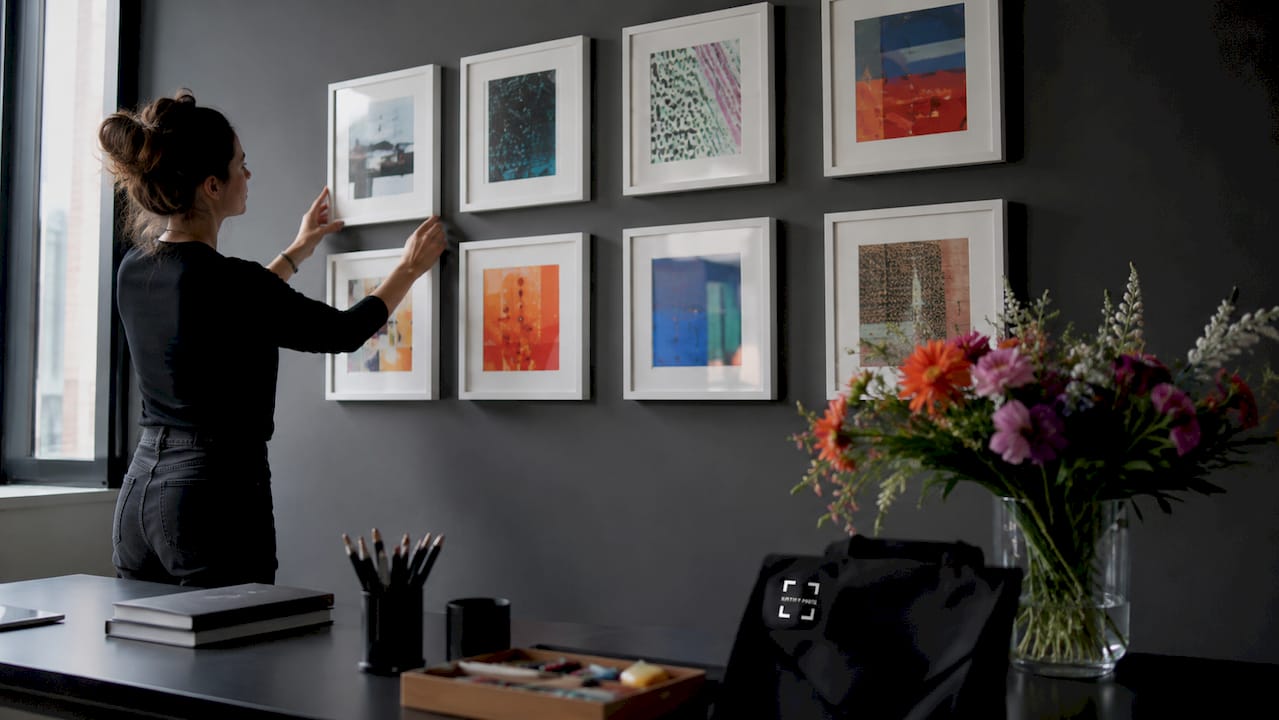
Color palette is the fastest route to unity. Choose two to three anchor colors that appear across multiple pieces. They do not need to match exactly. They need to echo each other. A deep navy in one print and a soft slate in another creates a dialogue without being matchy.
Frame consistency is equally powerful. A consistent frame finish unifies diverse artworks visually, even when sizes and styles vary widely. Black frames on a mix of photography, illustration, and abstract prints will still read as a collection. Mismatched gold, silver, and wood frames on similar prints will not.
Spacing is the detail most people underestimate. Consistent spacing of 2–4 inches between frames is more important than the exact gap size. The eye reads the rhythm of the gaps, not the measurement itself. Uneven spacing signals disorder even when the art is beautiful.
Beyond the visual mechanics, a cohesive display needs a narrative thread. True cohesion requires a central intellectual backbone, whether thematic, chronological, or color-based, to engage viewers and avoid incoherence. Grouping pretty objects without a connecting idea produces decoration, not curation.
- Color palette: Limit to two or three anchor colors across all pieces
- Frame finish: Match material or tone, even when sizes differ
- Spacing: Hold 2–4 inches between every frame, without exception
- Narrative thread: Define a mood, theme, or story before selecting art
- Scale balance: Mix sizes intentionally, not randomly
- Lighting: Proper lighting unifies diverse artwork styles in a single display
Pro Tip: Pick your frame finish before you buy any art. It is far easier to find art that fits a frame style than to find frames that match art you already own.
How do you plan your home art display layout?
Planning before hanging saves wall damage, time, and money. A complete gallery wall installation takes about two hours of focused work including measuring, composing, framing, and hanging. Skipping the planning phase easily doubles that time.
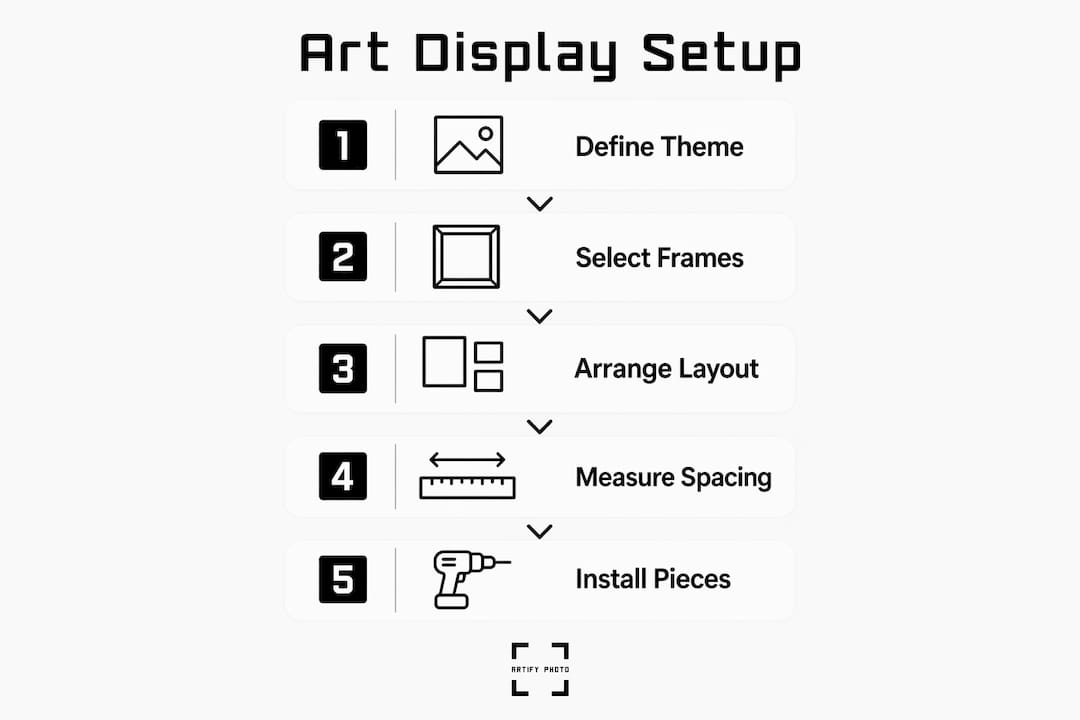
Start by measuring your wall space and noting the furniture below it. Art hung above a sofa should span roughly two thirds of the sofa’s width. Art hung in a hallway needs to account for sightlines from both ends of the corridor.
Next, choose your layout style. Gallery wall styles include tight grid, salon style, asymmetric anchor, and spotlight. Each demands different frame sizes, spacing, and arrangement logic. The grid works for photography collections. The salon style suits eclectic, layered displays. The anchor style centers one large piece with smaller works radiating outward.
- Measure the wall and mark the boundaries with painter’s tape
- Identify the furniture relationship (sofa width, console table height)
- Choose a layout style: grid, salon, anchor, or spotlight
- Cut paper templates to match each frame’s exact dimensions
- Tape templates to the wall and step back to evaluate the composition
- Gather your tools: level, hammer, picture hooks, and measuring tape
- Set a budget before buying frames or art
| Layout style | Best for | Key consideration |
|---|---|---|
| Tight grid | Photography, prints | Identical frame sizes work best |
| Salon style | Eclectic collections | Varied sizes, consistent frame finish |
| Asymmetric anchor | Statement walls | Largest piece drives the composition |
| Spotlight | Single hero piece | Negative space is part of the design |
Budget ranges for gallery walls run from under $75 for DIY thrifted setups to over $300 for custom professional framing. Knowing your budget before you start prevents mid-project compromises that break cohesion.
Pro Tip: Tape paper templates to the wall and live with the layout for 24 hours before driving a single nail. What looks right in the moment often reveals problems the next morning.
How do you hang art for a unified, balanced arrangement?
Execution is where planning pays off. Follow a clear sequence and the result will look intentional from across the room.
- Set your eye level anchor. Standard gallery hanging places the center of the artwork at 57–60 inches from the floor. This is the average human eye level and the standard used in professional galleries worldwide.
- Place the anchor piece first. Experts recommend anchoring with the largest piece at or slightly off-center, then adding smaller pieces outward. The anchor piece should be at least 50% larger than the next biggest frame.
- Maintain spacing as you build outward. Measure every gap. Do not eyeball it. The physical arrangement of art, including spacing, anchoring, and flow, contributes directly to storytelling and viewer engagement.
- Balance orientations. Aim for roughly a 60/40 mix of vertical to horizontal frames. An all-vertical or all-horizontal arrangement creates monotony.
- Use a level on every piece. A single crooked frame pulls the eye away from the art and toward the mistake.
- Step back after every addition. What looks balanced up close can feel lopsided from six feet away.
- Use renter-friendly options where needed. Adhesive strips rated for the frame weight work well for lighter prints and protect walls from damage.
“Professionals avoid trial-and-error hammering by using paper templates taped to the wall for precise layout visualization before installation. This single step eliminates most of the errors that make gallery walls look amateur.”
For practical guidance on measuring and installing a full arrangement, Artify’s guide on art arrangements for your home walks through the process room by room.
How do you maintain and evolve your art display over time?
A cohesive display is not a one-time project. It is a living part of your home that should grow with you. The risk is adding pieces impulsively and breaking the visual logic you built.
Art curators prioritize emotional mood before color or size when selecting new pieces. Apply the same filter at home. Before adding anything new, ask whether it fits the mood of the room, not just whether you like it in isolation.
- Curate new pieces around existing anchors. Match the color palette or frame finish of what is already on the wall before buying anything new.
- Rotate art seasonally. Swapping one or two pieces for the season keeps the display feeling fresh without rebuilding it entirely.
- Layer texture for depth. Mix canvas prints, framed photography, and sculptural wall objects to add dimension without losing unity.
- Avoid random additions. Focusing only on aesthetics without a conceptual narrative is the most common mistake in art display. Every new piece needs a reason to be there.
- Document your collection. Photograph the wall after each change. A simple photo catalog helps you track what works and reference the arrangement if you need to rehang after moving.
For room-specific guidance on keeping displays cohesive as your home evolves, Artify’s room-by-room styling guide covers the nuances of each space. Pairing good art habits with solid home organization practices also helps you manage your collection without clutter creeping in.
Key Takeaways
A cohesive art display requires a defined narrative thread, consistent framing, and disciplined spacing before a single nail goes into the wall.
| Point | Details |
|---|---|
| Define the narrative first | Choose a mood, theme, or color story before selecting any art. |
| Unify frames, not just art | A consistent frame finish ties together diverse styles and sizes. |
| Spacing is non-negotiable | Hold 2–4 inches between every frame to prevent visual clutter. |
| Anchor piece drives the layout | Place the largest piece first, then build outward with smaller works. |
| Evolve with intention | Add new pieces only when they fit the existing palette and mood. |
What I’ve learned from curating art at home
The biggest mistake I see is treating art like furniture. People buy what they love in isolation and then wonder why the wall feels chaotic. The problem is not the art. It is the absence of a decision made before the first piece went up.
Mood-first selection changes everything. When you decide the room should feel calm, or energized, or nostalgic, every subsequent choice becomes easier. You stop asking “do I like this?” and start asking “does this belong here?” That shift is the difference between a collection and a display.
Mixing styles can absolutely work, and often produces the most interesting walls. The condition is that something else must stay constant. Keep the frames identical and the styles can vary wildly. Keep the color palette tight and the subjects can range from botanical prints to abstract expressionism. The eye needs one consistent signal to read the whole as unified.
Trial and error is part of the process, but paper templates eliminate most of the painful kind. I have never regretted spending 20 minutes with scissors and painter’s tape before picking up a hammer. I have regretted skipping that step every single time.
— Artify
Artify’s curated collections for a cohesive home gallery
Building a cohesive display is significantly easier when the art is already curated for you.
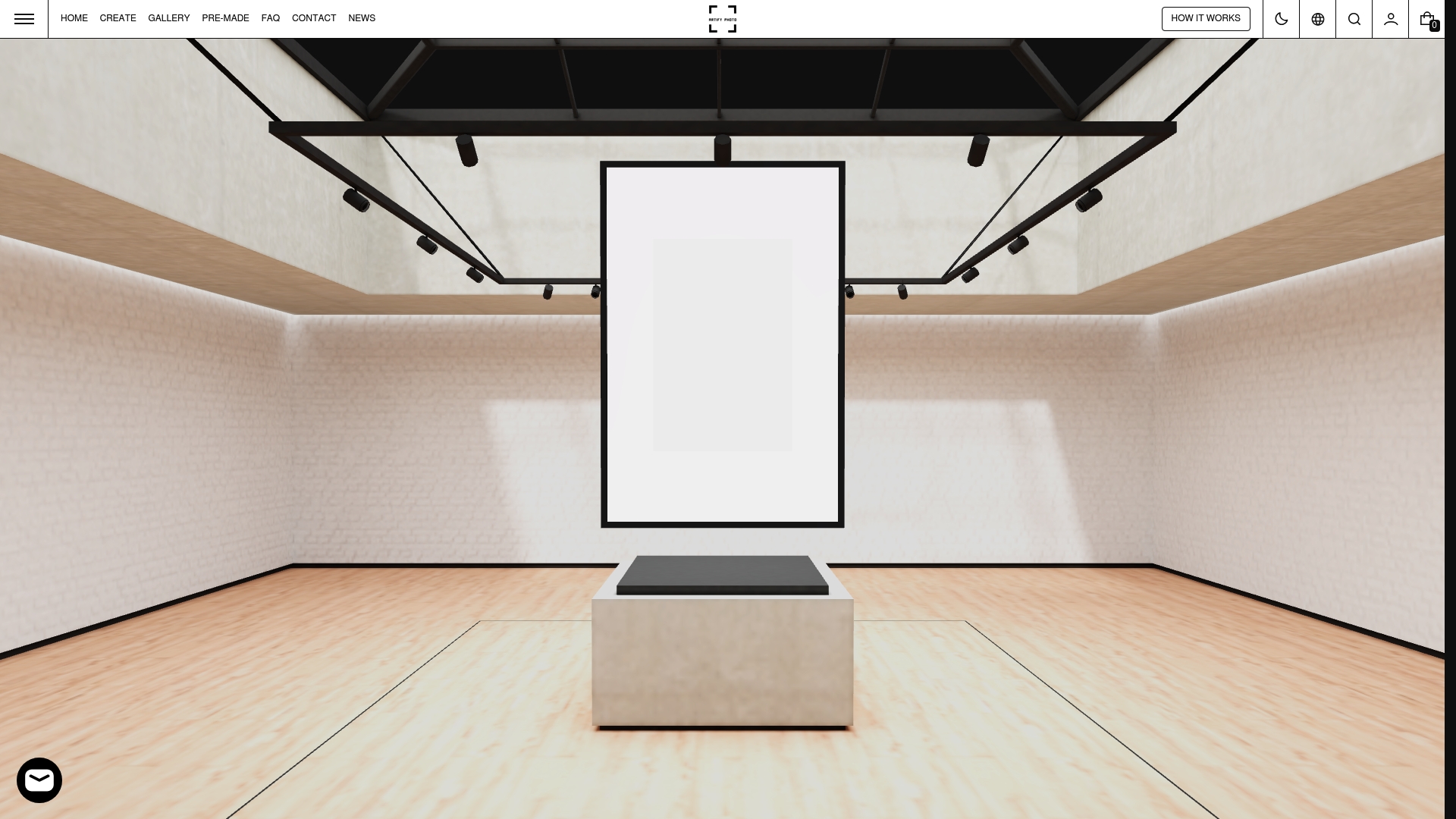
Artify’s pre-made collections are designed specifically for this. Each collection is built around a shared palette, style, and mood so the pieces work together out of the box. You do not need to hunt across dozens of sources and hope the prints align. Browse the full Artify gallery to find artwork that fits your existing space, or use the 3D room preview to see how a piece looks on your wall before you commit. Every print is produced by independent artists and fulfilled on demand, so the quality matches the intention behind the curation.
FAQ
What makes an art display cohesive?
A cohesive art display shares at least one unifying element across all pieces, such as a consistent color palette, matching frame finish, or a clear thematic narrative. Spacing consistency between frames also plays a major role in how unified the display reads.
How far apart should frames be in a gallery wall?
Maintain 2–4 inches between every frame. The exact gap matters less than keeping it consistent across the entire arrangement.
Where should I hang art on the wall?
Hang art so the center of each piece sits at 57–60 inches from the floor. This matches average eye level and is the standard used in professional galleries.
How do I add new art without breaking cohesion?
Match any new piece to the existing color palette or frame finish before purchasing. Art curators recommend evaluating emotional mood first, then checking whether the piece fits the room’s established visual logic.
How long does it take to install a gallery wall?
A complete gallery wall installation takes about two hours when you measure, plan with paper templates, and hang methodically. Skipping the planning phase significantly increases both time and wall damage.