


Yes, you can turn a personal photo into display-quality artwork, and for sentimental or heirloom pieces, Artify.photo is the strongest starting point. Upload a high-resolution image, choose your style, and Artify’s independent artists handle the rest, from the initial rendering to museum-grade giclée printing. If you need something faster, same-day AI digital renders are available, but for a framed oil portrait or archival watercolor you’ll actually hang on the wall for decades, artist-made work is worth the extra time.
Table of Contents
- What photo to art services actually offer: styles, materials, and finishes
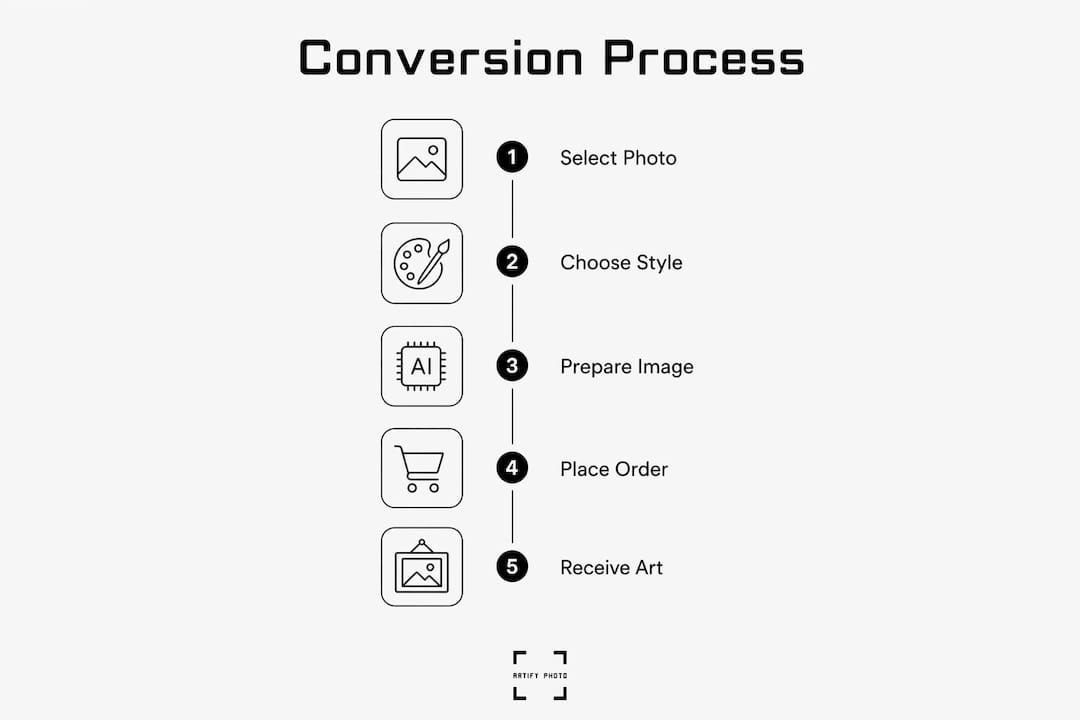
- How does the ordering process work, step by step?
- What does a photo-to-art commission actually cost?
- How do you pick and prepare the best photo for conversion?
- Which trust signals should you check before paying?
- What occasions call for a custom photo-to-art piece?
- Free apps and AI filters vs. professional services: which should you choose?
- Key Takeaways
- What actually makes a photo-to-art commission succeed
- Artify turns your photo into gallery-quality wall art
- Useful sources
- FAQ
What photo to art services actually offer: styles, materials, and finishes
The medium you pick shapes everything, from how the final piece feels in a room to how long it lasts. Here is a quick breakdown of the most common options and when each makes sense.
Common styles and mediums:
- Hand-painted oil — rich texture, deep color, formal feel; best for wedding portraits and traditional living rooms
- Acrylic painting — brighter, faster-drying than oil; works well for bold, contemporary spaces
- Watercolor — soft, translucent, muted; ideal for nurseries, bedrooms, or gifts with a delicate tone
- Pencil or charcoal — timeless and graphic; suits minimalist interiors and black-and-white photography
- Digital painting — clean, scalable, and fast; good for modern or commercial settings
- Pop art or caricature — high-contrast, playful; perfect for birthday gifts and accent walls
- Giclée prints on archival paper or canvas — not a painting style but a print standard; the right output format for any of the above when you want museum-grade longevity
When choosing a style, match the color temperature of your photo to the medium. A warm, golden-hour portrait translates beautifully into oil or acrylic. A cool, overcast outdoor shot often works better as watercolor or pencil. Gallery walls built around a single medium tend to feel more cohesive than mixing oil and pop art on the same wall.
Format options: gallery-wrapped canvas, framed canvas, framed fine-art paper, unframed paper, or a digital file only.
Finishing options: archival giclée inks, protective UV varnish, acid-free matting, and matte vs. gloss surface coating. For gallery-style display, archival giclée printing with pigment-based inks on acid-free paper materially outperforms standard dye-sublimation or low-cost inkjet prints in longevity.
Pro Tip: If your photo has warm amber tones, request a warm-white or cream paper stock for the print. Cool-white paper under warm pigments can make skin tones look slightly gray once framed.
How does the ordering process work, step by step?
The workflow is more straightforward than most buyers expect. Here is what happens from the moment you upload to the moment a package arrives at your door.
- Upload your photo. Choose the highest-resolution version you have. Most services accept JPG or PNG files.
- Select style, size, and finish. Pick your medium (oil, watercolor, digital, etc.), canvas or paper dimensions, and whether you want framing. Artify’s 3D room preview lets you see how a piece looks on your actual wall before you commit.
- Artist assignment or AI render. For hand-painted commissions, the platform matches your order to an independent artist whose portfolio fits your chosen style. AI-first services generate a render in seconds.
- Proof review and revisions. The artist sends a digital proof, typically within a few business days for painted work. Most services allow one to three rounds of revisions. Read the revision policy before you order, not after.
- Production and printing. Once you approve the proof, the piece goes to production. Giclée printing on archival materials takes one to three business days.
- Optional framing. If you selected a frame, it is added at this stage. Artify’s frame options include multiple profiles and finishes to match your decor.
- Shipping and delivery. Orders ship in protective packaging, usually insured and tracked. Expect five to ten business days for standard domestic delivery after production.
Timeline expectations at a glance:
- AI or digital renders: same day to 48 hours for the file; add print production time if ordering a physical piece
- Hand-painted commissions: typically two to four weeks from approval to delivery
- Rush orders: available at most providers for an added fee, but confirm availability before the holiday season
What does a photo-to-art commission actually cost?
Prices vary more than most buyers realize, and the gap between a $30 digital filter and a $400 hand-painted oil portrait is entirely justified once you understand what drives it.
Rough starting ranges (USD):
- Entry-level digital prints (filter-based, standard inkjet): $15–$50
- Premium giclée prints on archival paper or canvas: $80–$250 depending on size
- Hand-painted commissions (oil, acrylic, watercolor): $150–$600+, with large or complex pieces going higher
What pushes the price up:
- Larger canvas or paper dimensions
- Multiple subjects in a single composition
- Hand-painted medium vs. digital output
- Framing (a quality frame can add $50–$150 or more)
- Rush production or expedited shipping
- High level of artist customization or background reconstruction
- International shipping
A practical example: a 16×20-inch watercolor of two people, framed, with a one-week rush, could easily run $350–$500 at a quality provider. The same image as an unframed 8×10 giclée print might be $90–$120.
The smartest budget move for a sentimental piece is to choose archival materials at a modest size rather than going oversized on a standard print. A well-made 11×14 giclée outlasts a cheap 24×36 every time. Premium wall art earns its cost through materials and longevity, not just dimensions.
How do you pick and prepare the best photo for conversion?
Photo quality is the single biggest variable in the final result. A sharp, well-lit image gives an artist or AI system something real to work with. A blurry, compressed snapshot limits what anyone can do.
Photo selection checklist:
- Minimum 1,000 × 1,000 pixels; higher is always better
- Even, natural lighting with no harsh shadows across the subject’s face
- Clean or simple background (easier to isolate the subject)
- Subject clearly visible and in focus
- No heavy Instagram filters or compression artifacts
- Avoid extreme wide-angle distortion on portraits
Common upload specs across professional services:
| Spec | Typical requirement |
|---|---|
| File format | JPG or PNG |
| Max file size | Typically 5–10 MB per file |
| Minimum resolution | 1,000 × 1,000 px |
| Color mode | RGB |
For composition tweaks, most services let you request changes in the order notes: remove a cluttered background, shift color balance, or crop out an unwanted element. Supply two or three reference photos if you want the artist to capture a specific expression or angle.
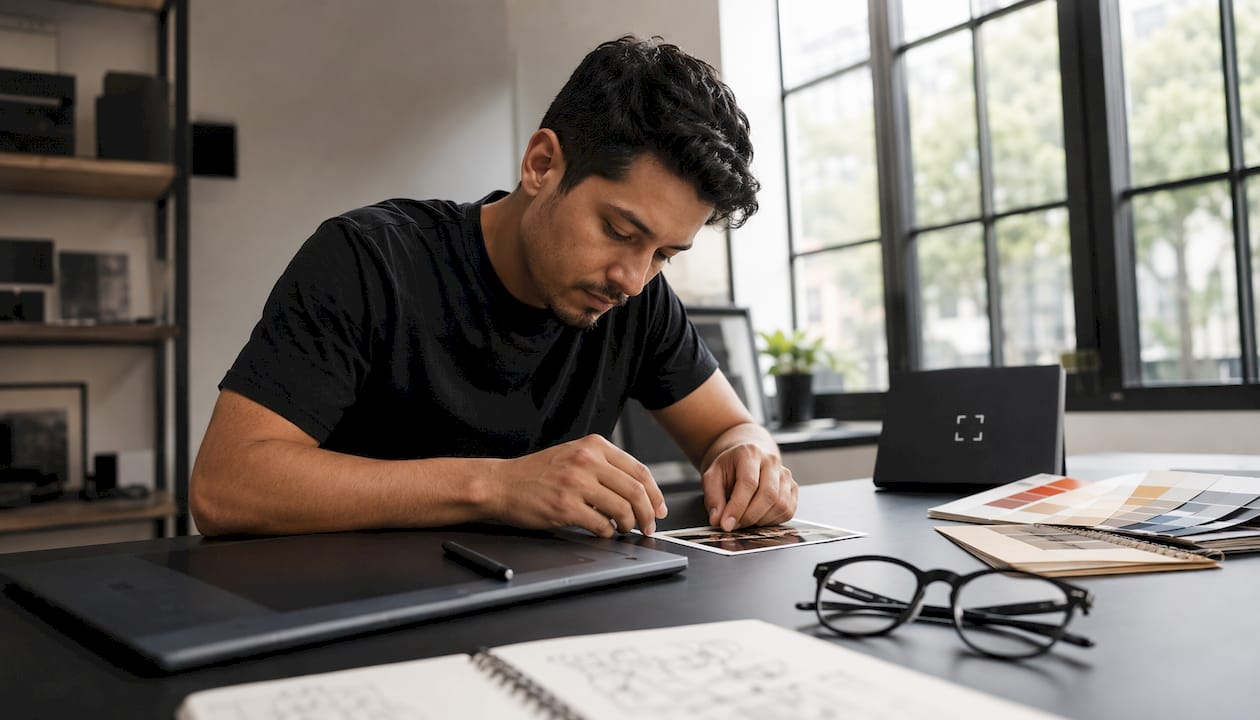
Pro Tip: For an old or low-resolution photo, scanning the original print at 600 DPI often recovers more detail than any digital upscaling app. If the image is genuinely damaged or missing detail, an artist-led restoration typically produces better results than automated tools, because a skilled artist can repaint missing areas in ways no algorithm can.
If you need guidance on file specs before uploading, Artify’s help center covers accepted formats and resolution requirements in plain language.
Which trust signals should you check before paying?
Not every photo-to-art provider delivers what the product page promises. These are the signals that separate reliable services from risky ones.
What to look for:
- Real artist bios with portfolio samples, not just generic “our team” copy
- Before-and-after galleries showing actual customer orders, not stock imagery
- Verified customer reviews with star ratings on a third-party platform
- Clear material descriptions: “archival giclée,” “acid-free paper,” “pigment-based inks”
- Explicit turnaround times stated per medium, not just “ships fast”
- A written refund or satisfaction guarantee with clear terms
- A defined revision policy (how many rounds, what qualifies as a revision)
- Secure checkout with recognized payment processing
Questions worth asking before you order:
- Who specifically will paint my piece, and can I see their portfolio?
- What happens if I’m not satisfied with the proof?
- Do I own the copyright to the final artwork, or does the artist retain any rights?
- What are the exact shipping and insurance terms?
Red flags: no individual artist bios, galleries that look like stock photo collections, no stated refund policy, and turnaround times listed only as “varies.” A clear revision policy and visible artist bios reduce buyer dissatisfaction significantly, because customers who know who made the work and what changes are allowed report far fewer surprise return requests.
What occasions call for a custom photo-to-art piece?
Photo-to-art services fit a wider range of occasions than most people initially consider. The format and style choice shifts depending on the moment.
- Wedding portraits: A framed oil or acrylic on canvas is the classic choice. It reads as a serious, lasting gift rather than a decorative print.
- Anniversary gifts: Watercolor of a meaningful location or the original wedding photo; softer and more romantic than oil.
- Memorial portraits: Pencil or charcoal for a timeless, dignified feel; oil for a more formal tribute.
- Pet portraits: Pop art for playful personality; oil for a regal, gallery-style result. Both are consistently among the most-ordered categories.
- Newborn and family walls: Watercolor or soft digital painting; pairs well with nursery palettes.
- Milestone birthdays: Pop art or caricature for humor; a framed giclée of a meaningful photo for something more sentimental.
- Home décor focal pieces: Large-format canvas in oil or acrylic; works as a room anchor.
- Corporate or client gifts: Digital painting or giclée print of a landmark or branded image; professional and memorable without being overly personal.
For wedding commissions specifically, the source photo matters enormously. Creative wedding photography that captures genuine emotion, rather than stiff posed shots, gives an artist far more to work with.
Free apps and AI filters vs. professional services: which should you choose?
The honest answer depends entirely on what you plan to do with the result.
Free filter-based apps let you apply artistic effects quickly and output a digital file, but they do not produce a physical print unless you pay separately for printing. AI-first platforms advertise 50–80+ art styles and can generate a render in seconds, often with free trials that watermark outputs. Some AI services produce print-ready files up to 4K resolution suitable for home printing. These are genuinely useful for social media content, quick previews, or low-stakes decorating.
The limitation shows up when you want something permanent. Hand-painted commissions carry a different value proposition: organic brushwork, physical texture, and one-of-a-kind creation that justifies premium pricing for sentimental pieces. Professional artists also apply something no algorithm replicates cleanly: the 70/30 creative principle, where roughly 70% of the work reflects the artist’s interpretation and only 30% is direct photographic reference. That is why a hand-painted portrait feels alive in a way a filtered image rarely does.
| Feature | AI / digital filters | Artist-made + archival print |
|---|---|---|
| Speed | Seconds to minutes | Days to weeks |
| Cost | Free to ~$50 | $80–$600+ |
| Customization | Limited to style presets | Full creative direction |
| Physical output | Requires separate printing | Included (canvas, paper, framed) |
| Heirloom value | Low | High |
| Commercial licensing | Varies by platform | Clarify with provider |
Which to pick:
- Last-minute digital gift or social post: AI filter or digital service
- Printable wall art on a budget: archival giclée print from a digital painting
- Keepsake or heirloom: hand-painted commission with archival printing
- Gallery display: artist-made work on museum-grade materials
- Limited budget but permanent piece: modest-size giclée print, archival materials
A smart hybrid approach: use an AI preview to test styles quickly, then commission a hand-painted or archival version once you know the composition works. Artify’s wall art printing review covers the difference between automated digital tools and professional-grade output in more detail.
Key Takeaways
The best photo-to-art result comes from matching your medium to your goal, preparing a high-resolution source image, and verifying trust signals before you pay.
| Point | Details |
|---|---|
| Match medium to purpose | Oils and acrylics suit formal portraits; watercolor fits soft decor; pop art works for playful gifts. |
| Prepare a quality source photo | Minimum 1,000 × 1,000 px, even lighting, clean background, no heavy compression. |
| Budget for what lasts | Archival giclée at a modest size outlasts a cheap oversized print; hand-painted commissions justify premium pricing for heirlooms. |
| Vet the provider | Check real artist bios, verified reviews, a written refund policy, and explicit turnaround times before paying. |
| Artify for artist-made quality | Artify.photo pairs independent artists with museum-grade giclée printing, framing options, and a 3D room preview for buyers who want both craftsmanship and confidence. |
What actually makes a photo-to-art commission succeed
Most buyers focus on style choice and price. Those matter, but the variable that determines whether a commission becomes a treasured object or a disappointment is almost always the relationship between the source photo and the artist’s brief.
A technically perfect photo handed to an artist with no direction produces a technically competent painting. A slightly imperfect photo paired with a clear brief, specific notes about what the subject means, and a reference image or two for mood, often produces something genuinely moving. Artists are not photo-copying machines. The 70/30 creative principle exists because the best commissions are collaborations, not reproductions.
The other thing buyers consistently underestimate is material longevity. A $40 print on standard inkjet paper fades within a few years under normal light exposure. An archival giclée on acid-free paper with pigment-based inks holds color for generations. For a piece meant to mark a wedding, a birth, or a loss, that difference is not a luxury upgrade. It is the whole point.
Artify turns your photo into gallery-quality wall art
Artify.photo connects you directly with independent artists who transform personal photos into original paintings and archival prints, with framing, 3D room previews, and a straightforward revision process built in. You are not buying a filtered image. You are commissioning a piece made by a real artist, printed on museum-grade materials, and delivered ready to hang.
Why buyers choose Artify:
- Independent artist portfolios you can browse before committing
- Museum-grade giclée printing on archival, acid-free materials
- Framed canvas and fine-art paper options with multiple frame profiles
- 3D room preview so you see the piece in your space before it ships
- Clear revision policy and satisfaction guarantee
Browse the Artify gallery to see finished commissions across styles, or go straight to How it Works to start your order.
Useful sources
- How it Works — Artify
- Creating Your Art — Artify help center
- How Artify Works — Artify
- The Ultimate Guide to Turning Your Photo into a Painting — TingaTinga African Art
- Why commission custom art for your home — Artify
- What is personalized art — Artify
- Picsart photo into art effects
FAQ
How much does it cost to turn a photo into a painting?
Hand-painted commissions (oil, acrylic, watercolor) usually start around $150–$600+, with large or complex pieces going higher. Premium giclée prints on archival paper or canvas start at $80–$250 depending on size. Entry-level digital prints from filter-based apps or standard inkjet prints often run $15–$50 or are free for digital files only.
How can I turn a photo into artwork professionally?
Upload a high-resolution photo to a service like Artify.photo, choose your style and size, and an independent artist creates a proof for your approval before the piece goes to print. The full process, from upload to delivery, is covered on Artify’s How it Works page.
What is the 70/30 rule in art commissions?
The 70/30 rule describes how professional artists approach photo-based commissions: roughly 70% of the work reflects the artist’s creative interpretation, while about 30% draws directly from the reference photo. This is why hand-painted pieces feel distinct from a photograph rather than just copying it.
Is there a free app that turns photos into paintings?
Yes. Filter-based apps and AI tools can apply artistic effects to photos at no cost, but they output digital files rather than physical prints. For a finished piece you can frame and hang, you will need either a paid print service or a commissioned artist.
How do I prepare my photo for the best result?
Use the highest-resolution version you have, at least 1,000 × 1,000 pixels, with even lighting and a clean background. Avoid compressed social media exports. If your original photo is damaged or low-resolution, a professional artist restoration usually produces better results than automated upscaling.