


TL;DR:
- Acrylic paint is the most beginner-friendly art medium because it works on many surfaces, dries quickly, and costs less than oils and watercolors. Oil painting provides depth and tradition but is best for experienced artists due to its slow drying and solvent requirements. Watercolor offers luminous effects but demands careful planning and practice to control its transparency.
Popular art mediums are the materials and tools artists use to create visual work, each producing distinct textures, colors, and effects. Acrylic paint, oil paint, and watercolor are the three most widely practiced painting mediums worldwide, but the full range of common art mediums extends to pastels, colored pencils, markers, and digital tools. Choosing the right medium depends on your skill level, budget, and the visual results you want. This guide covers the most used art materials in 2026, with practical advice for hobbyists, students, and aspiring artists at every stage.
1. What are popular art mediums and why do they matter?
An art medium is any material an artist uses to make a mark, build a surface, or create a finished piece. The medium shapes everything: drying time, texture, color depth, and how forgiving the process is when you make a mistake. Acrylic, oil, and watercolor are the most recognized painting methods, but drawing materials like graphite, charcoal, and ink are equally foundational. Understanding the differences between mediums before you commit time and money to one is the single most practical step a new artist can take.
Experts recommend practicing fundamental drawing techniques for 3–6 months before specializing in any single medium. That foundation builds the technical vocabulary, hand control, and observational skills that transfer directly to painting, illustration, and mixed media art. Skipping it is the most common reason beginners plateau early.
2. Acrylic paint: the most versatile medium for beginners
Acrylic paint is the top recommended medium for beginners because it works on almost any surface and costs less than oils or professional watercolors. Acrylic paint works on glass, metal, wood, paper, and plastic, which makes it the most flexible of the popular painting methods. It dries fast, typically within 20–30 minutes, so you can layer colors quickly without waiting days between sessions.
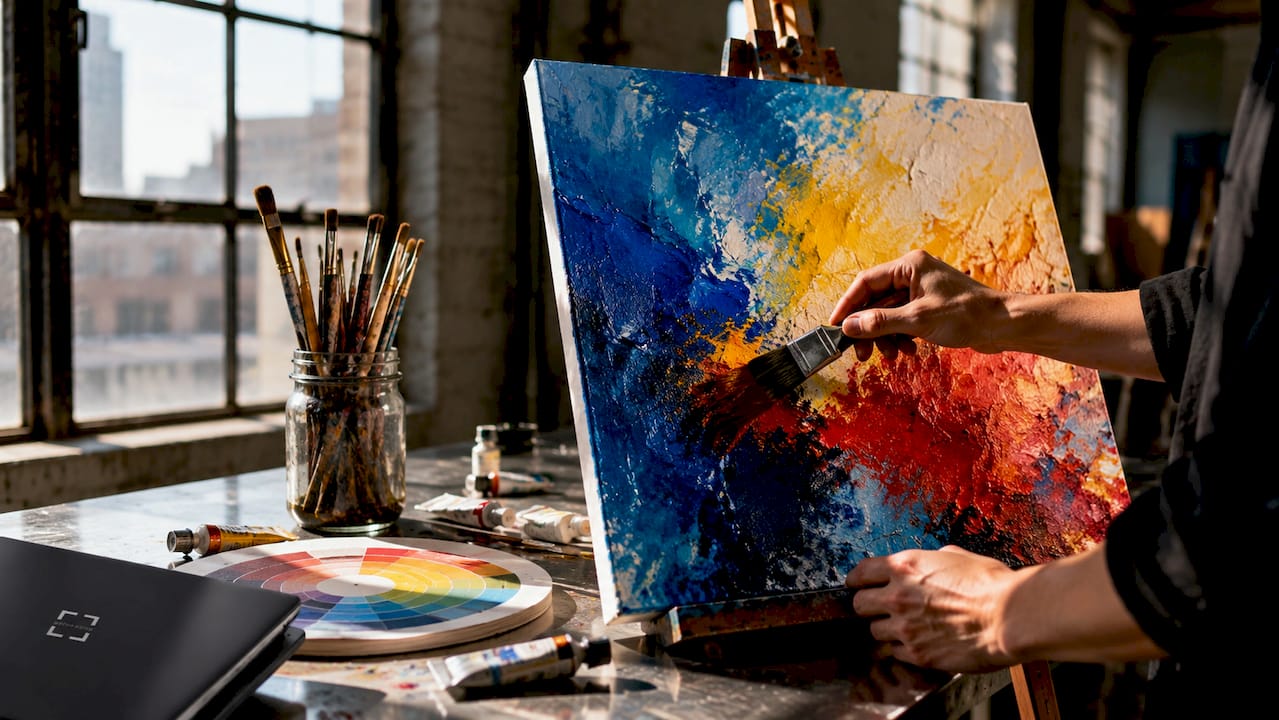
That fast drying time is both an advantage and a constraint. You can build up thick, textured surfaces and experiment with 3D effects by mixing in modeling paste or gel medium. The tradeoff is that blending on the canvas requires speed or a stay-wet palette to keep paint workable. Acrylic also cleans up with water, which keeps workspace requirements minimal.
Key reasons acrylic dominates beginner supply lists:
- Works on nearly any surface without special priming
- Dries water-resistant, making it durable once cured
- Accepts layering for both flat graphic styles and textured impasto effects
- Available in student-grade and professional-grade formulas at most price points
- Mixes with water, gels, and mediums to change consistency and finish
Pro Tip: Start with a limited palette of six colors: titanium white, ivory black, cadmium yellow, cadmium red, ultramarine blue, and burnt sienna. You can mix nearly every color you need from those six, which forces you to learn color relationships fast.
3. Oil painting: the medium of depth and tradition
Oil paint is defined by its slow drying time, which ranges from days to weeks depending on pigment and layer thickness. That slow drying time is what separates oil from every other popular painting method. It lets artists blend colors directly on the canvas, correct mistakes, and build up glazes of transparent color that create luminous depth impossible to replicate with acrylics.
The historical weight of oil painting is real. Vermeer, Rembrandt, and Caravaggio all worked in oil, and the medium’s capacity for rich texture and color depth is why it remains the standard for fine art galleries. That prestige comes with practical demands. Oil requires solvents like mineral spirits or odorless turpentine for cleanup, good ventilation, and patience with drying schedules.
Oil painting rewards artists who slow down. The medium forces deliberate decisions and teaches you more about color mixing than any faster-drying alternative.
Characteristics that define oil as a famous art form:
- Blending window stays open for hours or days, not minutes
- Glazing technique builds transparent layers for jewel-like color depth
- Impasto technique creates thick, sculptural brushwork
- Requires linseed oil, stand oil, or alkyd mediums to modify consistency
- Workspace needs ventilation and dedicated solvent containers
Oil paint is not the best starting point for most beginners. The drying schedule makes it hard to evaluate mistakes quickly, and the solvent requirements add cost and complexity. Most instructors recommend acrylic first, then transitioning to oil once you understand color mixing and composition.
4. Watercolor: transparent, unforgiving, and rewarding
Watercolor is defined by transparency. Pigment suspended in a water-soluble binder sits on the paper surface rather than building up in layers the way oil or acrylic does. That transparency creates luminous washes and delicate gradients that suit landscapes, botanical illustration, and portrait work. The catch is that watercolor offers very little room for error.
Working from light to dark is the core rule of watercolor technique. You cannot paint a light color over a dark one the way you can with opaque mediums. Every wash must be planned before you apply it. Watercolor techniques like wet-on-wet, dry brush, and salt texture methods each create distinct visual effects, but all require practice to control reliably.
Steps that build watercolor competence:
- Practice flat and graded washes on dry paper before attempting any subject matter.
- Learn wet-on-wet technique by dropping pigment into a wet surface and observing how it blooms.
- Use masking fluid to preserve white areas instead of trying to paint around them.
- Work in layers, letting each wash dry completely before adding the next.
- Study value relationships in grayscale before adding color complexity.
Pro Tip: Cold-press watercolor paper at 140 lb weight or heavier prevents buckling and holds water long enough for wet-on-wet work. Cheap paper is the most common reason beginners get unpredictable results.
5. Pastels, colored pencils, and markers: alternative mediums worth knowing
These three mediums are among the most used art materials for illustrators, designers, and artists who want portability and immediacy. Each has a distinct handling quality that suits different subjects and working styles.
Pastels come in two main types: soft pastels and oil pastels. Soft pastels smudge easily, which makes blending fast and intuitive. Oil pastels have a longer drying time and a waxy, textured finish that resists blending but holds color vibrantly. Both types work directly on textured paper or pastel board without any additional medium.
Colored pencils require layering and pressure to blend effectively. They are sold almost everywhere and cost less than most painting supplies, which makes them genuinely accessible. The limitation is time: achieving smooth gradients and rich color saturation takes many careful layers. Artist-grade colored pencils use lightfast pigments that resist fading, while student-grade sets use dye-based colors that shift over time.
Markers come in acrylic, felt-tip, and alcohol-based varieties, each with different blending behavior and surface compatibility. Alcohol-based markers blend smoothly and dry fast, making them the standard for illustration and concept art. Acrylic markers work on non-porous surfaces like glass and metal. Felt-tip markers suit lettering and graphic work but bleed on thin paper.
| Medium | Best for | Key limitation |
|---|---|---|
| Soft pastels | Blended, atmospheric work | Fragile surface, needs fixative |
| Oil pastels | Bold color, textured effects | Difficult to blend finely |
| Colored pencils | Detail work, portability | Slow to build saturation |
| Alcohol markers | Illustration, flat color | Expensive, bleeds through paper |
| Acrylic markers | Mixed media, hard surfaces | Limited blending window |
6. How to choose the right medium for your goals
The right medium matches your skill level, your subject matter, and your working environment. A student in a small apartment without ventilation should not start with oil paint. An artist drawn to loose, expressive landscapes will find watercolor more satisfying than colored pencil. Matching medium to intent prevents the frustration that causes most beginners to quit.
Mastery of color theory, including complementary and analogous color relationships, applies across every medium. Learning it once pays dividends regardless of which material you pick up next. The 2026 wall art trends show a clear shift toward textured, hand-crafted work over flat digital aesthetics, which means physical mediums with visible mark-making are more relevant now than they have been in years.
Practical factors to weigh before choosing:
- Skill level: Acrylic and graphite suit beginners. Oil and watercolor reward artists with foundational skills already in place.
- Budget: Colored pencils and acrylics offer the lowest entry cost. Oil painting requires solvents, mediums, and quality brushes that add up quickly.
- Workspace: Oil needs ventilation. Watercolor needs a flat or tilted surface and good lighting. Pastels create dust that settles on everything nearby.
- Subject matter: Watercolor suits transparent, delicate subjects. Oil suits portraiture and still life. Acrylics handle almost any subject.
- Time available: Fast-drying mediums like acrylic and markers suit short sessions. Oil rewards longer, uninterrupted working periods.
Beginners who attempt too many techniques at once consistently plateau faster than those who master 5–7 fundamental techniques over several months. Pick one medium, commit to it for at least three months, and learn its specific behaviors before adding a second.
Key takeaways
The most effective approach to learning art mediums is to start with one accessible material, build foundational skills deliberately, and expand only after you understand how your chosen medium behaves.
| Point | Details |
|---|---|
| Start with acrylics | Acrylic paint works on the widest range of surfaces and costs less than oils or professional watercolors. |
| Build drawing fundamentals first | Practicing core drawing techniques for 3–6 months before specializing accelerates progress in any medium. |
| Match medium to your environment | Oil needs ventilation and time; watercolor needs planning; acrylics work almost anywhere. |
| Learn color theory early | Complementary and analogous color relationships apply across every medium and improve results immediately. |
| Commit before expanding | Mastering 5–7 techniques in one medium over several months builds a stronger foundation than sampling many at once. |
What the Neo-Renaissance trend tells us about medium choice
The Neo-Renaissance trend in 2026 is the clearest signal I have seen in years that physical mediums are not just surviving the digital era. They are winning it. Brands and collectors are actively seeking work with visible brushstrokes, intentional imperfections, and the kind of textural presence that a screen cannot replicate. That shift changes the calculus for anyone deciding which medium to invest time in.
My honest view is that beginners should start with acrylics and drawing fundamentals, not because they are the most prestigious mediums, but because they are the most forgiving teachers. You learn faster when mistakes are cheap and corrections are immediate. Oil painting and watercolor are worth pursuing once you have a working understanding of value, composition, and color. Jumping to them too early is the most reliable way to get discouraged.
The artists I see growing fastest right now are the ones treating digital tools like Procreate as a complement to traditional skills, not a replacement for them. They sketch on paper, refine digitally, and then return to physical mediums for finished work. That hybrid approach produces artists who are genuinely fluent across formats, which is exactly what the current market rewards.
— Artify
Artify’s curated collections for every art style
Art exploration does not have to start from a blank canvas. Artify’s pre-made collections bring together work from independent artists across styles that reflect the mediums and trends covered here, from textured oil-inspired prints to watercolor-style botanicals and bold acrylic abstracts.
Whether you are building a creative practice or looking for finished art that reflects a specific aesthetic, Artify makes it straightforward to find work that fits your space and your taste. The platform also lets you create your own art by uploading personal photographs and choosing from a range of artistic styles, so your wall reflects something genuinely yours. Every piece ships as a gallery-quality print, ready to hang.
FAQ
What is the easiest art medium for beginners?
Acrylic paint is the easiest starting medium for most beginners. It works on a wide range of surfaces, dries fast, and costs less than oil paint or professional watercolors.
What are the most popular painting methods used today?
Acrylic, oil, and watercolor are the three most widely practiced painting methods. Acrylic dominates beginner and hobbyist practice, while oil and watercolor are more common among intermediate and advanced artists.
How long does it take to learn a new art medium?
Most artists need at least 3–6 months of consistent practice to develop basic competence in a new medium. Experts recommend focusing on 5–7 fundamental techniques within that period rather than sampling broadly.
What is mixed media art?
Mixed media art combines two or more art mediums in a single piece, such as acrylic paint layered with collage, ink, or pastel. The approach lets artists use the strengths of each material to create effects no single medium can achieve alone.
What are the trending art styles in 2026?
The Neo-Renaissance trend defines 2026, favoring hand-drawn work with visible textures and intentional imperfections over flat digital aesthetics. Abstract and minimalist styles also remain strong, particularly for home decor applications.