


Every gallery owner and art collector wants spaces that feel authentic and captivating. The challenge is moving beyond generic wall decor to art that speaks directly to your identity. Custom art transforms ordinary galleries into vibrant environments, echoing personal style and engaging visitors in meaningful ways. By embracing site-specific design and audience-driven creativity, you can build a collection that reflects evolving cultural cues and stands apart from mass-produced alternatives.
Table of Contents
- Defining Custom Art In Modern Galleries
- Key Types And Forms Of Custom Gallery Art
- How Custom Art Enhances Gallery Experience
- Custom Art’s Impact On Collectors And Buyers
- Navigating Costs, Trends, And Legal Concerns
Key Takeaways
| Point | Details |
|---|---|
| Custom Art vs. Mass-Produced Art | Custom art enhances visitor engagement and emotional resonance by aligning with specific spaces and audiences, unlike mass-produced alternatives. |
| Diverse Forms of Custom Art | A variety of artistic forms—from traditional painting to contemporary digital installations—can be tailored to enhance thematic goals and visitor experiences. |
| Impact on Collectors | Collectors are increasingly drawn to custom pieces that reflect personal identity and cultural status, shaping market dynamics through thoughtful acquisitions. |
| Navigating Costs and Legal Considerations | Successful galleries should address rising costs and legal complexities by diversifying revenue streams and seeking expert guidance on contracts and regulations. |
Defining Custom Art in Modern Galleries
Custom art in modern galleries isn’t one-size-fits-all. It’s art created with your specific space, audience, and vision in mind.
Unlike mass-produced prints or generic wall decor, custom art responds directly to context. Artists shape creations based on exhibition environments, blending traditional craftsmanship with modern conceptual thinking. This means your gallery space becomes part of the artistic statement itself.
Here’s what sets custom art apart:
- Site-specific design tailored to your gallery’s unique layout and lighting
- Audience engagement that reflects how visitors actually interact with the space
- Artistic intention that aligns with your curatorial vision or personal aesthetic
- Contemporary relevance connecting to current cultural conversations
Modern galleries define custom art as a contextual phenomenon. It emerges from cultural cues, audience interactions, and evolving societal values. Your custom art doesn’t exist in isolation—it lives within cultural, behavioral, and natural selection processes that shape how people experience it.
Think about what this means for collectors. When you commission a custom framed print or canvas wrap from your own photography, you’re not just decorating. You’re creating a fluid, continuously evolving piece that speaks to who you are right now.
Custom art transforms a gallery from a passive display space into an active conversation between artist, viewer, and environment.
The beauty of this approach lies in flexibility. Your custom art can shift meaning as your collection grows, as your space changes, or as new perspectives emerge. It’s not locked into one interpretation.
For gallery owners, this means deeper visitor engagement. Collectors feel genuine connections to pieces created specifically for their aesthetic world—not mass-produced alternatives that could hang anywhere.
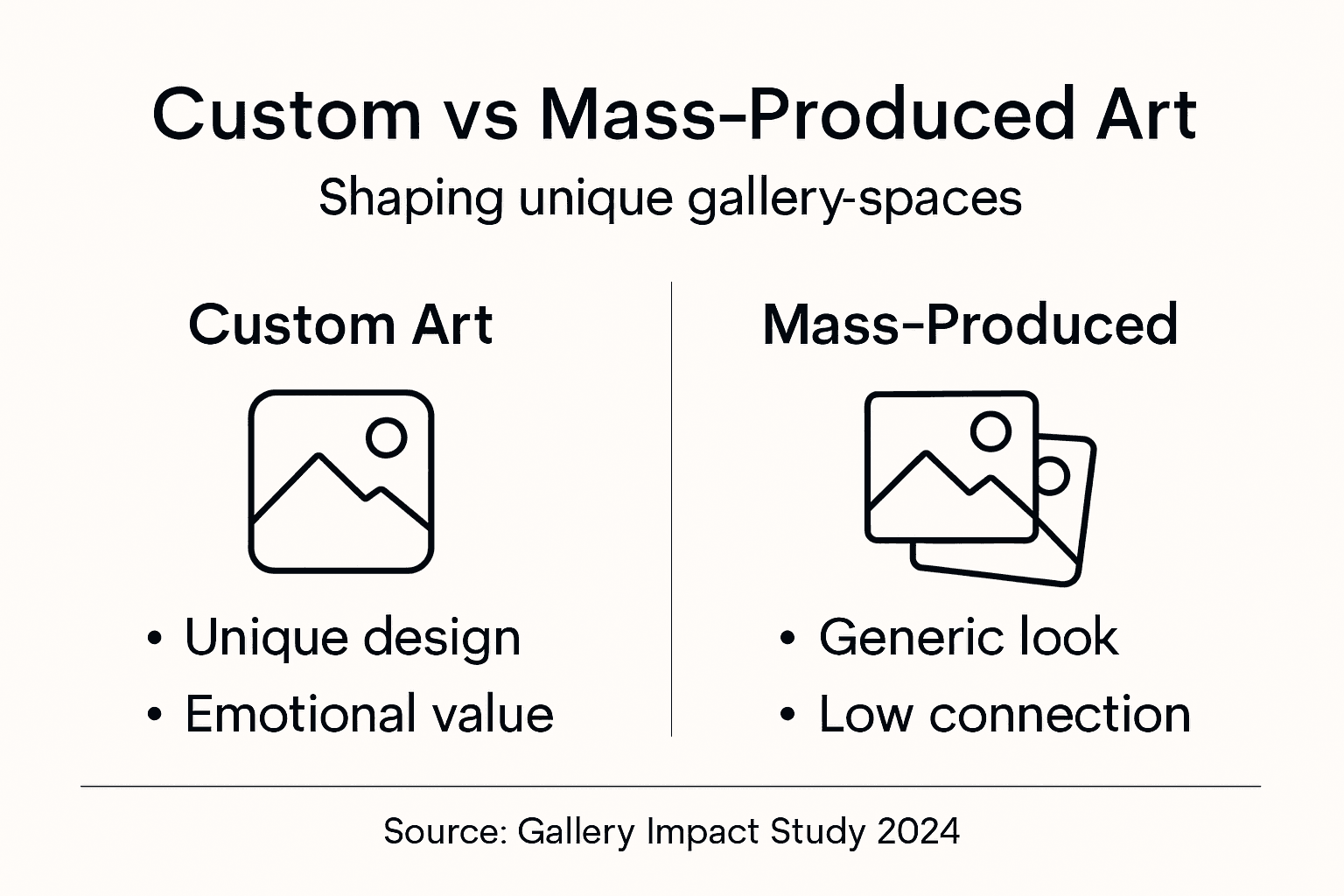
Here’s a summary of key differences between custom and mass-produced art in gallery settings:
| Aspect | Custom Art | Mass-Produced Art |
|---|---|---|
| Artistic Process | Tailored to space and vision | Generic and standardized |
| Visitor Impact | Enhanced engagement | Minimal involvement |
| Cultural Context | Responds to trends and cues | Unchanging, isolated |
| Collector Value | Personal and dynamic | Decorative, impersonal |
Pro tip: When commissioning custom work, share your gallery’s architectural details and lighting conditions with the artist or designer; these contextual factors directly influence how the finished piece will perform in your specific space.
Key Types and Forms of Custom Gallery Art
Custom gallery art comes in many forms, each offering distinct ways to engage your audience and express your curatorial vision.
The range spans from traditional to cutting-edge. Painting, sculpture, and printmaking form the foundation, while contemporary dimensions like conceptual art, installation, and digital media expand possibilities. Custom art in galleries comprises diverse types and forms that challenge conventional art classifications.
Here are the major forms you’ll encounter:
- Painting and drawing - Traditional works offering color, texture, and direct artistic expression
- Sculpture - Three-dimensional pieces that command physical space and viewer perspective
- Mixed media - Combines multiple materials for layered, complex visual experiences
- Digital art - Computer-generated or digitally manipulated works with interactive potential
- Installation art - Large-scale, immersive environments that transform entire gallery spaces
- Performance art - Live, temporal works that engage audiences through action and presence
Each form brings unique value. Commissioned works and site-specific installations resonate stronger because they’re designed explicitly for your environment. A canvas wrap of your own photography feels personal. An installation responds to your gallery’s architecture.
Hybrid forms are increasingly popular. Think combining digital projections with physical sculptures, or pairing traditional paintings with interactive elements. These blur boundaries and invite deeper visitor engagement.
Your gallery’s thematic goals shape which forms work best. A corporate space might favor abstract sculpture and modern digital art. A boutique collector’s gallery could showcase intimate framed prints alongside mixed media pieces that tell personal stories.
The most impactful custom gallery art matches the form to both your space and the emotional response you want to create.
When selecting forms for your collection, consider how visitors will move through the space. Immersive installations demand central placement. Delicate prints benefit from focused viewing areas. Sculpture needs breathing room.
Pro tip: Start with one or two dominant art forms that align with your gallery’s identity, then layer complementary forms around them; this creates visual cohesion while maintaining viewer interest throughout the space.
How Custom Art Enhances Gallery Experience
Custom art doesn’t just fill walls. It transforms how visitors experience your entire gallery space.

When art is tailored to your specific environment, something shifts. Custom art creates immersive and emotionally resonant environments that engage visitors far beyond passive observation. People linger longer, feel deeper connections, and leave with stronger memories.
Here’s what happens when you invest in custom art:
- Stronger emotional reactions compared to generic, mass-produced displays
- Deeper understanding through contextual presentation and curatorial information
- Meaningful visitor engagement that transforms casual browsers into invested participants
- Memorable experiences that encourage return visits and word-of-mouth recommendations
- Personal connection to pieces that reflect your gallery’s unique identity
The curatorial context matters enormously. When you pair custom art with thoughtful explanations about why it exists in your space, visitors appreciate it at a completely different level.
Tech-savvy audiences expect more today. Extended reality technologies and interactive design methods blend physical and digital experiences, creating multilayered sensory engagement. A framed print becomes part of an interactive story. A canvas wrap pairs with augmented reality details.
This isn’t gimmicky. It’s authentic engagement. Interactive custom art attracts younger audiences, tech-forward collectors, and curious minds seeking participatory experiences rather than static observation.
Custom art stops being decoration and becomes conversation when it’s designed specifically for your space and audience.
Consider visitor flow. Custom installations guide people through your gallery intentionally. Framed prints create focal points that naturally draw eyes. Each piece works together as a unified experience rather than disconnected artwork.
Your gallery becomes a destination, not just a place to hang art. Visitors feel your curatorial vision. They sense intentionality. They experience something they cannot replicate by scrolling through an online catalog.
This emotional resonance translates directly to sales. Collectors invest in art they feel connected to, and custom pieces create that connection authentically.
Pro tip: Include QR codes or small cards next to custom pieces explaining the backstory—why this artwork matters, how it connects to your gallery’s theme, or the artist’s intention; this contextual layer significantly deepens visitor appreciation and engagement.
Custom Art’s Impact on Collectors and Buyers
Collectors don’t just buy art. They invest in pieces that reflect who they are and what they value.
Custom art resonates because it aligns with personal identity. Collectors prefer artworks reflecting their values and establishing cultural status through thoughtful acquisition choices. When you commission a custom piece or select curated work for your collection, you’re making a statement about yourself.
Your collector profile speaks volumes. Here’s what drives collection decisions:
- Personal identity - Art that mirrors your aesthetic and worldview
- Cultural capital - Pieces that signal taste and sophistication to others
- Investment potential - Works positioned to appreciate over time
- Emotional attachment - Art you genuinely love spending time with
- Social responsibility - Supporting artists and galleries you believe in
Market dynamics shift based on collector choices. When collectors favor specific artists or styles, pricing adjusts and careers are validated. Your purchasing power shapes the entire art ecosystem.
Collectors enable artists’ practices and influence market valuations while fostering gallery sustainability. You’re not simply acquiring objects—you’re participating in an interconnected system that supports creative communities globally.
Emotional attachment matters as much as financial strategy. The best collections blend heart and head. You buy pieces that make you feel something while understanding their long-term value potential.
The strongest collectors approach acquisitions with clarity about motivation—whether they’re driven by passion, investment, status, or community support—and build collections aligned with those authentic priorities.
Private collectors also shape public access through loans and donations. Museums rely on collectors to share masterpieces with broader audiences. Your collection can influence cultural conversations far beyond your gallery walls.
Understanding your own collector motivations helps you build authentically. Are you seeking financial returns? Cultural expression? Supporting emerging artists? All of the above? Clarity here guides smarter acquisitions that feel meaningful rather than obligatory.
Pro tip: Document your collection’s story—why you acquired each piece, what it means to you, and its provenance—this narrative adds depth to your collection and increases its cultural and financial value for future owners or institutions.
Navigating Costs, Trends, and Legal Concerns
Running a gallery requires balancing real expenses with evolving market dynamics. Understanding both costs and legal requirements protects your business and reputation.
Operational expenses have climbed significantly. Galleries today face rising costs and shifting market pressures requiring strategic approaches for sustainability. Custom framing, climate-controlled storage, insurance, and staffing drain budgets fast.
Successful galleries diversify revenue streams and adapt to changing collector behaviors. Key cost-management strategies include:
- Digital and hybrid exhibition models expanding reach without proportional overhead increases
- Strong client relationships reducing marketing costs through referrals and repeat business
- Technology integration for efficient operations and inventory management
- Strategic partnerships with artists and complementary galleries
- Flexible pricing models that accommodate different collector budgets
Younger audiences expect online access and interactive experiences. Building hybrid galleries isn’t optional anymore—it’s essential for survival and growth.
Legal matters demand serious attention. Galleries navigate ownership rights, copyright issues, and import/export regulations that vary by jurisdiction. Get this wrong and you face significant liability.
Essential legal protections include:
- Clear contracts defining consignment terms, loan agreements, and artist rights
- Provenance documentation verifying artwork authenticity and ownership history
- Comprehensive insurance covering theft, damage, loss, and authenticity disputes
- Due diligence procedures for acquiring and selling works
- Cultural heritage compliance understanding restrictions on certain pieces
Consider your gallery’s legal structure. Liability varies based on whether you operate as a sole proprietor, LLC, or corporation. Each structure offers different protections and tax implications.
Galleries that invest upfront in solid legal frameworks and comprehensive insurance avoid costly disputes and protect both artists and collectors from unnecessary risk.
Copyright concerns arise especially with custom art from your own photography. Understand usage rights before licensing or selling. Intellectual property issues can derail projects quickly.
Stay updated on market trends. Collectors increasingly seek sustainability practices, digital innovation, and artists with diverse backgrounds. Galleries responding to these shifts attract broader audiences and build loyalty.
Pro tip: Consult with an art law specialist to draft customized contracts for your gallery operations; this upfront investment prevents expensive legal battles and clarifies expectations for everyone involved in your art ecosystem.
The following table highlights cost, trend, and legal considerations for modern galleries:
| Concern | Challenge | Strategic Response |
|---|---|---|
| Rising Expenses | Higher overhead and storage | Diversify revenue streams |
| Market Shifts | Changing collector demands | Hybrid and digital models |
| Legal Requirements | Complex art contracts | Consult specialists |
Elevate Your Gallery with Custom Wall Art Tailored to Your Space
The article highlights the power of custom art to transform gallery spaces into immersive, meaningful experiences that resonate emotionally with visitors and collectors. You want to overcome challenges like generic decor and engage your audience with site-specific designs that reflect your unique vision and environment. Custom art is not just decoration but a living conversation that evolves with your space.
At Artify, we understand these goals. We specialize in creating premium custom wall art including framed prints and canvas wraps that turn your own photography into museum-quality pieces. This lets you shape your gallery’s identity and captivate visitors with artwork designed exclusively for your setting. Our solutions help you create personal and dynamic collections that deepen visitor connection and elevate your space.
Discover how you can bring your vision to life through custom framed prints and bespoke canvas wraps ready to install.
Start enhancing your gallery’s emotional appeal and collector value today. Visit Artify now to transform your photos into gallery-grade custom art that inspires and engages every visitor. Don’t settle for ordinary when your gallery can be extraordinary.
Frequently Asked Questions
What is custom art in galleries?
Custom art in galleries refers to artwork created specifically for a particular space, audience, or vision, responding directly to the context of the gallery environment.
How does custom art enhance visitor engagement in galleries?
Custom art enhances visitor engagement by creating immersive and emotionally resonant experiences, encouraging visitors to interact more deeply with the artwork and the overall gallery space.
What are the key differences between custom art and mass-produced art in a gallery setting?
Key differences include the artistic process, with custom art being tailored to specific spaces and visions, while mass-produced art is generic. Custom art also fosters meaningful visitor engagement, while mass-produced pieces often result in minimal involvement.
What types of custom art can be showcased in a gallery?
Types of custom art include painting, sculpture, mixed media, digital art, installation art, and performance art, allowing for diverse ways to express curatorial vision and engage audiences.