


How wall art plays a role in branding
Wall art is one of the most direct ways a brand communicates who it is before anyone says a word. The moment you walk into a space, the images on the walls tell you whether this place values creativity, stability, warmth, or edge. That’s not decoration. That’s environmental branding.
Research supports this. Corporate murals and large-scale art installations help translate abstract brand values into visible, felt experiences. Employees and visitors absorb those signals instantly, and those first impressions shape every interaction that follows.
Here’s what wall art actually does for a brand:
- Communicates personality through style, subject matter, and scale before any verbal exchange
- Builds emotional connection by creating spaces that feel intentional and human
- Reinforces culture by making a company’s values visible every single day
- Signals authenticity to clients, guests, and potential hires who read physical spaces as brand statements
Artify brings this thinking into the home. Its platform lets you transform personal photographs into gallery-quality wall art, using 3D room previews and personalized framing to make sure every piece fits your space and your story.
Table of Contents
- How wall art communicates and strengthens brand identity
- Psychological and marketing effects of art on brand perception
- How to select personalized wall art that aligns with your brand
- Expert insights on texture, trends, and the future of wall art in branding
- How to measure the impact of wall art on brand recognition
- Real-world examples of wall art branding done right
- Guidelines for maintaining brand consistency through wall art
- Key Takeaways
- FAQ
How wall art communicates and strengthens brand identity
Walls make up more than 60 percent of visible surface area in any given room. That’s the largest canvas a brand has in any physical space, and most brands leave it underused.
Custom murals and curated art do something a logo wall cannot: they show personality. A financial firm that commissions geometric abstractions signals precision and stability. A creative agency that chooses bold street art signals disruption and risk. These aren’t arbitrary aesthetic calls. They’re brand statements that visitors read before the first handshake.
- Style speaks first. Graffiti artists signal urban energy. Canvas painters suggest refinement. Illustrators communicate narrative focus and approachability.
- Subject matter carries meaning. A nonprofit painting its founding story across a conference room wall makes its mission tangible, not just documented.
- Placement matters. Reception areas set first impressions. Breakout spaces reinforce culture. Hallways create visual continuity across a space.
Artist-brand collaborations add another layer. Research shows that partnering with an artist whose personality matches a new target demographic shifts brand perception among that group without alienating existing customers. It’s one of the few brand moves that expands reach without diluting identity.
Pro Tip: When selecting art for a branded space, treat the wall as primary storytelling real estate. Ask what a first-time visitor would conclude about your values from the art alone, before reading a single word.
Artify’s custom art options give you the flexibility to align pieces with any branding direction, whether that’s a personal photograph rendered in a fine art style or a curated collection that echoes a specific visual identity.
Psychological and marketing effects of art on brand perception
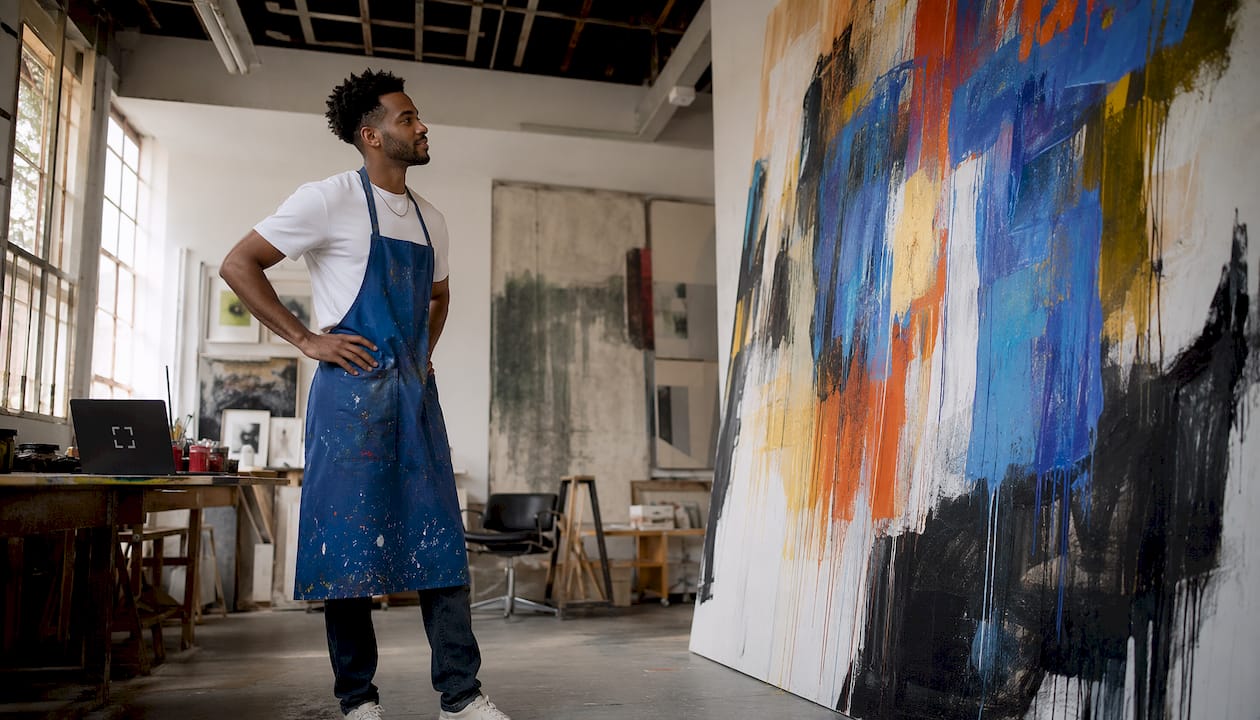
The art infusion effect is the mechanism behind why art-adjacent brands feel more premium. When visual art appears alongside a product or within a branded space, consumers transfer their perception of the art’s quality and luxury onto the brand itself. Across three experiments using works by Vermeer, van Gogh, and da Vinci, brand affect strongly mediated this effect, and it was strongest for utilitarian products.
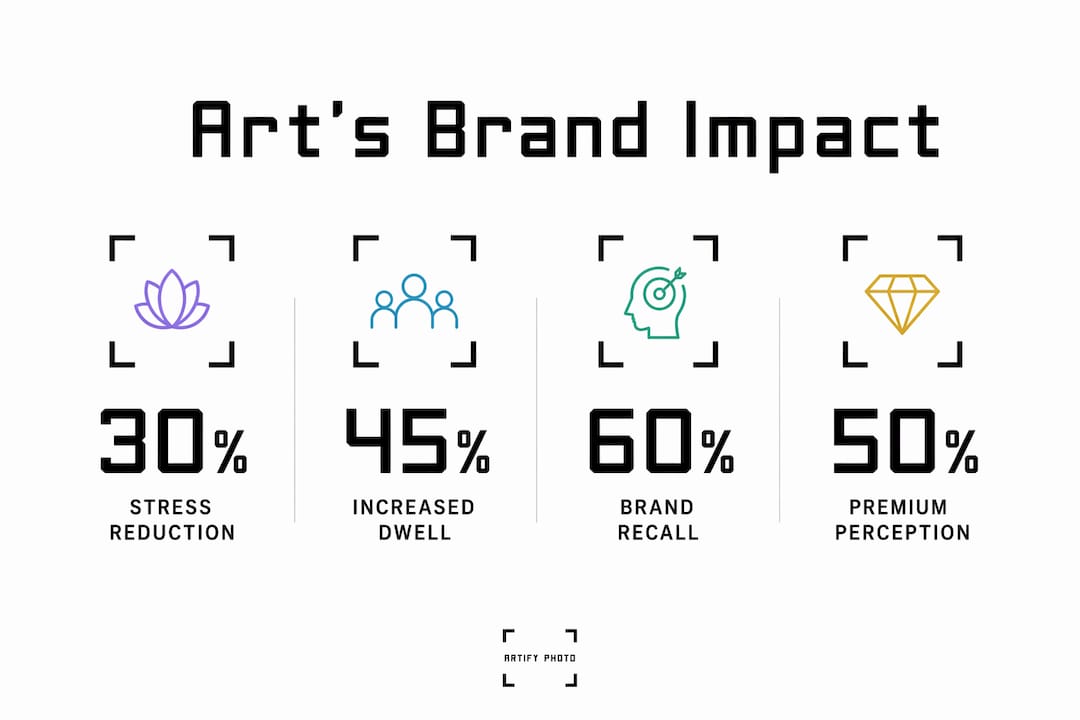
An experimental study of 219 participants found that advertising campaigns incorporating artistic elements produced higher consumer engagement and purchase intent by enhancing perceived brand authenticity.
| Effect | What the research shows |
|---|---|
| Stress reduction | Artwork helps reduce workplace stress according to many employees |
| Creativity boost | Artwork is reported to increase creativity and innovation by employees |
| Productivity | Art-enriched environments are associated with productivity and well-being improvements |
| Brand value | Art association raises perceived brand value and willingness to pay |
Visual art also shapes behavior in subtler ways. Formal art cues signal a brand’s culture and formality level, influencing how visitors carry themselves and interact within a space. A curated gallery wall in a boutique hotel lobby tells guests this is a place that takes detail seriously, and they respond accordingly.
How to select personalized wall art that aligns with your brand
Choosing art for a branded space isn’t about finding something that looks good. It’s about finding something that means something, and placing it where it does the most work.
- Start with your brand values. If your brand centers on warmth and community, nature photography or warm-toned abstract prints will reinforce that. Cold, geometric minimalism sends a different signal entirely.
- Match art style to your audience. A younger, design-forward demographic responds differently than a professional services clientele. The art should speak their visual language.
- Think about scale. Small, scattered pieces read as afterthoughts. Large-format or wall-spanning installations create focal points that anchor a room and a brand narrative.
- Use personal photographs strategically. A family home or personal studio gains authenticity and emotional depth from art built around real memories. Artify’s platform turns those photographs into custom gallery prints that feel curated, not casual.
- Avoid random decoration. Art that has no relationship to your brand values creates visual noise. Every piece should earn its place by reinforcing something specific.
- Plan for change. Modular or replaceable art elements let a brand evolve without committing to permanent installations that may feel dated in three years.
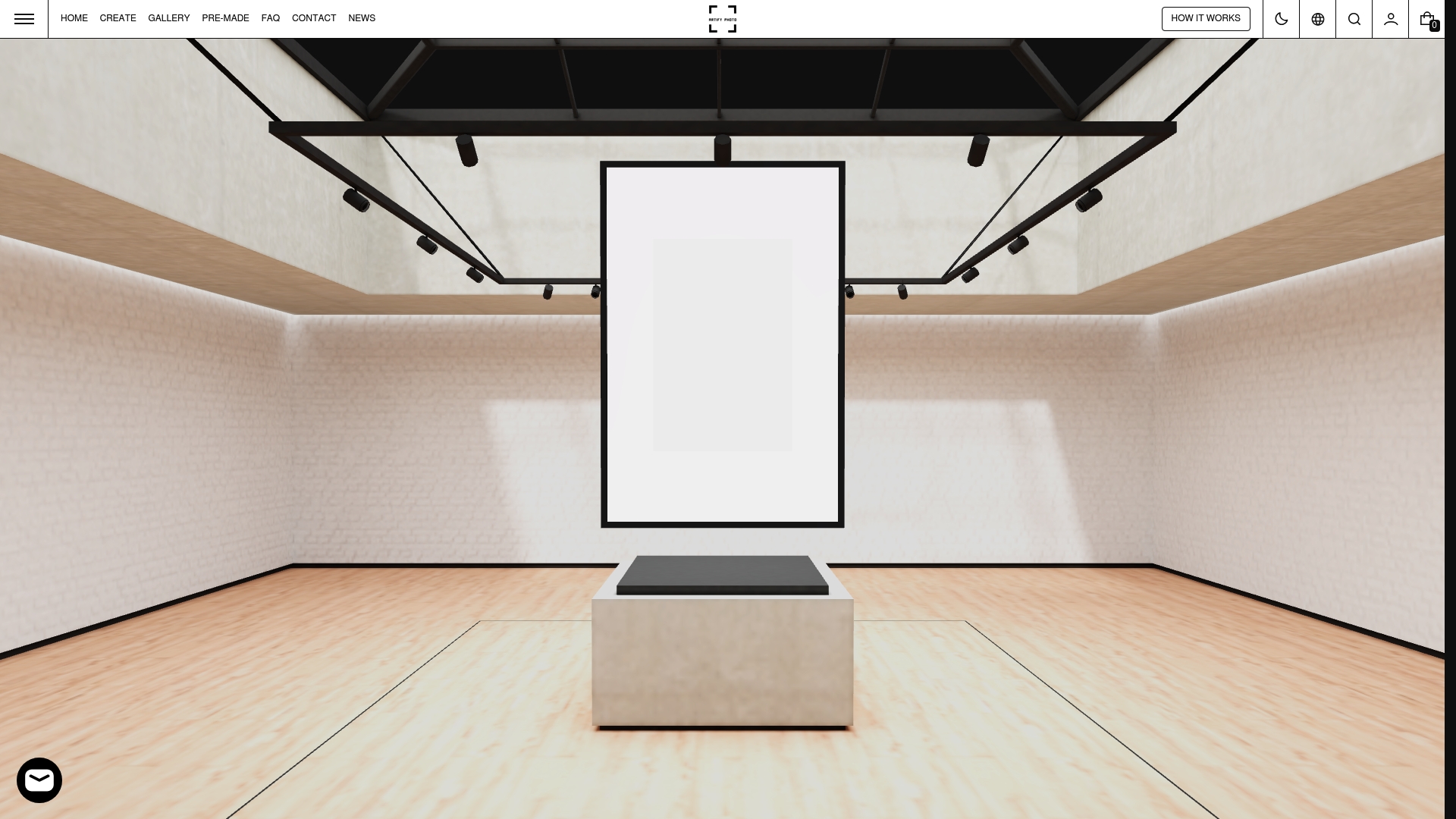
Pro Tip: Use Artify’s 3D room preview feature before committing to a piece. Seeing the art in your actual space, at scale, prevents the most common mistake: choosing something that works in isolation but clashes with the room’s proportions and light.
For curated starting points, Artify’s pre-made collections offer cohesive sets designed around specific moods and aesthetics, which makes it easier to build a branded environment without starting from scratch.
Expert insights on texture, trends, and the future of wall art in branding
The shift happening right now in commercial and residential design is away from flat-printed art and toward pieces with physical depth. Texture and materiality are growing priorities because they add sensory engagement that a screen or a logo simply cannot replicate.
- Texture creates presence. Dimensional, tactile wall pieces register differently than flat prints. They invite touch, hold light differently throughout the day, and make a space feel considered rather than assembled.
- Digital and interactive installations are entering branded environments as immersive experiences. A restaurant wall that responds to ambient sound or a retail display that shifts with the season creates a brand moment that guests remember and share.
- AI-generated art is becoming a practical tool for brands that need custom visuals at scale. The key, as branding researchers note, is not the style itself but how well the art connects abstract brand values to a felt user experience.
- Balancing traditional and modern styles keeps a brand grounded. A space that mixes a hand-painted mural with contemporary photography signals both heritage and forward momentum.
- Scalability matters long-term. Art that can be updated, expanded, or replaced as a brand evolves is a better investment than a single permanent installation that locks in a visual identity.
Exploring current wall art trends helps you stay ahead of what resonates with consumers right now, particularly as experiential design becomes the standard expectation in both retail and home environments. For broader context on how interior design brands approach art curation across different spaces, the range of approaches is wider than most people expect.
How to measure the impact of wall art on brand recognition
Measuring art’s effect on a brand isn’t as abstract as it sounds. The signals are concrete, you just have to know where to look.
Social sharing is the most immediate metric. A mural or statement installation that guests photograph and post generates organic reach that no paid campaign can replicate. Track how often your space appears in tagged posts and stories.
Dwell time tells you whether the environment is holding attention. Longer dwell times in art-rich spaces correlate with higher purchase intent in retail and stronger guest satisfaction scores in hospitality.
Employee surveys capture internal brand perception. Ask directly whether the physical environment reflects company values. The Gensler Global Workplace Survey found that 86% of workers prefer an inspiring, creative environment over a plain office, and that preference shows up in retention data.
Brand recall studies run before and after an art installation can quantify shifts in how visitors describe a brand’s personality. The language people use to describe a space, and by extension the brand, changes measurably when art is present.
Real-world examples of wall art branding done right
Facebook’s Menlo Park headquarters features murals by approximately fifteen local artists across a 430,000-square-foot campus. The result is a space that reads as a creative community rather than a corporate facility, which is exactly the brand signal Facebook wanted to send to both employees and visitors.
Eight Sushi & Asian Kitchen worked with local artists to commission mixed-media pieces and a bar-front mural that visually interprets the symbolism behind the number eight. The art doesn’t just decorate; it drives the atmosphere and gives guests a story to carry out the door.
Mellow Mushroom’s Lynchburg, Virginia location used a custom mural woven directly into the interior concept to amplify the franchisee’s rockstar personality. It became one of the most photographed moments in the restaurant, generating ongoing organic social content at zero additional cost.
In each case, the art was commissioned with a specific brand intention, not selected to fill empty wall space.
Guidelines for maintaining brand consistency through wall art
Consistency doesn’t mean uniformity. It means every piece of art in a space feels like it belongs to the same story.
Establish a visual language first. Define the color palette, mood, and subject matter that align with your brand before selecting any individual piece. This prevents the common mistake of accumulating art that looks fine in isolation but creates a disjointed environment overall.
Apply it across zones, not just focal points. Reception areas, meeting rooms, hallways, and breakout spaces each offer an opportunity to reinforce the brand. A consistent visual thread across all of them creates an environment that feels intentional from every angle.
Audit regularly. Art that made sense for a brand three years ago may no longer reflect where the brand has gone. A quarterly or annual review of what’s on the walls, and whether it still fits, prevents gradual drift from the brand’s current identity.
Choose flexible formats. Modular prints and replaceable panels let you update individual pieces without overhauling an entire space. This is especially practical for growing brands whose visual identity is still evolving.
For home environments, Artify’s full artwork collection offers pieces across a wide range of styles, making it straightforward to build a cohesive visual environment that reflects a personal brand or aesthetic with gallery-level quality.
Key Takeaways
Wall art is the largest physical canvas a brand controls, and the brands that treat it as a communication tool rather than decoration consistently build stronger emotional connections with the people who move through their spaces.
| Point | Details |
|---|---|
| Art communicates before words | Walls make up over 60% of visible room surface, making art the first brand signal visitors receive. |
| The art infusion effect is real | Art association raises perceived brand value and willingness to pay, strongest for utilitarian products. |
| Productivity and well-being improve | Art-enriched environments improve productivity and well-being, enhancing workplace experience. |
| Consistency requires a visual language | Define color palette, mood, and subject matter before selecting individual pieces to avoid a disjointed space. |
| Flexibility protects long-term brand fit | Modular, replaceable art elements let a brand evolve without committing to permanent installations. |
FAQ
How does wall art communicate brand identity?
Wall art signals brand personality through style, subject matter, and scale before any verbal communication occurs. A geometric abstract piece reads differently than a nature mural, and those differences map directly onto how visitors perceive the brand.
What is the art infusion effect?
The art infusion effect is the transfer of luxury and quality perceptions from visual art onto the products or brands associated with it. Research across three experiments found that brand affect strongly mediates this effect, particularly for utilitarian products.
How can I measure whether wall art is improving brand recognition?
Track social sharing of your space, monitor dwell time, run employee surveys on whether the environment reflects company values, and conduct brand recall studies before and after an installation to capture measurable shifts in perception.
Does the style of art matter, or just its presence?
Style matters significantly. The specific art style signals distinct brand traits: geometric abstraction suggests precision, street art signals disruption, and nature imagery communicates care and approachability. The fit between style and brand values determines whether the art reinforces or undermines the brand message.
How does Artify help with personalized wall art for branding?
Artify transforms personal photographs into gallery-quality custom prints, with 3D room previews and personalized framing options that let you see exactly how a piece will look in your space before you commit.