


TL;DR:
- Art presentation significantly influences viewer emotions, market value, and engagement by shaping perception through framing, lighting, and labels. Properly curated displays, early planning, and professional handling enhance both the experience and the value of artworks, creating stronger connections and higher sales. Investing in presentation from the start ensures artwork reaches its full potential and appeal in both gallery and home environments.
Art presentation is the strategic process of displaying artwork to shape how viewers perceive, feel, and connect with it. The role of art presentation extends far beyond aesthetics. It determines whether a piece moves someone emotionally, commands a higher price at auction, or gets ignored entirely. Research from 2026 confirms what gallerists have known for decades: framing, lighting, placement, and exhibition text are not finishing touches. They are core to the art experience itself.
How does art presentation influence viewer engagement?
Art presentation directly controls the emotional experience a viewer has before they even process the subject matter of a piece. The physical and contextual conditions surrounding artwork set the stage for everything that follows.
Recent research shows that biophilic art installations produced a 67% improvement in depression symptoms and 72% improvement in anxiety symptoms among 300 urban residents studied over 12 months. That is not a passive outcome. It means the way art is curated and placed in an environment actively changes how people feel in their bodies.
A separate study with 64 participants in Berlin found that pedestrian-level public art creates stronger neighborhood connection and immediate well-being improvement, especially when the artist’s intent is communicated clearly. The takeaway is direct: presentation that conveys meaning amplifies emotional impact.
Three presentation elements consistently drive deeper viewer engagement:
- Lighting draws the eye and sets emotional tone. Warm directional light creates intimacy; cool diffuse light signals formality or contemplation.
- Placement and sight lines control the physical relationship between viewer and artwork. Eye-level hanging invites connection; elevated placement creates reverence.
- Exhibition texts and labels frame the narrative. Analysis of visitor behavior at Tate, MoMA, and Serpentine Gallery shows that sensory, narrative-driven labels dramatically outperform abstract jargon in keeping visitors engaged.
“Art presentation is not merely packaging. It is a vital form of communication that shapes viewer perception and credibility.” — Display & Presentation Purchase Guide
Pro Tip: Open your exhibition text with a sensory detail or a specific moment rather than the artist’s biography. Visitors read the first sentence and decide in two seconds whether to keep going.
What are the key art presentation techniques?
The most effective art presentation techniques work together as a system, not as isolated choices. Framing, pedestals, lighting, spatial arrangement, and labeling each contribute a distinct layer to the viewer’s experience.

Framing is the most visible presentation decision. It either separates the artwork from its surroundings or blends it into the wall. According to expert opinion on mounting and framing, proper frames spotlight artwork by creating visual separation, which prompts closer examination. The wrong frame competes with the piece rather than supporting it.
Here is a direct comparison of common framing styles and their trade-offs:
| Framing Style | Strengths | Weaknesses |
|---|---|---|
| Floating frame | Shows full canvas edge; modern look | Can feel cold for traditional subjects |
| Classic wood frame | Warm, familiar; suits oil paintings | Can overpower smaller or minimal works |
| Metal frame | Clean lines; works for photography | Less warmth; not ideal for textured media |
| Frameless/acrylic mount | Minimal; lets art breathe | Offers less physical protection |
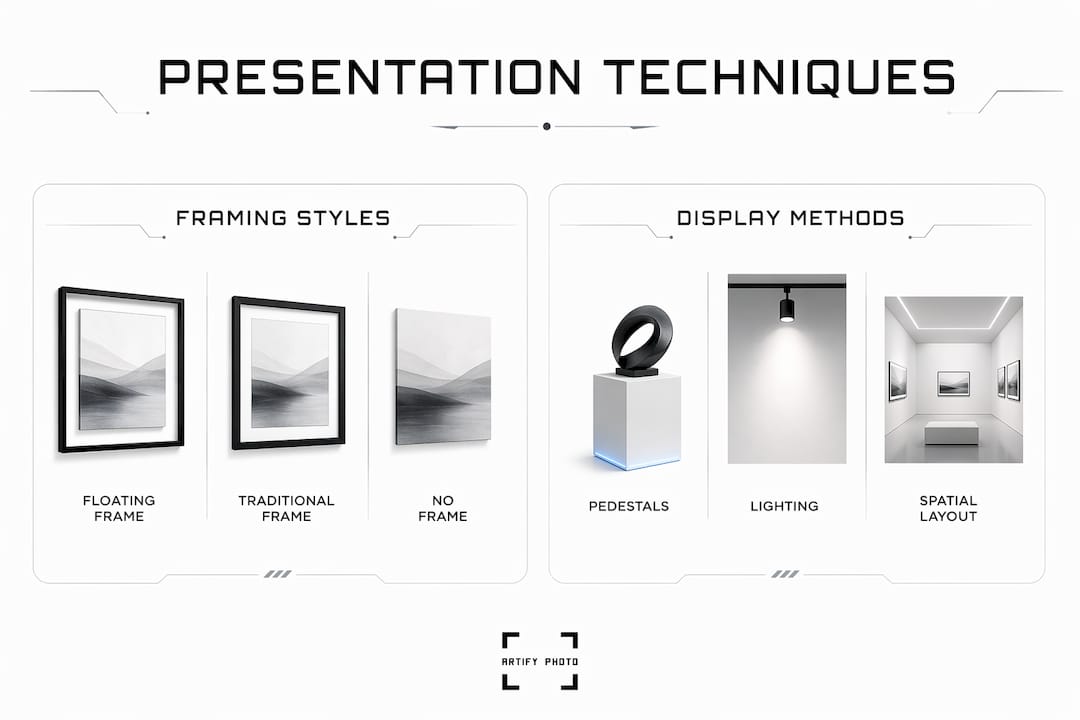
Pedestals and mounts serve the same function for sculpture and three-dimensional work. They lift objects out of the visual noise of a room and signal that the piece deserves focused attention.
Spatial arrangement is where many emerging artists make costly mistakes. Crowding walls reduces the perceived value of every piece. White space is not wasted space. It is the visual silence that lets each work speak.
Pro Tip: When preparing work for a gallery submission, use a transport portfolio for moving pieces and a separate presentation portfolio for showing work to clients or curators. Confusing the two signals unprofessionalism and can damage your reputation before a single piece is reviewed.
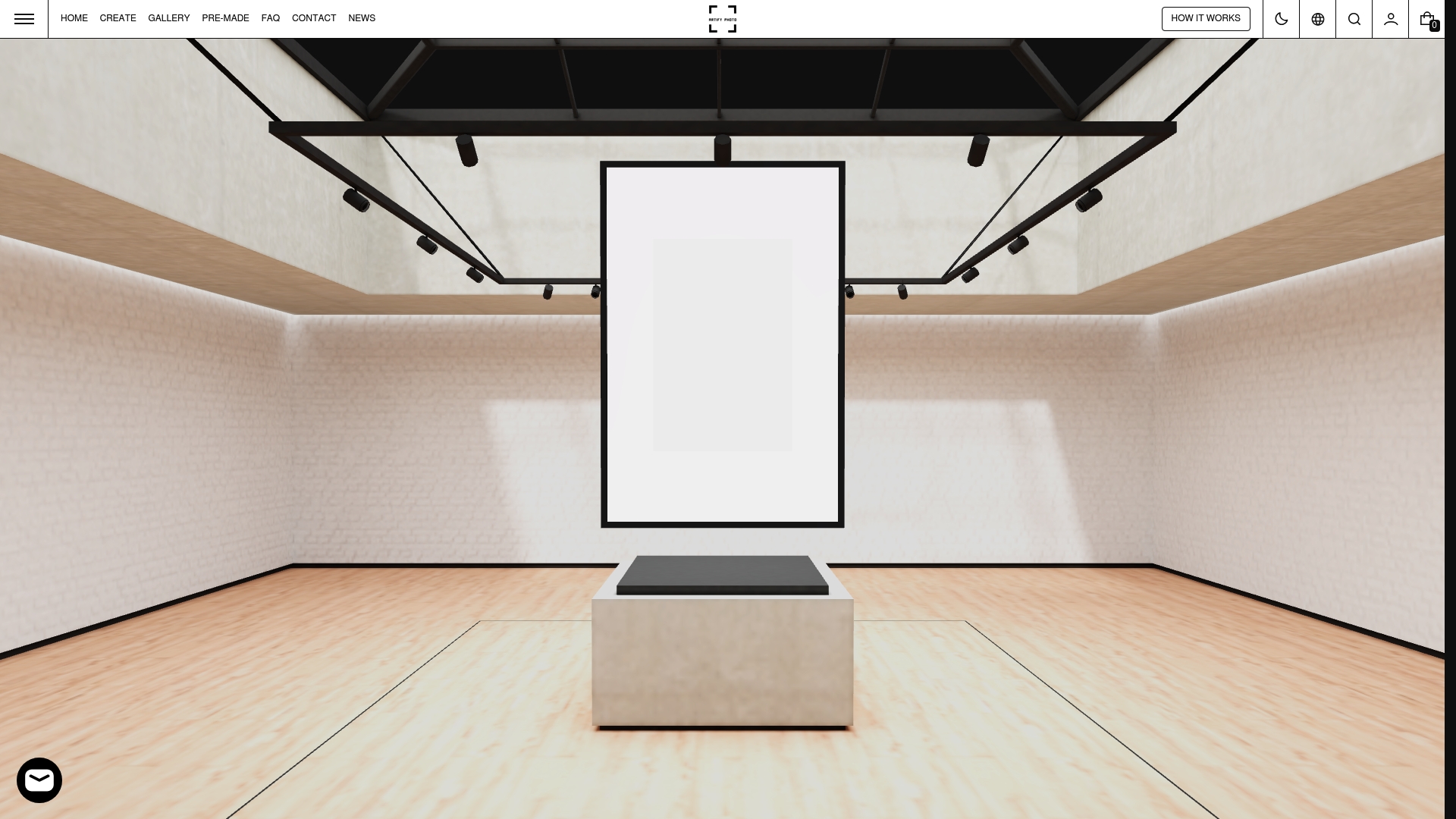
For digital contexts, platforms like Artify offer 3D room preview tools that replicate the spatial logic of physical presentation. Seeing a print in a rendered room setting answers the buyer’s core question: will this work in my space? That question, answered visually, closes sales.
How does art presentation affect market value?
Art presentation directly influences what buyers are willing to pay. This is not a soft claim. It is the stated position of auction professionals and gallery directors who handle transactions daily.
Meredith Hilferty, director of fine art sales at Rago Auctions, confirmed in march 2026 that frames and pedestals boost sales price by helping buyers visualize artwork in their own homes. Presentation removes the imaginative burden from the buyer. When a piece looks finished and considered, it feels worth more.
The tension this creates is real. Experienced gallerists treat framing and mounting as integral to final market valuation. Many artists treat them as optional costs to minimize. That gap in perspective costs artists money at every stage of the sales process.
Here are the presentation factors that most directly increase a work’s sellability:
- Professional framing that complements the medium and subject
- Consistent sizing across a series, which makes groupings easier to sell
- Clean, accurate labeling with title, medium, dimensions, and price
- Condition documentation that proves the work has been properly stored and handled
- Professional photography of the work in a well-lit, neutral setting
Physical handling matters just as much as visual presentation. 60% of fine art damage claims occur during shipment and transit. Damaged work loses value immediately and permanently. Professional packaging is not a luxury. It is market value protection.
“Professional presentation elements are essential investments that directly affect artwork market value and buyer perception.” — Presentation Drives Price in Art Markets
How can artists and curators collaborate on exhibitions?
The most successful exhibitions result from interdisciplinary collaboration that begins months before opening day. Artists, curators, exhibition designers, registrars, conservators, and art handlers each own a distinct part of the process. When that collaboration starts late, the gaps show.
Early planning covers the following:
- Floor plans and sight lines: Where does a viewer’s eye travel when they enter the room? The answer determines which piece anchors the space.
- Lighting design: Directional spotlights, ambient fill, and color temperature are decided in advance, not improvised during installation.
- Signage and wayfinding: Labels, wall text, and directional cues shape the pace at which visitors move through a space.
- Accessibility: Font size, label height, and pathway width determine who can fully experience the exhibition and who cannot.
The language used in exhibition texts deserves its own attention. Labels that open with abstract statements about the artist’s philosophy lose readers in the first sentence. Labels that open with a specific image, a material detail, or a question pull readers in and hold them. This is not a stylistic preference. It is documented visitor behavior from institutions including Tate and MoMA.
Pro Tip: Test your exhibition text on someone outside the art world before installation. If they cannot explain the work back to you after reading the label, rewrite it. Clarity is not a compromise of depth. It is the delivery mechanism for it.
Artists who want to understand how professional presentation decisions translate to home environments can explore room-by-room art placement as a practical reference for spatial logic that applies equally to gallery and domestic settings.
Key takeaways
Art presentation is a strategic discipline that shapes emotional response, market value, and viewer engagement in equal measure.
| Point | Details |
|---|---|
| Presentation drives emotion | Biophilic and pedestrian art studies confirm that display context directly improves viewer well-being. |
| Framing affects perceived value | Professional framing separates artwork visually and signals quality to buyers and collectors. |
| Collaboration starts early | Artists and curators who plan floor plans, lighting, and labels together produce stronger exhibitions. |
| Handling protects market value | 60% of fine art damage occurs in transit, making professional packaging a financial decision. |
| Exhibition text shapes engagement | Sensory, narrative labels at institutions like Tate and MoMA consistently outperform abstract descriptions. |
Artify’s take: presentation is the work, not the wrapper
Artists often treat presentation as the last step, something to handle after the real creative work is done. That framing is backwards. Presentation is where the creative decision meets the viewer’s reality, and that meeting point determines everything.
What I have seen repeatedly is that artists who invest in presentation early, before the gallery call or the client meeting, consistently outperform those who treat it as an afterthought. The piece does not change. The perception of it does. And in art, perception is the entire game.
The uncomfortable truth is that a mediocre piece in a perfect frame, under ideal lighting, with a well-written label, will outsell a brilliant piece leaning against a wall with a handwritten price tag. That is not a failure of the art world’s taste. It is how human attention and perceived value actually work.
For home collectors, the same logic applies. A print that fits the room, hangs at the right height, and arrives framed and ready to display creates an emotional response the moment it goes up. One that arrives rolled in a tube and requires three trips to the hardware store creates friction. Friction kills emotional connection.
Presentation is not packaging. It is the final act of making the work complete.
— Artify
Bring your art to life with Artify
The principles in this article apply directly to how you choose and display art at home. Artify makes professional presentation accessible without requiring a gallery budget.
Artify’s pre-made collections are curated with display logic built in, so each piece arrives ready to anchor a room rather than compete with it. Every print is produced to gallery standards, with framing and sizing options designed to complement the artwork rather than overpower it. If you are an artist looking to reach collectors who understand presentation value, the Artify artist platform connects your work with buyers who are actively looking for pieces that belong on a wall, not in a drawer.
FAQ
What is the role of art presentation in exhibitions?
Art presentation in exhibitions controls how viewers emotionally connect with and interpret artwork. It encompasses framing, lighting, spatial arrangement, and exhibition text, all of which shape perception and engagement.
How does framing affect the value of artwork?
Professional framing separates artwork visually from its surroundings and signals quality to buyers. According to Meredith Hilferty of Rago Auctions, frames and pedestals directly boost sales price by helping buyers visualize pieces in their own spaces.
Why do exhibition labels matter for viewer engagement?
Exhibition labels that open with sensory or narrative details keep visitors reading and deepen their connection to the work. Analysis of visitor behavior at Tate, MoMA, and Serpentine Gallery confirms that abstract jargon in labels causes visitors to disengage quickly.
How does art presentation affect mental health?
A 12-month study of 300 urban residents found that exposure to biophilic art installations produced a 67% improvement in depression symptoms and a 72% improvement in anxiety symptoms. Presentation context, not just the art itself, drives those outcomes.
What is the biggest mistake artists make with presentation?
The most common mistake is treating presentation as optional or cost-cutting on framing and handling. Industry data shows 60% of fine art damage occurs during transit, and gallerists consistently report that poor presentation reduces both perceived value and final sale price.