


TL;DR:
- Texture in wall art adds dimension and emotional depth to a flat surface, transforming how viewers perceive and connect with the artwork. Physical textures create real shadows and shift with light, while visual textures mimic surface qualities on flat surfaces, both enriching the viewer’s experience. Proper lighting and placement enhance texture’s visual effects, making it a dynamic element in home decor.
Texture in wall art is defined as the surface quality of an artwork that creates visual or physical dimension, transforming a flat piece into a multi-sensory experience. The role of texture in wall art goes far beyond decoration. It shapes how you perceive a piece, how light plays across a room, and how emotionally connected you feel to what hangs on your walls. Whether you’re drawn to the thick, raised strokes of an oil painting or the subtle grain of a printed canvas, texture is the element that makes art feel alive. Understanding it changes how you choose, display, and live with art.
How does texture affect perception and emotional response to wall art?
Texture is one of the first things your brain registers when you look at art. 2023 IEEE research confirms that visual qualities like texture, shape, and color dominate initial perceptual responses to images. That means texture isn’t a secondary detail. It’s a primary signal your eye reads before anything else.
The emotional effect of texture depends heavily on its character. Smooth, simple textures produce positive emotional responses, while overly complex textures can trigger discomfort or visual fatigue. This is why a linen-textured canvas feels calming in a bedroom, while a heavily layered mixed-media piece energizes a studio or living room.
“Texture invites sustained looking and rewards familiarity over time, adding narrative and authenticity to a piece. It is a structural decision in contemporary art, used to slow down viewing and reveal the artist’s labor and narrative depth.” — Domenick Naccarato
Texture creates contrast and tension by juxtaposing smooth against rough surfaces, which directs your eye and enriches emotional impact. In abstract and expressionist works, this contrast is often the entire composition. Your gaze moves from a rough, dense area to a smooth passage, and that movement creates feeling.
Texture also slows you down. A flat print gives up all its information in seconds. A physically textured piece rewards you differently each time you look at it, depending on where you stand and how the light falls. That depth of engagement is what makes textured wall art feel like a long-term investment rather than a decorative afterthought.
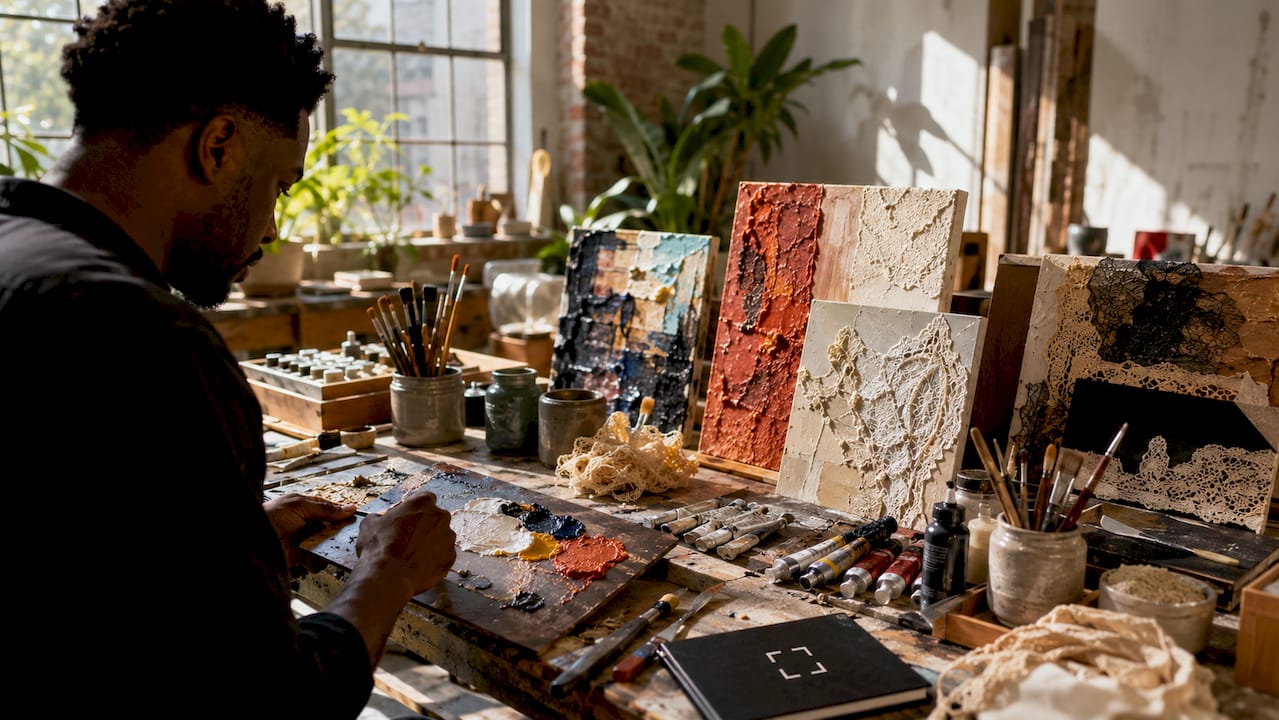
What are the different types of textured wall art techniques?
Texture in art falls into two distinct categories: physical (tactile) texture and visual (implied) texture. Each engages viewers differently, and knowing the difference helps you make smarter choices for your space.
Physical texture involves actual raised or recessed surfaces you can touch. Common techniques include:
- Impasto: Thick paint applied with a palette knife or brush, creating ridges and peaks that cast real shadows.
- Mixed media: Incorporating materials like sand, fabric, paper, or metal into the artwork surface.
- Sculptural elements: Relief work where the art extends off the canvas plane into three dimensions.
- Palette knife painting: Produces sharp, angular surface variations with strong directional energy.
Visual texture creates the illusion of surface quality on a flat plane. Techniques include:
- Layered brushwork: Overlapping strokes that suggest depth without physical relief.
- Trompe l’oeil: Painted patterns that mimic stone, wood, or fabric convincingly.
- Photographic grain and print texture: Deliberate surface patterns added during the printing process to simulate canvas or paper grain.
Physical texture catches light and creates shadows, while visual texture tricks the eye into perceiving depth on flat surfaces. Both are legitimate tools, and neither is inherently superior. The right choice depends on your room and your goals.
Artists like Anselm Kiefer push physical texture further still. Kiefer incorporates thick, industrial materials to convey emotional and historical weight through surface alone. The texture isn’t decoration. It’s the message.
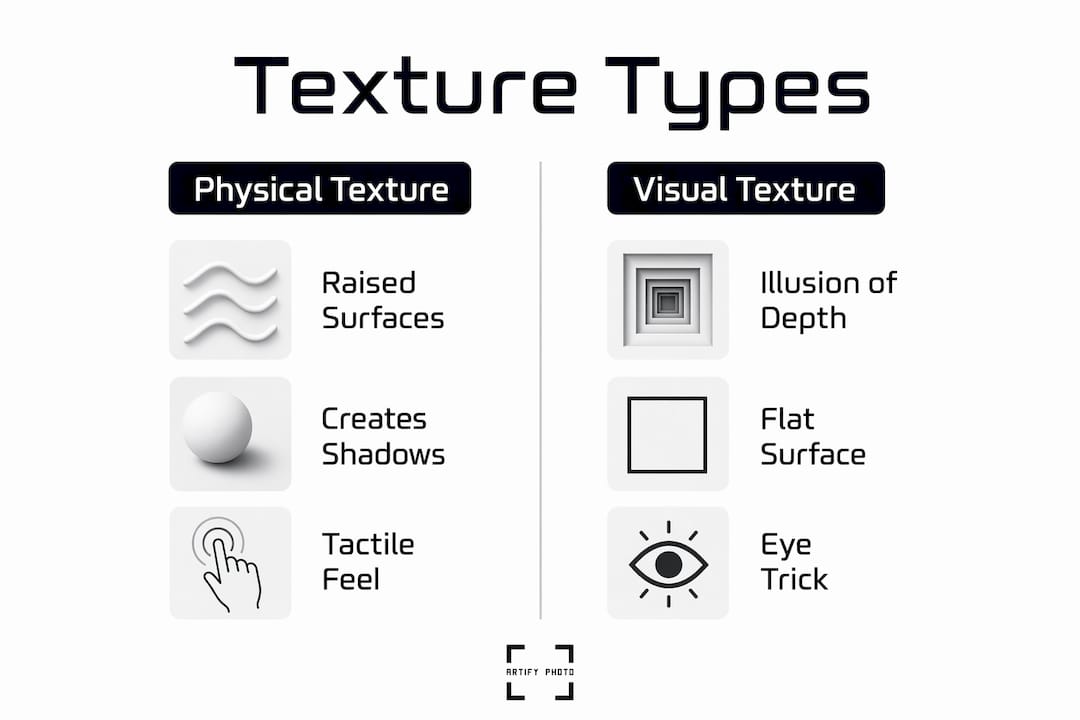
Pro Tip: In rooms with strong directional lighting, physical texture performs best. The shadows it casts shift throughout the day, keeping the piece visually active. In low-light rooms, visual texture holds its appearance more consistently.
How does texture interact with light and space in wall art?
Physical texture and light are inseparable. A heavily textured piece in morning light looks completely different by late afternoon. Textured artworks interact with changing light throughout the day, producing dynamic shadow and highlight effects that alter perception and engagement. This makes textured art one of the few decor elements that genuinely changes without you changing anything.
The table below shows how texture behaves under different lighting conditions, which directly affects placement decisions.
| Light source | Effect on physical texture | Effect on visual texture |
|---|---|---|
| Direct natural sunlight | Strong shadows, high contrast, vivid depth | Minimal added effect, colors may wash out |
| Indirect natural light | Soft shadows, gentle depth, warm tones | Subtle enhancement, colors remain true |
| Warm artificial light | Deep, dramatic shadows, rich tonal range | Slight warmth added, minimal depth change |
| Cool artificial light | Crisp, defined shadows, clinical clarity | Neutral effect, pattern clarity improves |
| Side lighting (raking light) | Maximum texture visibility, every ridge highlighted | Little to no enhancement |
Side lighting, also called raking light, is the single most effective way to show off physical texture. Placing a textured piece where a lamp or window hits it from the side reveals every ridge and valley in the surface. Overhead lighting, by contrast, flattens texture almost completely.
Texture also affects how a room feels spatially. A large, deeply textured piece on a bare wall adds visual mass and makes the wall feel closer. A subtly textured piece in a small room adds interest without crowding the space. Texture adds depth and dimensionality that flat art simply cannot replicate.
Pro Tip: Before hanging a textured piece, hold it at the intended location at different times of day. Watch how the shadows shift. The piece that looks flat at noon may become the most dramatic element in the room by 4:00 PM.
How to select and display textured wall art for your home
Choosing textured wall art well requires matching the intensity of the texture to the existing character of your room. Heavily textured artwork works best in minimal or smooth interiors, where it becomes the dominant focal point. Subtle textures complement patterned or already-layered rooms without competing for attention.
Follow this process when selecting textured pieces for your home:
- Assess your room’s existing texture load. Count the patterns and surface variations already present: rugs, upholstery, wallpaper, curtains. A room already rich in pattern needs a calmer texture in its art.
- Match scale to wall size. A small, heavily textured piece on a large wall gets lost. Scale up the piece or group smaller textured works in a gallery arrangement.
- Choose texture type based on lighting. Physical texture needs directional light to perform. Visual texture works in any lighting condition.
- Use texture as a visual anchor. Place the most textured piece at the natural focal point of the room, such as above a fireplace, sofa, or bed. It draws the eye and organizes the rest of the decor around it.
- Consider the room’s function. Smooth, calming textures suit bedrooms and reading spaces. Energetic, complex textures work well in living rooms, studios, and dining areas.
Caring for textured art requires specific attention. Proper care for textured artworks means avoiding direct sunlight, maintaining stable humidity, dusting gently with a soft brush, and allowing extra depth clearance when framing or shipping. Mixed-media pieces with sand, fabric, or organic materials are especially vulnerable to humidity changes.
Common mistakes to avoid when integrating textured art into your home:
- Hanging textured pieces under overhead lighting, which eliminates shadow and flattens the surface.
- Pairing a heavily textured piece with a busy, patterned wall. The two compete and neither wins.
- Ignoring scale. A small textured piece in a large room reads as an afterthought.
- Framing physical texture pieces flush against glass. The texture needs air space to breathe visually.
- Neglecting care. Dust buildup in the ridges of impasto work dulls the surface over time.
For a deeper look at how art choices interact with room design, the wall art in interior design guide from Artify covers placement, scale, and style in detail. If you want to match texture choices to specific rooms, the room-by-room art guide offers practical, space-specific advice.
Key Takeaways
Texture is the single most dynamic element in wall art, shaping emotional response, directing the eye, and changing appearance with light throughout the day.
| Point | Details |
|---|---|
| Texture drives first impressions | IEEE research confirms texture dominates initial perceptual responses before color or subject matter. |
| Physical vs. visual texture | Physical texture creates real shadows and shifts with light; visual texture implies depth on flat surfaces. |
| Light placement is critical | Side or directional lighting maximizes physical texture; overhead lighting flattens it almost completely. |
| Match texture intensity to room | Heavy texture suits minimal rooms; subtle texture complements spaces already rich in pattern. |
| Care extends artwork life | Avoid direct sunlight, control humidity, and dust gently to preserve built-up textured surfaces. |
Texture is a conversation, not just a surface
After years of looking at how people live with art, I’ve come to one firm conclusion: most people underestimate texture. They treat it as a finishing detail, something to notice if they happen to get close. That’s the wrong way to think about it.
Texture is a language. It slows down the viewer’s gaze and deepens emotional engagement by revealing the artist’s process and material choices. A piece with real physical texture asks something of you. It asks you to move around it, to come back to it, to notice what changes. That’s rare in home decor.
What I find most compelling is how texture makes art behave differently over time. A smooth print looks the same on day one as it does on day one thousand. A textured piece changes with the seasons, with the light, with your own shifting attention. That’s not a small thing. That’s the difference between decoration and art that genuinely lives in your home.
My honest advice: don’t choose texture for its trend value. Choose it because you want something on your wall that rewards looking. The types of wall art available today span an enormous range of surface qualities. Take the time to understand what each one does in real light, in a real room, before you commit.
— Artify
Artify’s curated collections for textured wall art
Artify brings together curated collections of gallery-quality wall art, including pieces with rich surface variation and tactile depth, selected by independent artists.
Browsing the pre-made collections gives you direct access to textured works organized by style, mood, and interior fit. Each piece is produced on demand, so quality stays consistent. If you want to explore the full range before committing, the Artify gallery lets you preview pieces in context. For personalized options, Artify’s credit system makes it easy to acquire art that fits your specific space and style.
FAQ
What is the role of texture in wall art?
Texture transforms flat artwork into a multi-dimensional experience by adding depth, shadow, and emotional resonance. It shapes how viewers perceive a piece and how it interacts with the light and space around it.
What is the difference between physical and visual texture in art?
Physical texture involves actual raised surfaces you can touch, such as impasto paint or mixed media. Visual texture creates the illusion of surface depth on a flat plane through brushwork, layering, or printed patterns.
How does texture affect the mood of a room?
Smooth textures produce positive, calming emotional responses, while complex or rough textures add energy and visual tension. Matching texture character to room function, calm in bedrooms, dynamic in living spaces, creates a more intentional interior.
What lighting works best for textured wall art?
Side or raking light maximizes the visual impact of physical texture by casting strong shadows across the surface. Overhead lighting flattens texture and reduces its effect significantly.
How do I care for textured wall art?
Dust gently with a soft brush, avoid direct sunlight, and maintain stable humidity levels. Allow extra depth clearance when framing to preserve the integrity of built-up surfaces.