


TL;DR:
- Proper art placement enhances a room’s balance, mood, and visual flow by guiding the viewer’s eye effectively. Strategic positioning based on scale, alignment, and spacing influences how spaces feel and how occupants experience them. Consistent placement practices create harmony, reduce stress, and transform rooms into thoughtfully designed environments.
Art placement is defined as the deliberate positioning of artwork within a space to shape visual balance, mood, and room cohesion. Where you hang a piece matters as much as which piece you choose. The significance of art placement goes far beyond aesthetics. Research confirms that strategic positioning can improve perceived room balance by up to 100% in unfinished spaces. Interior designers use placement standards like the 57–60 inch eye-level center rule to anchor art within a room’s visual logic. Artify’s curated collections and 3D room preview tools make it easier to see these principles in action before you commit to a single nail.
How does art placement affect room balance and visual flow?
Art placement is the primary tool for guiding a viewer’s eye through a room. When a piece is scaled and positioned relative to the surrounding architecture and furniture, it creates a sense of order that bare walls cannot achieve. Scaling and positioning relative to architecture and furniture increase room harmony and completion, with well-placed art improving perceived balance by up to 100% in rooms that previously felt unfinished. That number reflects how much visual weight a single correctly hung piece can carry.
Alignment is the second factor. Art that floats above a sofa with no visual connection to the furniture below reads as an afterthought. When the bottom edge of a piece relates clearly to the furniture beneath it, the eye reads the grouping as a single unit. This is why alignment with furniture and sightlines enhances perceived room structure and prevents imbalance in the majority of cases.
Placement also controls wayfinding. A large horizontal piece at the end of a hallway draws you forward. A vertical piece beside a doorway frames the entry and signals transition. These effects are not accidental. They are the result of treating art as an architectural element rather than decoration applied after the fact.
- Scale: Choose art whose width is roughly two-thirds the width of the furniture below it.
- Alignment: Center the piece horizontally over the furniture, not the wall.
- Visual anchoring: Group smaller pieces to create a mass equivalent to one large work.
- Wayfinding: Use large format pieces at the terminus of corridors or sightlines.
Pro Tip: Before hanging anything, tape paper cutouts of your intended pieces to the wall and live with them for 24 hours. The proportional relationship becomes obvious in real light and real time.
What psychological effects does art placement have in living environments?
Art placement directly affects stress levels, attention, and emotional wellbeing. Environmental psychology confirms that strategic placement reduces stress and restores directed attention by creating visual anchors that give the mind a place to rest. This is not a soft claim. It is the same principle that hospitals and workplace designers use when specifying art for recovery rooms and open offices.
The location of a piece also shapes how seriously a viewer engages with it. Context creates a symbolic field that influences how viewers perceive and receive artwork. A print hung in a dedicated, well-lit alcove reads as significant. The same print wedged between a light switch and a door frame reads as filler. The art has not changed. The placement has.
“Art placement mediates the relationship between physical space and the viewer’s mental state, fundamentally altering a work’s meaning. Location acts as an atmospheric filter shaping emotional and cognitive response.”
This filter effect extends to identity and social behavior. Art placed in shared living areas signals values, taste, and memory to guests. Art placed in private spaces like a bedroom or home office serves a more personal function, reinforcing the occupant’s sense of self. Environmental art transforms rooms from neutral containers into lived spaces by triggering aesthetic and spatial reconfiguration. That shift from neutral to lived is the real goal of intentional placement.
How to adapt art placement according to room function and furniture layout
The correct hanging height changes depending on whether viewers are standing or seated. The eye-level standard places the center of a piece at 57–60 inches from the floor. That figure suits standing contexts like hallways and dining rooms where guests move around. In a lounge where people sit for extended periods, dropping the center height by 3–5 inches keeps the art in the natural sightline without requiring anyone to look up.
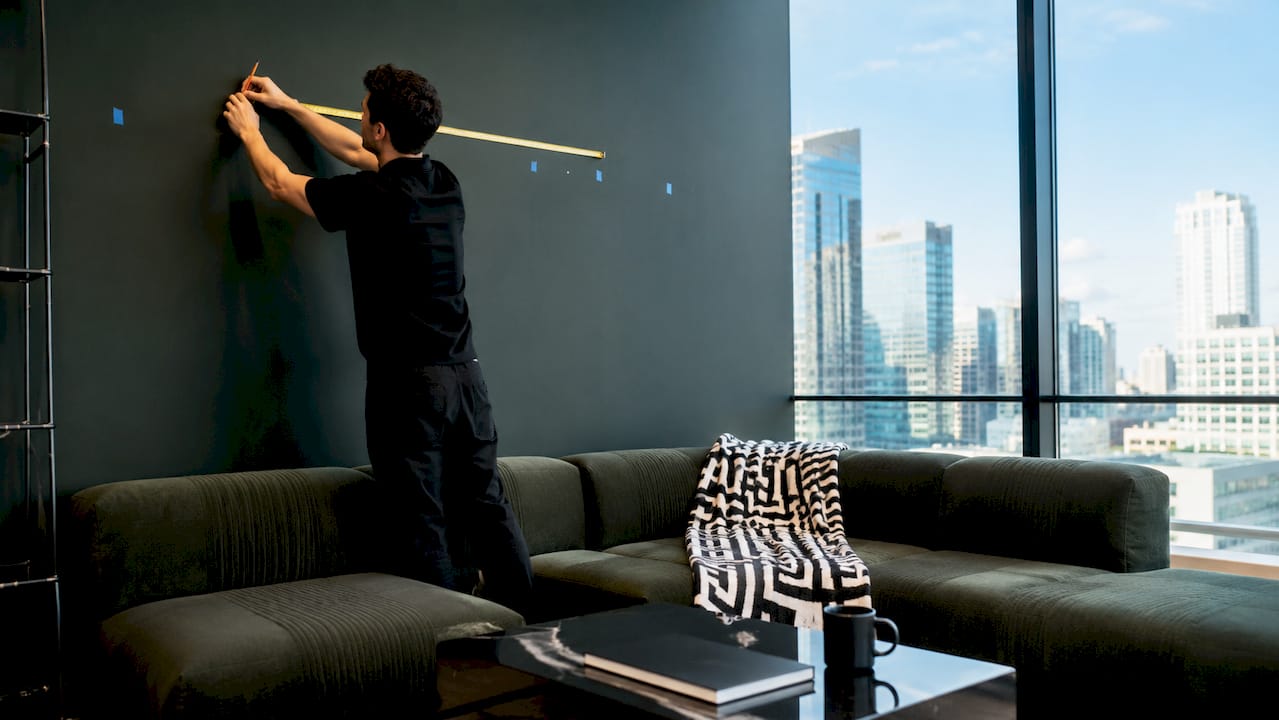
The relationship between art and furniture is equally specific. A 6–10 inch gap between the bottom of the artwork and the top of the furniture below prevents the visual disconnect that makes art look like it is floating away from the room. This gap is the single most commonly violated rule in residential interiors. Hanging art too high above a sofa is the default mistake, and it is easy to fix.
Room-by-room placement follows a clear logic:
- Living room: Center art over the main sofa or focal wall. Width should be 50–75% of the sofa’s width. Lower the center height to seated eye level.
- Hallway: Hang at standard standing eye level, 57–60 inches center. Space pieces evenly to create rhythm as you move through.
- Bedroom: Position the primary piece above the headboard, centered on the bed width. Keep the bottom edge 6–10 inches above the headboard top.
- Open-plan spaces: Use art to define zones. A large piece behind a dining table separates that zone from the adjacent kitchen or lounge without a physical wall.
- Home office: Place art within the natural resting sightline from your desk chair, not above the monitor where it competes with the screen.
Pro Tip: In rooms with high ceilings, resist the urge to fill vertical space by hanging art higher. Keep the center at seated or standing eye level and let the wall breathe above the piece.
For a detailed room-by-room breakdown, the Artify room-by-room guide covers specific placement decisions for every space in the home.
What role does art orientation and spacing play in perceived room proportions?
Artwork orientation is one of the fastest ways to correct a room’s proportional problems without renovation. Vertical pieces increase perceived ceiling height, while horizontal pieces expand the perceived width of a wall. This means a narrow room with low ceilings benefits from tall portrait-format pieces, while a wide, low-ceilinged room reads better with landscape-format works hung in a horizontal arrangement.
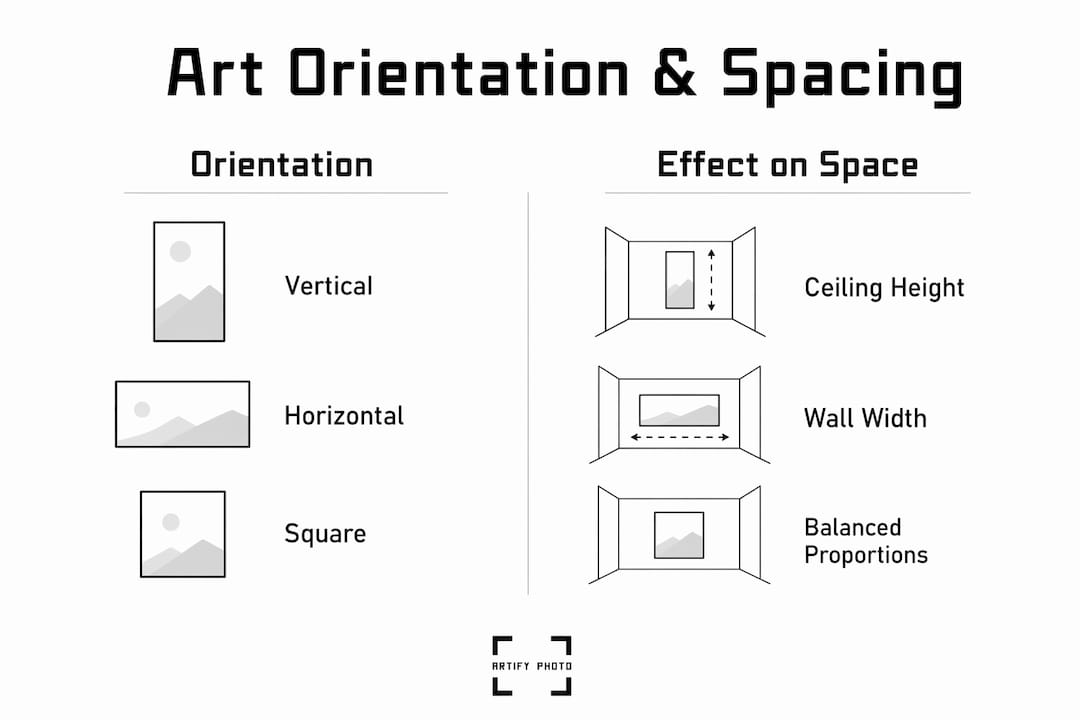
Spacing between pieces controls the emotional tone of a grouping. Even spacing creates calm, while inconsistent spacing creates visual tension and discomfort. Humans respond to pattern and rhythm in visual arrangements at a neurological level. A gallery wall with random gaps feels restless. The same pieces with consistent 2–3 inch spacing between frames feel considered and intentional.
| Orientation | Effect on space | Best used in |
|---|---|---|
| Vertical (portrait) | Increases perceived ceiling height | Narrow rooms, low-ceiling spaces, stairwells |
| Horizontal (landscape) | Expands perceived wall width | Wide walls, above long furniture, hallways |
| Square | Neutral, anchoring | Focal walls, symmetrical arrangements |
| Mixed grouping | Creates dynamic rhythm | Gallery walls, open-plan zone definition |
In open-concept living areas, orientation and spacing do the work that walls would otherwise do. A horizontal triptych above a console table defines the dining zone. A vertical pair flanking a window frames the seating area. These are not decorative choices. They are spatial decisions that shape how art impacts space and how occupants move through and experience it.
Choosing between portrait and landscape is also a question of the art’s subject matter. For guidance on that specific decision, Artify’s breakdown of portrait vs. landscape wall art covers the practical and aesthetic trade-offs clearly.
Key takeaways
Art placement determines how a room feels, functions, and communicates, making it as critical a design decision as furniture selection or lighting.
| Point | Details |
|---|---|
| Eye-level standard | Hang art with its center at 57–60 inches from the floor for standing contexts; lower slightly for seated rooms. |
| Furniture gap rule | Maintain a 6–10 inch gap between the bottom of the art and the top of the furniture below to prevent visual disconnection. |
| Orientation corrects proportions | Use vertical pieces to raise perceived ceiling height and horizontal pieces to widen a narrow wall. |
| Even spacing signals intention | Consistent spacing between grouped pieces creates calm; inconsistent spacing creates visual tension. |
| Placement shapes psychology | Strategic art location reduces stress, anchors identity, and transforms neutral rooms into lived spaces. |
What I have learned from watching art placement done right and wrong
Most homeowners hang art too high. That is the single most common mistake I see, and it is almost always driven by the instinct to fill vertical space rather than to connect art to the human experience of the room. A piece hung at 72 inches center looks correct in an empty room. The moment you add a sofa and people sitting on it, the art is in the ceiling zone and the room feels disconnected.
The second mistake is treating each room as a separate project. A home where every room has a different hanging height, a different frame style, and a different scale logic feels unsettled even when each individual room looks acceptable. Consistency across rooms, in height, in the relationship between art and furniture, and in the visual weight of pieces, is what makes a home feel designed rather than assembled.
The insight that changed how I think about placement is this: art is a collaborator with the space, not a finishing touch applied to it. When you treat placement as a structural decision made at the same time as furniture layout and lighting, the results are categorically different from art chosen and hung after everything else is in place. The art installation best practices that professional installers use are not complicated. They are simply applied earlier and more consistently than most homeowners attempt.
The homes that feel genuinely considered always share one quality: every piece of art is in a conversation with the space around it. That conversation is the product of deliberate placement, not luck.
— Artify
Art that fits your space, placed with purpose
Getting placement right starts with having the right art. A piece that is the wrong scale, the wrong orientation, or the wrong subject for a room will resist every placement rule you apply to it.
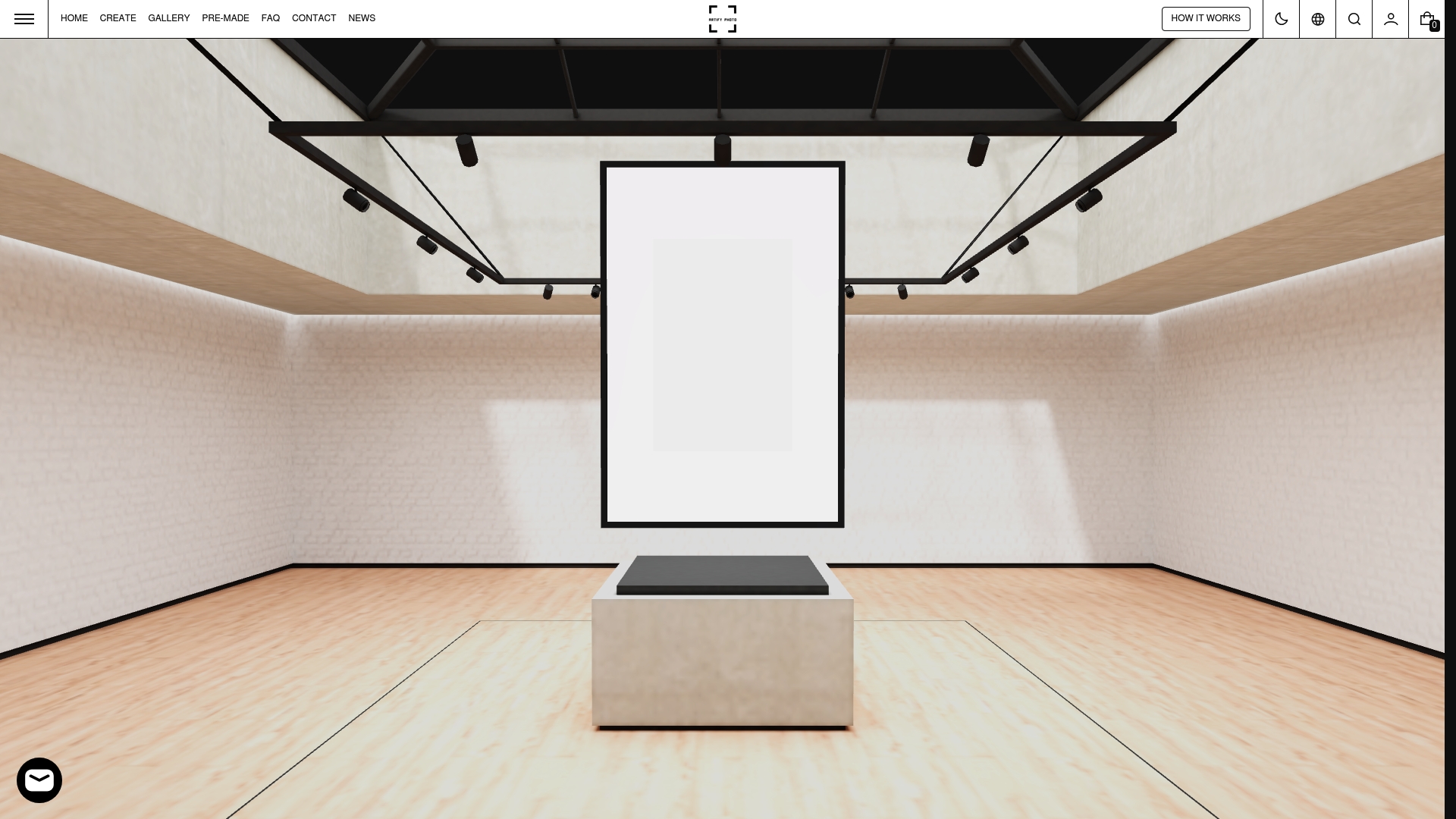
Artify’s pre-made collections are curated with living spaces in mind, covering a range of scales, orientations, and styles suited to everything from compact apartments to open-plan family homes. Each piece is available with framing options and a 3D room preview so you can see the placement relationship before you order. For homeowners who want something specific to their space and story, Artify also lets you transform personal photographs into gallery-quality prints sized and formatted for your exact wall. The Artify gallery is the fastest way to find art that works with your room rather than against it.
FAQ
What is the standard height for hanging wall art?
The center of a piece should sit at 57–60 inches from the floor, which aligns with average standing eye level. In rooms where viewers are primarily seated, lower the center height by 3–5 inches.
How far above a sofa should art be hung?
Leave a 6–10 inch gap between the bottom of the artwork and the top of the sofa or furniture below. Hanging art higher than this creates a visual disconnect between the two elements.
Does art placement really affect mood?
Yes. Environmental psychology confirms that strategic art placement reduces stress and restores attention by providing visual anchors. Location also shapes how seriously viewers engage with a piece.
How does art orientation change a room’s proportions?
Vertical pieces increase perceived ceiling height, while horizontal pieces expand perceived wall width. Choosing orientation based on a room’s proportional weaknesses is one of the most effective placement strategies available.
How much space should be between grouped artworks?
Consistent spacing of 2–3 inches between frames creates visual calm and signals intention. Inconsistent gaps produce visual tension that makes even high-quality art feel poorly arranged.