


TL;DR:
- Wall art trends in 2026 favor oversized, intentional pieces that emphasize scale, authenticity, and personal meaning. Earthy color palettes, textured materials, and customized artwork replace minimalism and generic prints, creating curated and emotionally resonant interiors. Refined gallery arrangements and tactile, handcrafted art objects highlight a shift toward permanence and sensory richness.
Wall art trends 2026 are defined by three forces: scale, material authenticity, and personal meaning. The days of filling walls with small, interchangeable prints are over. Interior designers and home decor enthusiasts alike are choosing fewer, larger, and more intentional pieces that anchor rooms and tell real stories. This shift reflects a broader move in 2026 home decor trends toward spaces that feel curated rather than assembled, and lived-in rather than staged. Whether you are refreshing a living room or advising a client, understanding these trends gives you a clear framework for making art choices that last.
1. Oversized statement art dominates wall art trends 2026
Interior designers in 2026 favor oversized statement art sized at 48×60 inches or larger as the primary focal point in living spaces. One large canvas does more visual work than a cluster of smaller frames, and it does it with less effort. The result is a room that feels considered and calm rather than busy.
Professionals size statement art by furniture silhouette and viewing distance, targeting 60 to 75% of wall width for pieces that read clearly across the room. That rule of thumb removes the guesswork from placement and prevents the common mistake of hanging art that floats awkwardly above a sofa.
The most sought-after formats in this category include:
- Abstract paintings with visible brushwork in warm earth tones, which reward close inspection and hold attention from across the room
- Diptychs and triptychs that create horizontal sweep above main furniture without requiring multiple unrelated frames
- Large botanical or landscape prints that connect interiors to natural environments
Pro Tip: When sizing a piece for above a sofa, measure the sofa’s width and multiply by 0.65. That number gives you the minimum canvas width for a balanced look.
Artify’s guide on oversized wall art covers placement rules in detail for anyone working through this decision for the first time.
2. Earthy, organic color palettes replace cool grays
2026 wall art palettes trend toward earthy tones including terracotta, muted olive, warm neutrals, and deep blues for contrast in luxury interiors. This is a direct response to the cool gray and white minimalism that dominated the previous decade. Warm antique cream and natural pigment tones now set the base for most modern interiors.
The color shift is not arbitrary. Warm neutrals and earth tones create a livable base for interiors, while deeper blues provide elegant contrast without requiring multiple competing art pieces. A single large canvas in terracotta or dusty sage can unify a room’s palette without overwhelming it.
Key colors defining popular wall art styles in 2026:
- Terracotta and burnt sienna for warmth and grounding
- Sage and muted olive for organic, biophilic connection
- Warm cream and antique white as neutral backgrounds replacing cool gray
- Deep navy and indigo for contrast and a sense of depth in larger rooms
Pro Tip: If your furniture leans warm (wood tones, linen, leather), choose art with at least one matching warm undertone. The piece will feel like it belongs rather than like an afterthought.
This palette shift aligns directly with the Japandi and biophilic design movements gaining ground in 2026, both of which prioritize natural materials and organic color over synthetic brightness.
3. Personalization and emotional resonance drive art choices
Personalization is a key driver in 2026 wall art, with buyers seeking unique art that reflects memories and identity rather than generic prints. This is one of the most significant shifts in how people think about the role of art trends in 2026. Art is no longer just decoration. It is documentation.
Personalized art adds emotional utility by telling stories that reduce the chance the piece will feel generic or quickly outdated. A custom portrait, a photograph transformed into an abstract painting, or a landscape tied to a meaningful place will outlast any trend cycle because its value is biographical, not aesthetic alone.
“The most enduring art in any home is the piece that answers the question: why is this here? If the answer is personal, the art will never feel out of place.”
Practical ways to incorporate personalization without sacrificing design cohesion:
- Start with palette coordination. Personalized art choices in 2026 begin with matching the piece’s color range to the room, then layering in personal subject matter.
- Choose subject matter with visual restraint. A single meaningful image at large scale reads better than a collage of many small personal photos.
- Commission or customize rather than mass-produce. Bespoke pieces from independent artists carry a level of craft that printed reproductions cannot replicate.
Artify’s Family Ties collection is a direct example of this approach, translating personal photographs into gallery-quality artwork that fits within a designed interior.
4. Refined gallery walls vs. single statement pieces
Gallery walls remain in use but with more selective, refined spacing, color coherence, and fewer frames, while single statement art is rising in popularity. The cluttered grid of mismatched frames that defined the mid-2010s is now widely considered dated. What replaces it is more deliberate.
Gallery walls are evolving to curated, calm arrangements with fewer frames and visual coherence, responding directly to past clutter issues. The preferred alternative is a primary artwork above main furniture, complemented by only a few supporting pieces for balance.
| Approach | Best for | Key characteristic |
|---|---|---|
| Single statement piece | Larger walls, open-plan rooms | Maximum visual impact, minimal complexity |
| Refined gallery wall | Hallways, reading nooks, smaller walls | Curated cohesion, 3 to 5 frames maximum |
| Diptych or triptych | Above sofas, dining tables | Horizontal scale without multiple decisions |
| Mixed media cluster | Eclectic or maximalist interiors | Texture variety, requires strong color anchor |
The practical takeaway is that room size and function should drive the choice. A large open-plan living room benefits from one commanding piece. A narrow hallway or a reading corner can carry a small, tightly edited gallery wall without feeling cluttered, provided the frames share a finish and the spacing is generous.
5. Tactile textures and material innovation define premium art trends 2026
Textured wall art and three-dimensional materials like plaster, resin, and woven fibers are popular in 2026, providing depth and changing appearance with light. This is what separates premium art trends 2026 from the flat, mass-produced prints that dominated e-commerce for years. A textured surface behaves differently at 9 a.m. than at 9 p.m., which means the piece is never static.
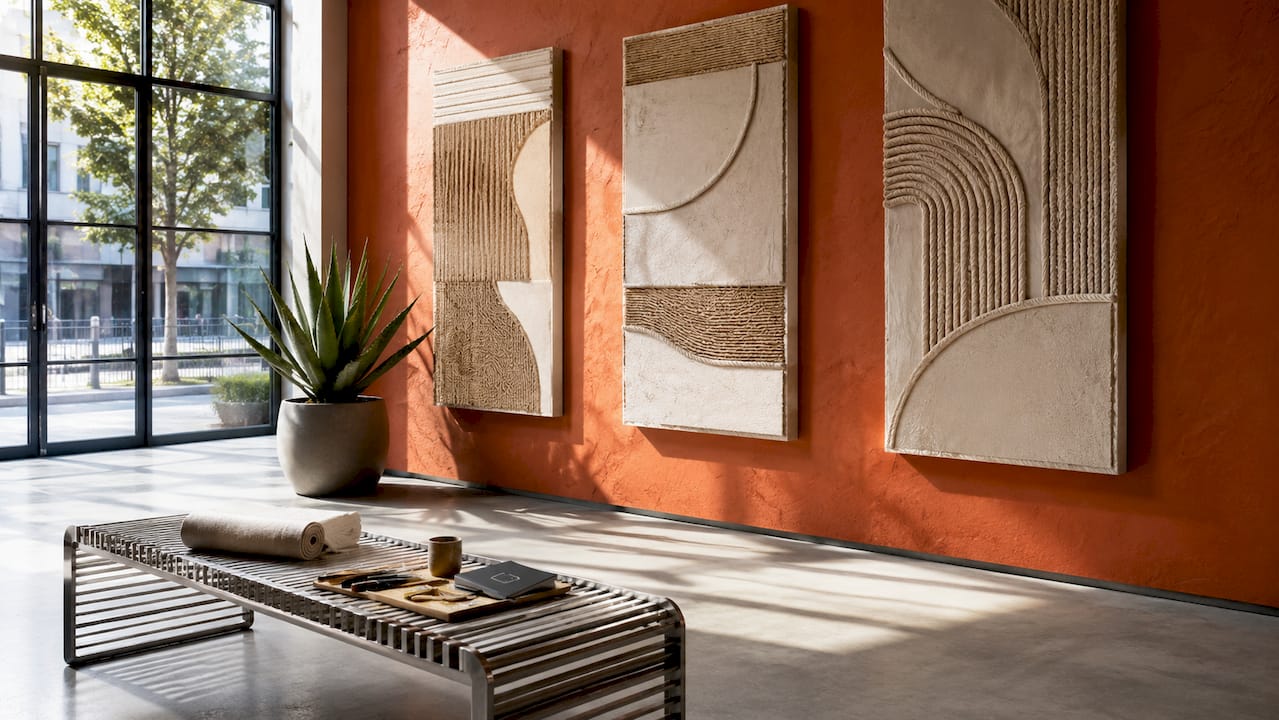
The shift away from trend-driven digital art frames toward permanent, tactile, and biographically meaningful art objects is accelerating in 2026. Material permanence adds value that a screen cannot replicate. A plaster relief or a layered canvas carries physical weight, both literally and perceptually.
Popular materials and techniques in this category:
- Plaster and gesso textures applied over canvas for sculptural depth
- Resin pours and encaustic wax for luminous, layered surfaces
- Woven fiber and macramé panels for organic warmth in Japandi or bohemian interiors
- Layered canvas with palette knife application for visible, expressive brushwork
Pro Tip: Place textured art on a wall that receives natural light from the side, not directly from the front. Raking light amplifies the surface texture and makes the piece look dramatically more expensive.
The Japandi design style consolidating in 2026 is a direct driver of this material preference. Wabi-sabi aesthetics, which celebrate imperfection and natural materials, align perfectly with handcrafted, textured surfaces over digitally printed reproductions.
6. Japandi and biophilic art integration
The Japandi aesthetic is no longer emerging. It is now a consolidated design language in 2026, and it has specific implications for how you choose and place wall art. Botanical prints, ink wash landscapes, and wabi-sabi inspired works with visible imperfection are the canonical choices within this style. The Great Wave diptych has become a reference point for how Eastern art traditions translate into Western interiors without feeling appropriative or superficial.
Biophilic art, which depicts natural forms including plants, water, stone, and organic abstraction, works within almost any 2026 interior because it connects to the broader material palette of wood, linen, and ceramic that defines modern home decor. The key is choosing art that feels like a continuation of the room’s materials rather than a contrast to them.
For design professionals, this means specifying art at the same time as specifying furniture and textiles, not as an afterthought. The types of wall art available in 2026 span a wide enough range of materials and styles that matching art to a room’s material story is entirely achievable without custom commissions.
Key takeaways
Wall art trends 2026 reward scale, material authenticity, and personal meaning over quantity, trend-chasing, and generic decoration.
| Point | Details |
|---|---|
| Scale over quantity | One oversized piece at 48×60 inches or larger outperforms multiple small frames in visual impact. |
| Earthy palettes lead | Terracotta, sage, warm cream, and deep navy replace cool grays as the dominant art colors. |
| Personalization extends longevity | Art tied to personal memory or identity resists trend cycles and feels relevant longer. |
| Texture adds perceived value | Plaster, resin, and woven fiber surfaces change with light and signal handcrafted quality. |
| Gallery walls require editing | Refined arrangements of 3 to 5 frames with color coherence replace cluttered multi-print grids. |
Artify’s take on choosing art that actually lasts
The most common mistake I see is treating wall art as the last decision in a room rather than one of the first. When art is chosen after everything else is in place, it ends up competing with furniture instead of anchoring it. The 2026 shift toward oversized statement pieces is partly a correction to that habit. One large piece chosen early sets the room’s color story, scale, and mood before a single piece of furniture arrives.
What I find genuinely useful about the 2026 direction is the emphasis on permanence. The move away from digital art frames and mass-produced prints toward textured, handcrafted, and personalized pieces reflects something real about how people want their homes to feel. A plaster canvas or a custom photograph transformed into an abstract painting is not going to feel dated in three years. It carries context that a trend-driven print simply cannot.
My honest advice: choose art that you can explain. If someone asks why a piece is on your wall and your answer involves the artist, the memory it captures, or the specific way it catches afternoon light, that piece belongs there. If the answer is “it matched the couch,” reconsider.
— Artify
Bring 2026’s top wall art trends into your space
Artify curates artwork that reflects exactly where design is heading in 2026, from large-scale abstract canvases in earthy palettes to personalized pieces that transform your own photographs into gallery-quality prints.
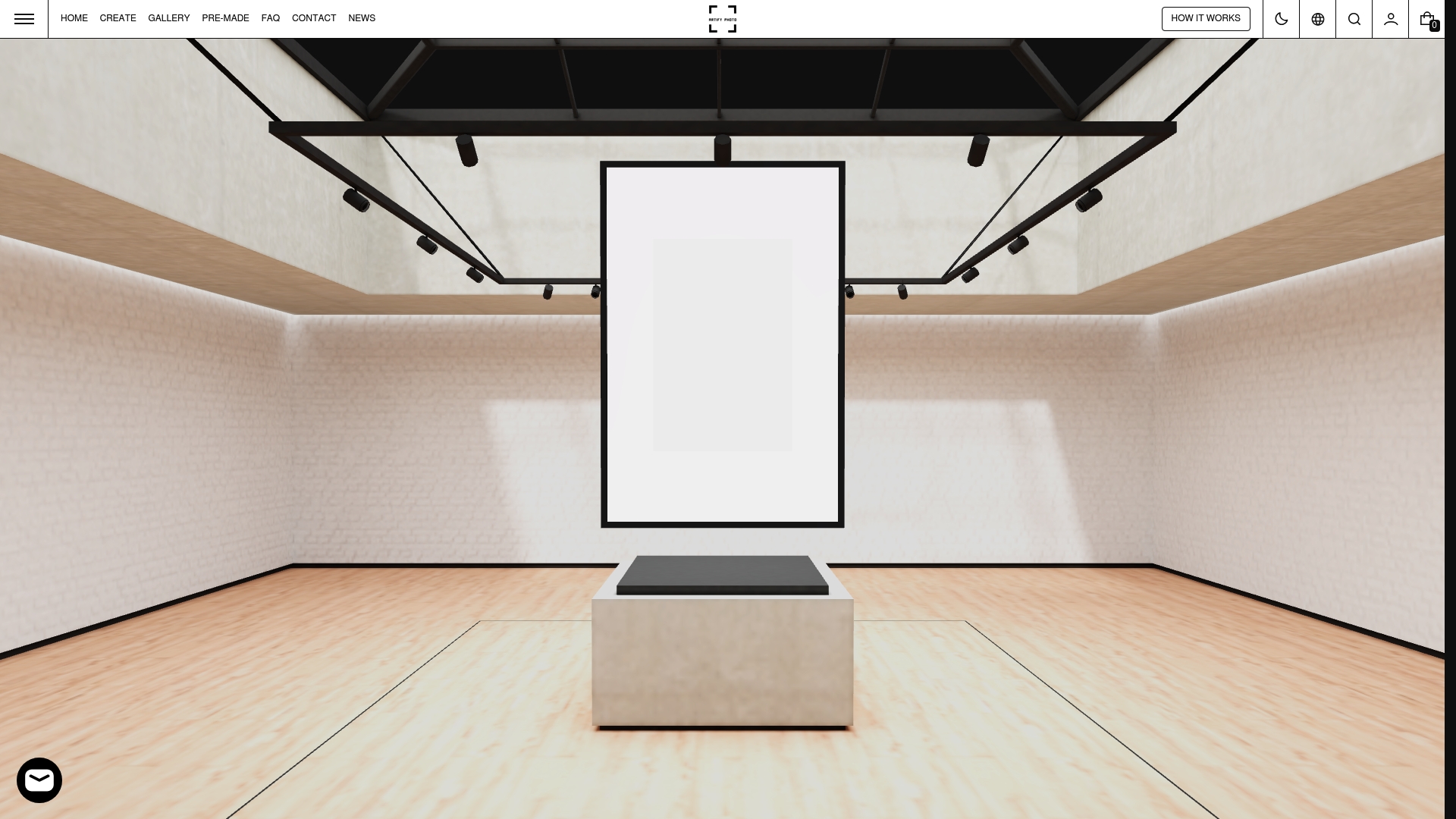
Browse Artify’s pre-made collections to find oversized statement pieces, nature-inspired works, and refined single-canvas options that align with 2026’s dominant styles. Every piece is printed on demand by independent artists, which means you get quality and originality without the mass-production compromise. If personalization is your priority, Artify’s customization tools let you upload a photograph and choose from multiple artistic styles, with a 3D room preview so you can see exactly how the piece fits before you order. The result is art that fits your space and your story.
FAQ
What size wall art is recommended for 2026 interiors?
Interior designers recommend pieces sized at 48×60 inches or larger for living room focal points in 2026. A useful rule is to target 60 to 75% of the wall’s width for balanced placement above main furniture.
What colors are trending in wall art for 2026?
Terracotta, muted olive, warm cream, and deep navy are the dominant palette in 2026 wall art. These earthy tones replace the cool grays of the previous decade and complement natural materials like wood and linen.
Are gallery walls still popular in 2026?
Gallery walls are still used but in a more edited form, with 3 to 5 frames, consistent color, and generous spacing. Single statement pieces and diptychs are growing in popularity as cleaner alternatives.
Why is personalized wall art growing in 2026?
Personalized art creates emotional connection and biographical meaning, which makes it more resistant to trend cycles than generic prints. Buyers in 2026 prioritize art that reflects identity and memory over mass-produced decoration.
What materials define premium wall art in 2026?
Plaster, resin, woven fibers, and layered canvases with visible brushwork define premium wall art in 2026. These tactile surfaces interact with natural light and signal handcrafted quality that flat digital prints cannot match.