


TL;DR:
- A fine art print is an archival reproduction of original artwork or photography created with pigment-based inks and acid-free paper. It reflects the artist’s intent and uses durable materials, ensuring longevity of 70 to over 200 years. Buyers should verify the materials, edition, and authenticity to ensure they own a true fine art piece.
A fine art print is defined as a high-quality, archival reproduction of original artwork or photography, created with the deliberate intention of serving as the final physical expression of the artist’s vision. Professional photographer Nick Rains explains that the word “fine” traces back to Aristotle’s concept of Final Cause, meaning the print exists as an end in itself, not merely as a copy. These prints use archival pigment-based inks and acid-free papers rated to last 70 to 200+ years under normal display conditions. Understanding what separates a true fine art print from a standard reproduction helps collectors, decorators, and gift shoppers make choices they won’t regret in five years.
What is a fine art print, and what makes it different?
The fine art print definition centers on two things: materials and intent. A print qualifies as “fine art” when it combines archival-grade substrates, pigment-based inks, and a production process guided by the artist’s creative vision. Without all three, it is a commercial reproduction, regardless of how it is labeled.
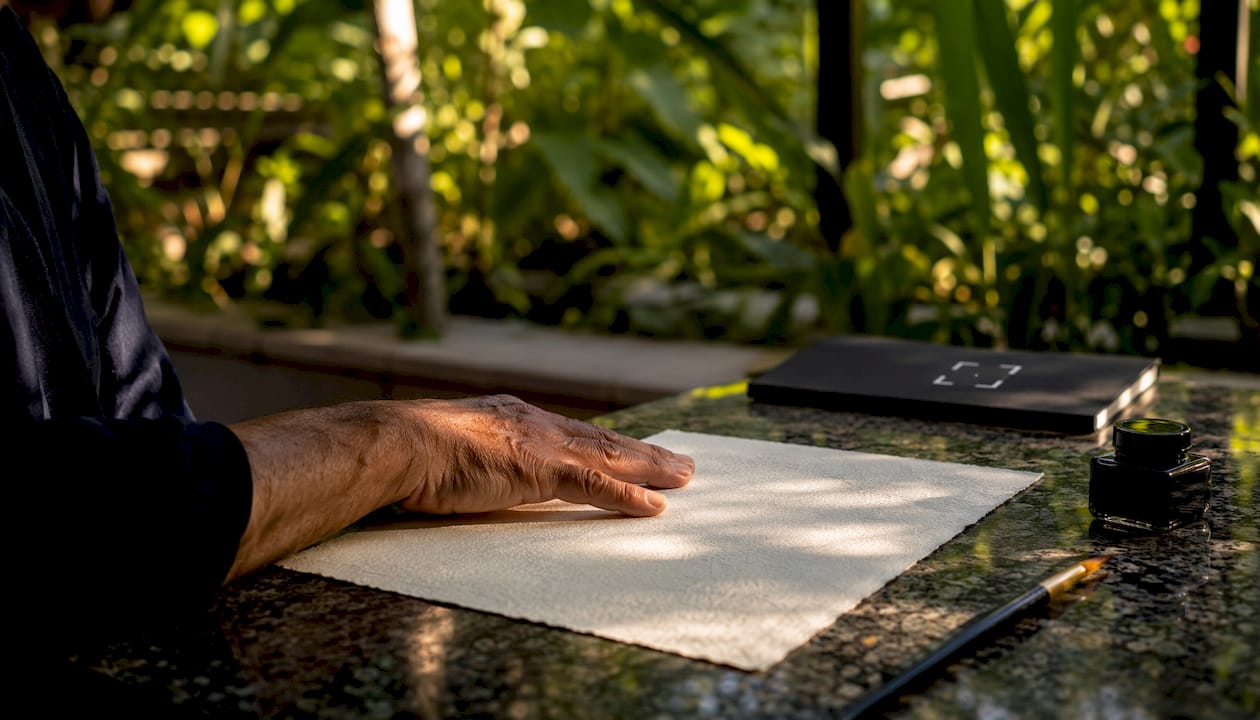
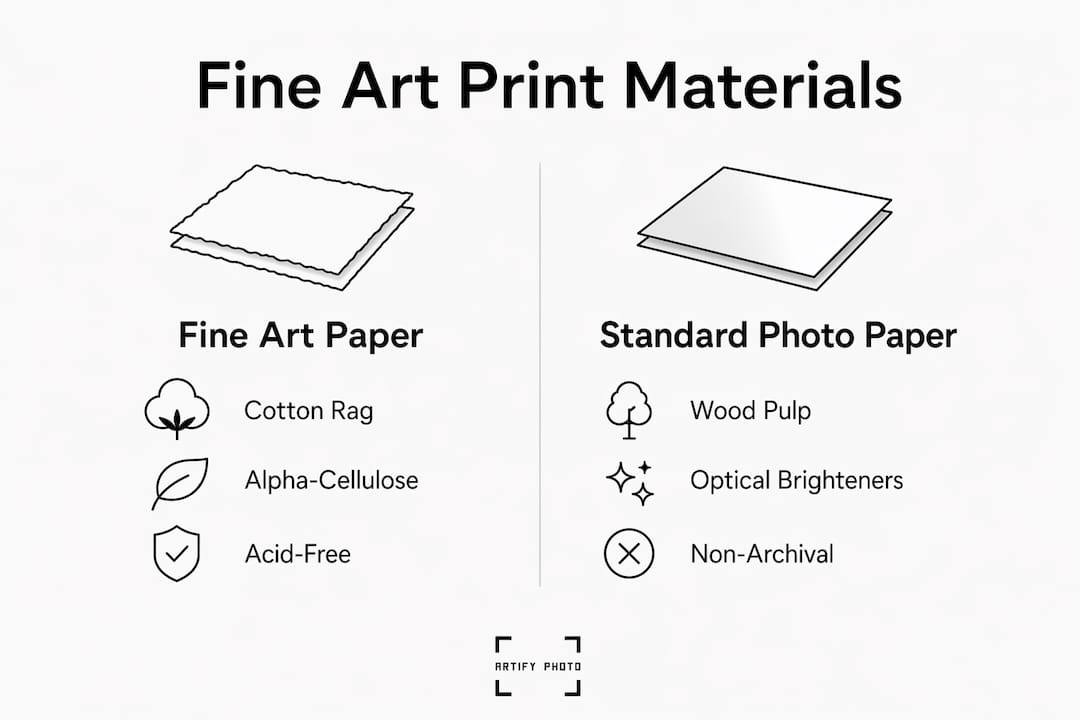
Fine art paper is typically made from 100% cotton rag or alpha-cellulose, and it is acid-free and lignin-free by design. That composition matters because standard photo papers use plastic resin coatings that break down over time, while cotton-based fine art papers remain chemically stable for generations. The tactile difference is immediate. Fine art paper feels substantial and often carries a visible texture, which is a quality signal collectors and decorators recognize on contact.
Pigment-based inks complete the equation. Unlike dye inks, which dissolve into the paper and fade relatively quickly, pigment inks sit near the paper surface and bond with the fiber structure to resist light fade and oxidation. The result is a print that holds its color depth across decades, not just years.
What materials and processes go into a fine art print?
The production of a fine art print involves a precise combination of paper chemistry, ink formulation, and printing technology. Each element affects the final result in ways that are measurable and visible.
Fine art paper types
Fine art papers avoid optical brightening agents (OBAs), which are chemical additives used in many standard papers to appear whiter under UV light. OBAs cause subtle color shifts over time as they degrade under natural and gallery lighting. True fine art papers maintain color neutrality because they skip those agents entirely. Common surface options include smooth matte, textured watercolor, and velvet finishes, each suited to different image types and artistic styles.
Pigment inks versus dye inks
The gap between pigment and dye inks is not subtle. Archival pigment inks bond with fine art paper to deliver color stability and longevity that dye-based prints cannot match. Even among pigment inks, slight formulation differences affect resistance to UV light and oxidation, which is why pairing specific ink sets with compatible paper stocks matters for long-term results.
Printing technology
High-resolution inkjet printing, often called giclée printing, is the dominant technology for fine art reproduction today. Giclée uses microscopic ink droplets to build continuous-tone images with color accuracy that rivals traditional printmaking. The process requires color-managed workflows and calibrated equipment to maintain fidelity to the original artwork.
| Feature | Fine art paper | Standard photo paper |
|---|---|---|
| Base material | Cotton rag or alpha-cellulose | Plastic resin-coated paper |
| Acid-free | Yes | Rarely |
| Surface options | Matte, textured, velvet | Glossy, semi-gloss |
| Longevity with pigment ink | 70–200+ years | Significantly shorter |
| OBA content | None | Often present |
Pro Tip: Ask any print supplier for the paper’s ICC profile and whether it is rated as acid-free and lignin-free. Reputable fine art printers provide this information without hesitation.
How do fine art prints compare to other types of prints?
Understanding what are art prints in general helps clarify where fine art prints sit in the hierarchy. Art prints range from mass-produced posters printed on thin stock to limited-edition giclée works on museum-grade cotton paper. The difference between fine art and prints of the commercial variety comes down to materials, process, and intent.
Christie’s notes that prints are collaborative works between artists and skilled printmakers, treated as original artworks with limited editions that confer authenticity beyond commercial reproductions. That collaborative standard is what separates a collectible print from a poster you’d find in a discount bin.
Giclée is a specific subset of fine art printing with defined standards: pigment inks, archival paper, and a color-managed workflow. As UKGICLEE clarifies, all giclée prints are fine art, but not all fine art prints are giclée. “Fine art print” is a broader, non-regulated term describing intent, while “giclée” signals a specific technical standard. Buyers who want certainty should look for the giclée designation alongside documentation of the materials used.
Key differences collectors and decorators should know:
- Archival longevity: Fine art prints rated at 70–200+ years versus commercial dye-based prints that fade within years under normal light exposure.
- Paper weight and texture: Fine art papers feel heavier and more intentional. Standard photo papers feel thin and plasticky by comparison.
- Limited editions: Fine art prints often come in numbered, signed editions. Commercial prints are typically unlimited runs.
- Price point: Fine art prints cost more because the materials, process, and edition size justify it. That cost reflects real value, not just marketing.
For a broader look at types of art prints and how they compare across categories, Artify’s buyer’s guide breaks down the full spectrum clearly.
What should buyers consider when selecting fine art prints?
Choosing a fine art print well requires asking the right questions before purchasing. The label alone is not enough.
Limited edition prints that are signed and numbered typically hold higher value due to scarcity and authentication. That scarcity is meaningful only when the edition is genuinely limited and documented with a certificate of authenticity. Always ask the seller for that certificate and confirm it includes the edition number, total run size, and the artist’s signature.
Environmental conditions affect even the best archival materials. Proper framing and controlled display conditions covering light and humidity are essential to preserve fine art prints over decades. UV-filtering glass or acrylic is the single most effective framing upgrade for any print displayed near natural light. Avoid hanging prints in bathrooms, kitchens, or any space with high humidity fluctuations.
For collectors who also value physical preservation of photographic memories alongside prints, resources on photo album preservation offer complementary guidance on archival display methods.
Pro Tip: Before buying, ask the seller three direct questions: What ink type was used? What paper stock? Is there a certificate of authenticity? Any reputable fine art printer answers all three without hesitation.
Additional considerations worth noting:
- Verify the paper is acid-free and lignin-free, not just matte.
- Confirm pigment-based inks were used, not dye-based.
- Check whether the print is part of a limited or open edition.
- Store unframed prints flat in acid-free sleeves away from direct light.
- Use UV-filtering glazing in any frame to slow color degradation.
What are the most common misconceptions about fine art prints?
Several persistent myths lead buyers to overpay for low-quality work or dismiss genuinely valuable prints.
Myth 1: A matte finish means archival quality. Matte finish alone does not mean archival. Many matte photo papers still contain plastic layers that degrade over time, unlike true fine art papers designed for permanence. The finish describes the surface texture, not the paper’s chemical composition.
Myth 2: The “fine art” label guarantees quality. “Fine art print” is a non-regulated marketing term. Any seller can use it. The label does not confirm pigment ink, archival paper, or any specific production standard. Buyers must verify the materials independently.
Myth 3: All giclée prints are the same. Giclée describes a process, not a quality floor. Standards vary widely between printers. A giclée print on cheap paper with inconsistent color management is still called giclée, but it will not perform like a properly produced one.
Myth 4: Prints are just copies. Christie’s is direct on this point: prints are original art forms, not copies. The printmaking process involves deliberate artistic and technical choices. A limited-edition signed print carries the same creative authority as a painting or sculpture in the artist’s body of work.
“A fine art print is created with the deliberate intention of being the final physical expression of the artist’s creative process. The print is not a copy of the art. It is the art.” — Nick Rains, professional photographer and imaging specialist
That distinction matters for collectors. When you buy a fine art print, you are acquiring a work the artist intended to exist in that form, not a substitute for something else.
Key Takeaways
Fine art prints are defined by archival materials, pigment-based inks, and artistic intent working together. No single element alone qualifies a print as “fine art.”
| Point | Details |
|---|---|
| Archival materials define quality | True fine art prints use acid-free cotton paper and pigment inks rated to last 70–200+ years. |
| “Fine art” is not a regulated label | Always verify ink type, paper composition, and certificate of authenticity before purchasing. |
| Giclée is a specific standard | Giclée prints meet defined technical criteria; not all fine art prints carry this designation. |
| Limited editions add value | Signed and numbered prints with documented edition sizes hold greater collectible value. |
| Display conditions matter | UV-filtering glazing and controlled humidity protect even the best archival prints over time. |
Why fine art prints deserve more credit than they get
The art world has a habit of treating prints as the lesser sibling of paintings and sculptures. At Artify, we’ve seen enough collector regret on both sides to know that view is wrong in both directions.
Buyers who dismiss prints as “just reproductions” miss the point entirely. The artistic intent behind a fine art print is identical to that behind any other medium. The artist chose this format. The print is not a compromise. It is the work. What we’ve observed consistently is that buyers who understand production standards, who ask about ink type and paper composition before purchasing, end up with pieces they treasure for decades. Buyers who focus only on visual appeal and price often find themselves replacing faded prints every few years.
The other mistake we see is assuming that a higher price automatically signals archival quality. It does not. The questions matter more than the price tag. Ask about the materials. Ask for the certificate. Ask whether the edition is genuinely limited. Those three questions filter out most of the noise in the fine art print market.
Fine art prints, chosen well, are among the most accessible ways to own original art. They bring the artist’s final vision into your space at a fraction of the cost of a unique work, with longevity that outlasts most furniture in the room. That is not a consolation prize. That is the point.
— Artify
Artify’s curated fine art print collections
Artify brings together archival-quality fine art prints from independent artists, all produced with the materials and standards this article describes.
Whether you are building a collection, decorating a space, or searching for a gift that lasts, Artify’s curated print collections offer museum-grade options across a wide range of styles and subjects. Every print available through Artify meets the archival standards collectors expect, with pigment-based inks and acid-free substrates as standard. Artists looking to produce and sell their own fine art prints can also join as a creator through Artify’s artist program. Browse the full Artify gallery to find prints that match your space and your standards.
FAQ
What is the fine art print definition in simple terms?
A fine art print is a high-quality, archival reproduction of original artwork or photography made with pigment-based inks and acid-free paper, intended as the artist’s final physical expression of their creative vision.
How long do fine art prints last?
Fine art prints made with archival pigment inks on quality substrates are rated to last 70–200+ years under normal display conditions, far outlasting commercial dye-based prints.
What is fine art paper, and why does it matter?
Fine art paper is made from 100% cotton rag or alpha-cellulose, is acid-free and lignin-free, and contains no plastic resin coatings. Those properties give it the chemical stability needed to support archival print longevity.
Is a giclée print the same as a fine art print?
Not exactly. All giclée prints qualify as fine art prints, but not all fine art prints are giclée. Giclée is a specific process with defined technical standards, while “fine art print” is a broader, non-regulated term.
How do I know if a fine art print is genuinely archival?
Ask the seller for the ink type, paper specification, and a certificate of authenticity. Reputable fine art printers confirm pigment-based inks and acid-free paper without hesitation.