


TL;DR:
- Art curation is the intentional selection, arrangement, and presentation of artwork to create meaning and define spaces. It involves care, interpretation, and stewardship to produce a cohesive and personal visual story at home. Proper curation enhances room ambiance, emphasizes quality, and allows for meaningful and evolving art displays over time.
Art curation is the intentional process of selecting, arranging, and presenting artworks to create meaning. In a home, that means choosing pieces that define a room’s mood, tell your story, and hold up over time. The word traces back to the Latin cura, meaning care, and the Metropolitan Museum of Art uses exactly that framing: curation involves scholarship, interpretation, and stewardship to make a collection more valuable than its individual parts.
For homeowners, the definition is simpler: curation is the opposite of decorating by default.
What curated wall art does for a room:
- Defines the emotional tone before furniture or paint does
- Creates a focal point that organizes the whole space
- Builds a personal narrative that mass-produced decor never can
- Raises the perceived quality of everything around it
- Gives you a framework for adding pieces over time without starting over
Table of Contents
- Why curated wall art matters more than most people realize
- Core principles every homeowner should apply when choosing art
- How to plan, select, and arrange a curated wall
- How to turn personal photos into gallery-quality pieces
- Which print materials and finishes work best for your space
- What does custom wall art cost in the U.S., and how long does it take?
- Common mistakes homeowners make when curating art
- Hanging, spacing, and lighting your art so it looks professional
- Key Takeaways
- Why curation is really just another word for care
- Artify turns your photos and collections into curated wall art
- FAQ
Why curated wall art matters more than most people realize
Art defines a room’s emotional pulse, not just its look. A sofa fills space; the right piece of art changes how the room feels to everyone who walks in.
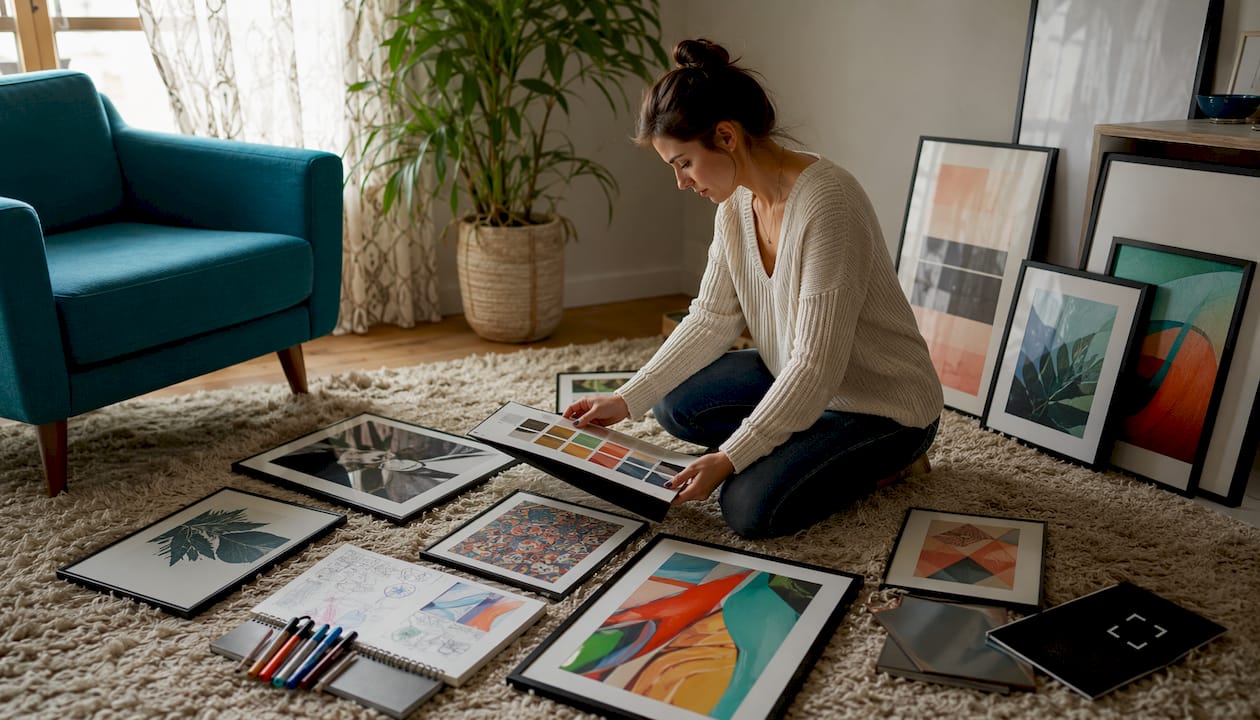
Art advisor Arushi Kapoor puts it directly:
That distinction matters for buyers of personalized wall art especially. A custom print from a photo you love carries context no catalog piece can replicate. It tells a story the room couldn’t tell otherwise.
Three situations where curation is worth the extra time and budget:
- New home or first apartment: Art chosen early sets the palette and scale for everything else you buy.
- Major renovation: A fresh room is a blank canvas; this is the moment to lead with art rather than fill gaps after the fact.
- Meaningful gift: A curated, custom piece lands differently than a gift card. It shows thought, not just spend.
Pro Tip: Let art lead the palette. Pull colors from a piece you love and build the room around them, rather than hunting for art that matches pillows you already own. The second approach almost always produces a showroom look, not a home.
Core principles every homeowner should apply when choosing art
Good curation follows a short set of principles. You don’t need to memorize all of them, but understanding each one helps you make faster, more confident decisions.
- Scale: Art should be proportional to the width of the furniture beneath it. A small print above a king-size bed reads as an afterthought.
- Negative space: Leave breathing room. Crowding a wall with pieces of equal size creates visual noise, not a gallery.
- Focal point: Every room benefits from one anchor piece the eye goes to first. Everything else supports it; for insights on selecting an anchor piece, see Statement Wall Art Explained by Noirci Studio.
- Cohesion: Pieces don’t need to match, but they should share something: a color family, a material, a mood, or an era.
- Contrast: A single black-and-white photograph in a warm, colorful room creates tension in the best way.
- Texture: Mix media. A canvas print next to a framed photograph next to a textile adds depth a uniform set of prints never achieves.
Building a cohesive art display doesn’t mean buying a matching set. It means choosing pieces that can coexist without competing.
Pro Tip: Start with one strong piece and let others arrive over time. A single confident purchase anchors future choices and prevents the over-matched, catalog look that makes a room feel staged rather than lived in.
How to plan, select, and arrange a curated wall
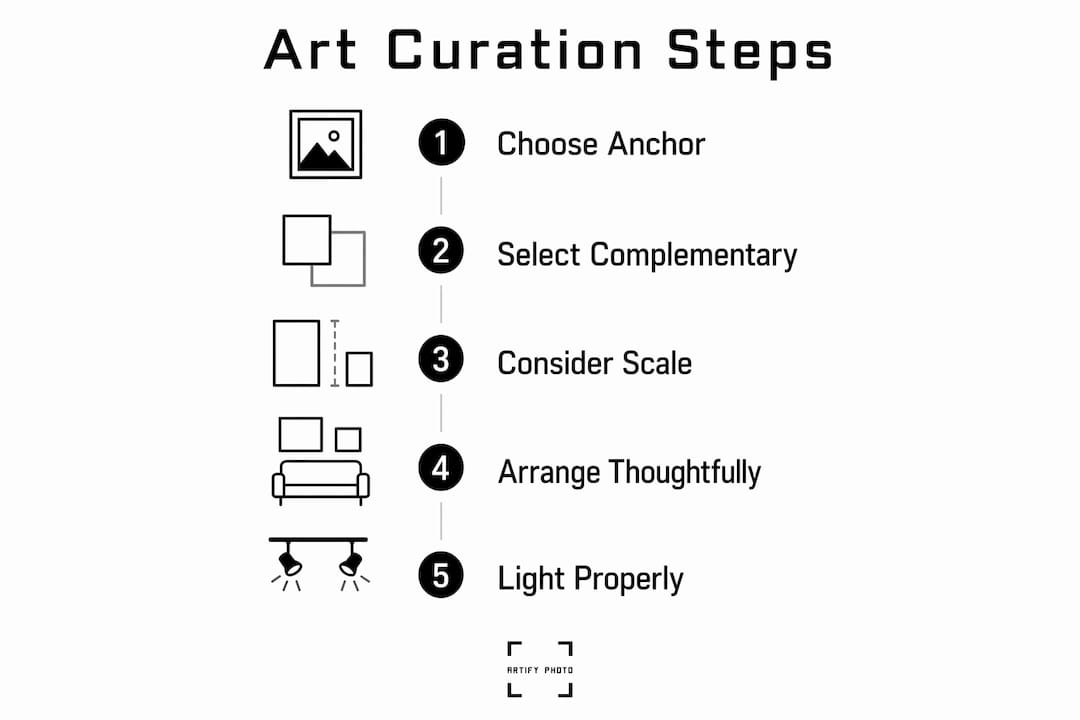
The process breaks into five steps. Follow them in order and you’ll avoid the most common and expensive mistakes.
- Plan the wall. Measure the wall and the furniture beneath it. Sketch a rough layout or use painter’s tape to block out the space.
- Select your anchor piece. Choose one work that sets the tone: scale, palette, and mood. Everything else responds to it.
- Mock up before you commit. Cut paper templates to size and tape them to the wall. Or use a platform with a 3D room preview, like Artify, to see pieces in your actual space before ordering.
- Order and proof. For custom prints, order a proof first. Check crop, color, and orientation in the room’s real light before committing to a large format.
- Install with intention. Hang the anchor piece first. Build outward from it, keeping consistent spacing between pieces.
Practical measuring guide:
| Element | Recommended measurement |
|---|---|
| Center of art from floor | Around eye level |
| Art width over sofa | Proportional to sofa width |
| Spacing between gallery pieces | Moderate spacing |
| Minimum margin from ceiling | Adequate margin |
| Minimum margin from door frame | Some margin |
For pre-order checks: confirm image resolution, crop, framing orientation, and color profile. Artify’s art selection process guide walks through each step in detail.
How to turn personal photos into gallery-quality pieces
Personal photos can absolutely become gallery-quality wall art. The difference between a print that looks professional and one that looks like a drugstore enlargement comes down to file quality and a few technical choices.
Technical specs checklist:
- Minimum resolution: High resolution appropriate for print size to ensure clarity and detail.
- File format: TIFF or high-quality JPEG. PNG works for smaller sizes.
- Color space: sRGB for most online print services; it ensures color accuracy across devices and printers.
- Avoid heavy compression: Repeatedly saving a JPEG degrades quality. Work from the original file.
Cropping and composition: Don’t just center the subject. Consider the aspect ratio of your chosen print size and reframe accordingly. A portrait shot often works better as a vertical canvas; a landscape photo may need cropping to fit a square format cleanly.
Styling choices: Match the artistic treatment to the room’s mood. A photorealistic print suits a modern, minimal space. A painterly or watercolor treatment softens a traditional room. A graphic, high-contrast style works well in a contemporary or industrial setting.
| Treatment style | Best room mood | Works with |
|---|---|---|
| Photorealistic | Modern, minimal | Clean frames, neutral walls |
| Painterly / watercolor | Traditional, warm | Wood frames, textured walls |
| Graphic / high contrast | Contemporary, industrial | Metal frames, exposed brick |
Pro Tip: Order a single proof and view it in the room’s actual light before committing to a large size. Colors shift under different lighting conditions, and what looks right on a screen can read differently on a wall.
Which print materials and finishes work best for your space
Material choice affects how art looks, how long it lasts, and how much it costs. Here’s how the main options compare:
- Giclée print: Museum-grade color depth and longevity. The standard for fine art reproduction. Best for living rooms, studies, and any space where quality is the priority.
- Canvas: Adds texture and warmth. Works well in casual or traditional rooms. Avoid high-humidity spaces like bathrooms unless the canvas is sealed.
- Photographic paper (glossy or matte): Sharp detail and accurate color. Glossy suits modern spaces; matte reduces glare in bright rooms.
- Acrylic face-mount: High contrast, vivid color, and a contemporary finish. Best for modern interiors with controlled lighting.
| Material | Durability | Color depth | Best use |
|---|---|---|---|
| Giclée print | High | Excellent | Living rooms, galleries, gifts |
| Canvas | Medium–high | Good | Casual rooms, large formats |
| Photographic paper | Medium | Very good | Bedrooms, offices |
| Acrylic face-mount | High | Excellent | Modern spaces, statement walls |
UV-protective glazing is worth the cost for any piece in direct or indirect sunlight. Anti-reflective glass makes a real difference in rooms with multiple light sources.
Pro Tip: Match frame weight to room architecture. A heavy ornate frame in a minimal room fights the space. A thin metal or natural wood float frame usually disappears and lets the art lead.
What does custom wall art cost in the U.S., and how long does it take?
Typical U.S. price ranges for custom wall art vary by size, material, and finish:
- Small prints (8×10 to 11×14): $25–$80 unframed; $60–$150 framed
- Medium prints (16×20 to 18×24): $60–$180 unframed; $120–$300 framed
- Large formats (24×36 and up): $150–$400+ unframed; $250–$600+ framed
- Giclée or museum-grade upgrades: Add $30–$100 depending on size
- Shipping and insurance: $10–$40 standard; $25–$80 for large or framed pieces
Standard production and delivery timeline:
- File prep and upload: same day
- Proof review (if ordered): 2–5 business days
- Production: 3–7 business days
- Framing (if selected): add 3–5 business days
- Standard shipping: 5–10 business days
- Express shipping: 2–4 business days
To save without sacrificing quality: choose standard sizes (they use less material and ship more efficiently), skip premium glazing on walls that receive little direct light, and order unframed if you plan to source a local frame.
Common mistakes homeowners make when curating art
The most common mistake is treating art as an afterthought, something chosen after the furniture, the rug, and the paint. Starting with art first produces a more cohesive room faster.
Other mistakes worth avoiding:
- Wrong scale: A piece too small for the wall reads as timid. When in doubt, go larger.
- Forcing a match: Art that matches the sofa cushions exactly looks like it came in a set. Let art lead; let furniture follow.
- Over-cluttering: More pieces don’t mean more impact. Negative space is part of the composition.
- Poor lighting: Even a great print looks flat under the wrong light. Directional lighting changes everything.
- Skipping the proof: Ordering a large custom print without a proof is the most expensive mistake in this list.
- Ignoring material suitability: Canvas in a steamy bathroom, or a glossy print in a sun-drenched room, degrades faster than you’d expect.
- Hanging everything at the same height: Varying heights in a gallery wall creates rhythm; uniform height creates a shelf.
Pro Tip: Start with one strong anchor piece and plan lighting and scale around it before adding anything else. That single decision resolves most of the mistakes above.
Hanging, spacing, and lighting your art so it looks professional
The general rule: hang art so the center of the piece sits 57–60 inches from the floor, which is roughly eye level for most adults. For gallery walls, that rule applies to the visual center of the whole arrangement, not each individual piece.
Installation checklist:
- Hang the anchor piece first, centered on the wall or above the furniture
- Maintain 2–4 inches between pieces in a gallery arrangement
- Use a level on every piece, not just the first
- Mark nail positions with painter’s tape before committing
- Use wall anchors for anything over 5 lbs, especially in drywall
Lighting guidance: Directional lighting (track lighting or picture lights) makes the biggest difference. Aim for a light source angled at roughly 30 degrees to the wall to minimize glare. Warm-white bulbs (2700–3000K) suit most art; cooler light (4000K+) works for photography and graphic prints.
Renter-friendly options: High-quality removable adhesive hooks hold up to 7–16 lbs depending on the brand. Leaning large prints against the wall on a shelf or ledge is a legitimate display choice, not a workaround.
- Mark positions with painter’s tape
- Check level before drilling or pressing hooks
- Use two hanging points for anything wider than 18 inches
- Add felt pads to the back corners to protect walls and keep frames straight
Pro Tip: A single picture light above one strong piece does more for a room than recessed lighting spread across the whole wall. It signals intention.
Key Takeaways
Art curation is the intentional selection, arrangement, and presentation of pieces that define a room’s mood, tell a personal story, and hold up over time.
| Point | Details |
|---|---|
| Start with one anchor piece | Choose a single strong work first; it governs scale, palette, and every piece that follows. |
| Follow the 57–60 inch rule | Hang art so its center sits at eye level; apply this to the visual center of gallery arrangements too. |
| Verify file specs before ordering | Use sRGB color space, 300 DPI at print size, and order a proof before committing to large formats. |
| Match material to the room | Giclée for quality-first spaces, canvas for texture and warmth, acrylic for modern high-contrast walls. |
| Artify for custom and curated art | Artify offers 3D room previews, museum-grade giclée, framing options, and pre-made collections for every style. |
Why curation is really just another word for care
Most people think of curation as a museum concept, something that requires credentials and a white-walled gallery. The truth is simpler and more personal. Curation is just the decision to be intentional about what you put on your walls and why.
What gets lost in most home decor advice is the permission to go slowly. You don’t need to fill every wall at once. One piece, chosen because it genuinely moves you, does more for a room than a coordinated set chosen because it matched the paint. The art selection process is not a project to complete. It’s a practice that evolves as you do.
The other thing worth saying: personal photos, when printed with real care and the right specs, belong in the same conversation as purchased art. A photograph from a trip that changed you, printed as a museum-grade giclée and framed properly, is not a lesser choice. It’s often the most meaningful one on the wall.
Artify turns your photos and collections into curated wall art
If you want to move from idea to finished piece without guesswork, Artify.photo gives you a guided path from upload to installation.
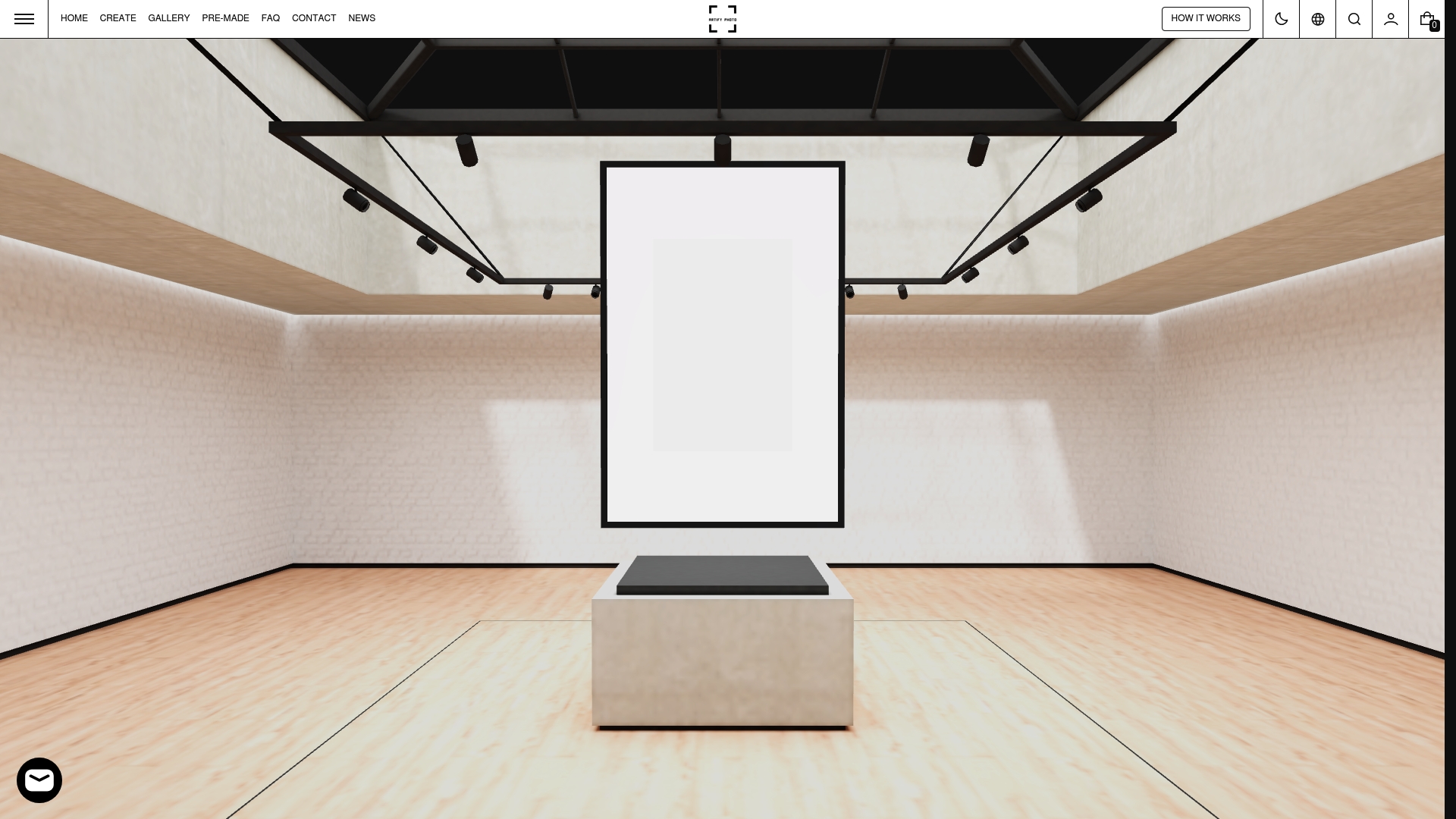
Upload a personal photo, choose an artistic style, and preview it in your actual room using Artify’s 3D room preview before you order anything. Every print is produced on demand by independent artists, with museum-grade giclée, framing options, and proof ordering built into the process. Prefer something ready to hang? Browse pre-made collections curated around contemporary trends, landmarks, and pop culture.
The how it works page walks through every step: upload, preview, proof, production, and delivery. Start with one piece, see it in your space first, and order when you’re confident.
FAQ
What is art curation in simple terms?
Art curation is the intentional process of selecting, arranging, and presenting artworks to create meaning. The term comes from the Latin cura, meaning care, and applies to both museum collections and home walls.
How do I start curating wall art for my home?
Start with one anchor piece that sets the scale and mood for the room, then build outward over time. Measure the wall, mock up layouts with paper templates or a 3D preview tool, and order a proof before committing to large formats.
What file specs do I need for a custom photo print?
Use a high-quality JPEG or TIFF file in sRGB color space at high resolution appropriate for your intended print size to ensure clarity and detail.
What is the right height to hang wall art?
Hang art so the center of the piece sits 57–60 inches from the floor, which corresponds to average eye level. For a gallery wall, apply that measurement to the visual center of the whole arrangement.
What is the difference between giclée and canvas prints?
Giclée prints offer museum-grade color depth and longevity on archival paper, making them the best choice for fine art reproduction. Canvas adds physical texture and warmth, and works well for casual or large-format displays.