


TL;DR:
- Bespoke artwork is created entirely from scratch based on a client’s detailed vision and preferences. It is unique, built via deep collaboration, and commands a premium price for its exclusivity. Commissioning involves a clear process, early design integration, and offers lasting emotional and investment value.
Bespoke artwork is defined as a fully original piece created from scratch to meet one specific client’s vision, space, and preferences. Unlike off-the-shelf prints or even standard custom art, a bespoke commission starts with a blank canvas and a detailed brief. Every decision, from medium and scale to color palette and subject matter, belongs to the buyer. The result is a one-of-a-kind work that no other person owns. For art enthusiasts and home decorators alike, understanding what is bespoke artwork is the first step toward making a genuinely personal investment in your space.
What is bespoke artwork, and how is it defined?
Bespoke artwork is created entirely from scratch per a detailed client brief, controlling size, colors, subjects, and room architecture. The word “bespoke” originates from the tailoring trade, where a suit was “spoken for” by a specific customer before a single stitch was made. Applied to art, it carries the same meaning: nothing exists until the client defines it.
This distinguishes bespoke art from both mass-produced prints and standard personalized artwork. A mass-produced print is reproduced identically for thousands of buyers. A personalized print might add your name or photo to an existing template. Bespoke art, by contrast, has no template. The artist builds the concept, composition, and execution entirely around your specifications.
The term “commissioned artwork” is the standard industry phrase for this practice. Both terms describe the same process, and you will encounter them used interchangeably by galleries, interior designers, and independent artists. Knowing both terms helps you search more effectively and communicate clearly with artists.
How does bespoke art differ from custom and mass-produced art?
Custom art adapts an artist’s existing style and techniques to a client’s request, while bespoke art is conceived fully from scratch. This distinction affects both the uniqueness of the final piece and the length of the creative process. Custom art is faster and typically less expensive because the artist is working within a familiar framework. Bespoke art demands deeper collaboration and original conceptualization at every stage.
Mass-produced art sits at the opposite end of the spectrum. It is printed in large runs, sold through retail channels, and designed to appeal to the broadest possible audience. The trade-off is obvious: you get a lower price but zero exclusivity. Anyone can own the same piece.
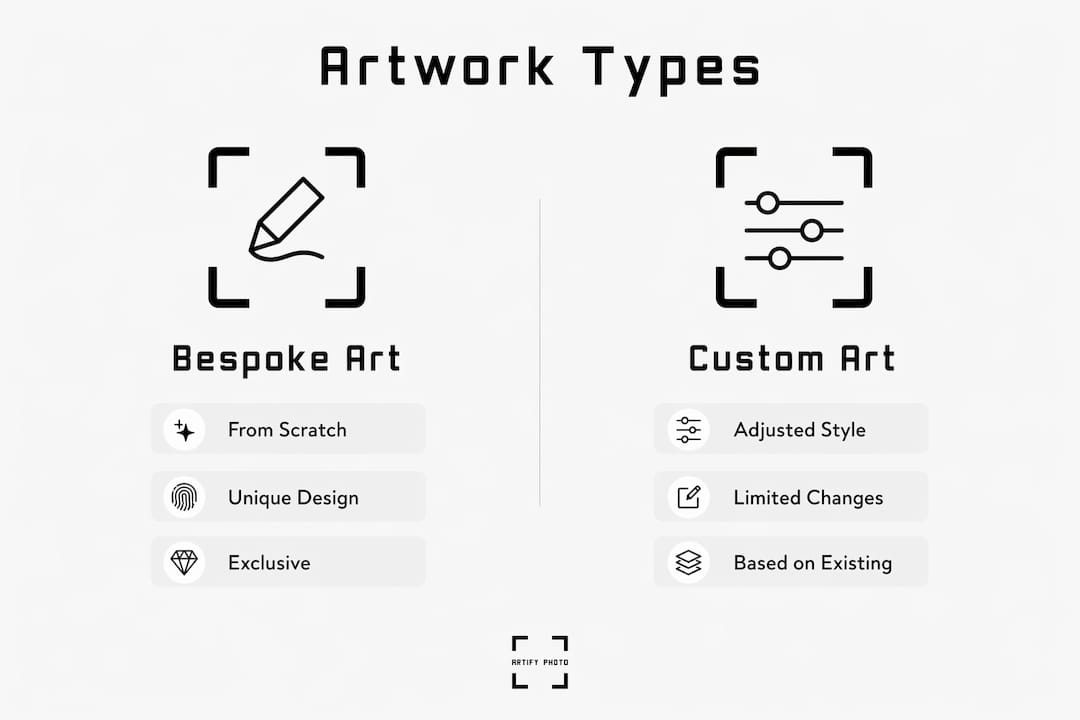
Bespoke commissions command a premium price that reflects their exclusivity and the extensive collaborative process behind them. Pricing varies by artist reputation and project complexity, and timelines are longer because each decision requires client input. That premium is not arbitrary. It reflects the hours of consultation, revision, and original creative labor that go into a single work.
| Point | Custom art | Bespoke art | Mass-produced art |
|---|---|---|---|
| Creation process | Adapts existing style | Built from scratch | Reproduced in bulk |
| Uniqueness | Semi-unique | Fully one-of-a-kind | Identical copies |
| Client involvement | Moderate | Deep collaboration | None |
| Pricing | Mid-range | Premium | Low |
| Timeline | Weeks | Weeks to months | Immediate |
How to commission bespoke artwork: the step-by-step process
Commissioning a bespoke piece follows a clear sequence. Understanding each stage helps you prepare and avoids costly miscommunication.
- Initial consultation. You meet the artist, share your vision, and discuss the space where the work will hang. Bring photos of the room, your color palette, and any reference images that capture the mood you want.
- Formal brief and agreement. The commissioning process involves formal agreements and clear design briefs covering medium, room layout, size, and deadlines. A written agreement protects both parties and keeps the project on track.
- Concept development. The artist produces sketches or digital mockups for your review. This is the most collaborative phase. Expect two or three rounds of feedback before the direction is locked.
- Creation. The artist executes the final work. Depending on the medium, oil painting or large-scale mixed media can take four to twelve weeks. Watercolor or digital illustration typically moves faster.
- Review and delivery. You approve the finished piece before it ships. Ordering custom artwork requires providing details on size, medium, mood, and framing preferences upfront, so surprises at this stage are rare when the brief was thorough.
Pro Tip: Before your first consultation, visit Artify’s sizes and framing guide to understand standard dimensions and framing options. Arriving with a clear size in mind saves at least one revision round and keeps your timeline tight.
Timelines and costs are the two questions buyers ask most. A straightforward oil portrait on a 24x36 inch canvas from a mid-career artist typically runs eight to sixteen weeks and starts at several hundred dollars. Large-scale abstract works for commercial spaces can run into the thousands. Budget for framing separately, as it often adds 15–30 percent to the total cost.

How bespoke artwork fits into interior design
Design professionals consider bespoke artwork an integral, structural part of luxury interior design, not a finishing touch. Bespoke pieces are created to align with room scale, materials, and client personality. That alignment is impossible to achieve with a piece selected from a retail catalog after the room is already furnished.
The practical advantages of commissioning art early in a design project are significant:
- Scale accuracy. A bespoke piece is sized to the exact wall, not approximated from standard retail dimensions.
- Color harmony. The artist pulls specific tones from your upholstery, flooring, or architectural details, creating visual coherence that a pre-made print rarely achieves.
- Style consistency. Whether your interior is mid-century modern, Japandi, or maximalist, the artist builds the work within that visual language.
- Narrative fit. The subject matter can reflect your personal history, a meaningful location, or a family story, giving the room a layer of meaning that generic art cannot provide.
Design experts recommend integrating bespoke art early in design projects as a foundational element. This approach is common in high-end residential projects and commercial spaces like boutique hotels, law offices, and private dining rooms. The art does not decorate the room. It defines it.
For buyers exploring how wall art shapes a space, Artify’s guide on wall art in interior design covers the principles that apply whether you commission a bespoke piece or select from a curated collection.
What are the benefits and key considerations of bespoke art?
The emotional value of a bespoke commission is measurable. The co-creation process triggers the endowment effect, greatly increasing the perceived value of the finished work. Buyers who participate in the creation process feel a stronger bond with the piece than they would with any purchased print. That bond does not fade. It deepens over time.
Beyond emotion, bespoke art carries real investment and legacy value. Commissioned pieces can become heirlooms representing personal values and memories, passed down through generations. Provenance, the documented history of who commissioned a work and why, adds to its long-term worth. A piece with a clear story is more valuable than an anonymous print.
Key considerations before you commit:
- Budget. Set a realistic ceiling before approaching artists. Bespoke work is an investment, and underfunding the brief leads to compromises in scale or materials.
- Timeline. Allow more time than you think you need. Rushing a bespoke commission produces inferior results and strains the artist relationship.
- Artist selection. Review portfolios carefully. Choose an artist whose existing body of work already resonates with you, not one you hope will adapt to your taste.
- Communication. The brief is everything. Vague instructions produce vague art. The more specific your reference materials and written description, the better the outcome.
Pro Tip: Collectors often find the commissioning journey as rewarding as the artwork itself. Document your brief, sketches, and correspondence. That paper trail becomes part of the piece’s provenance and adds to its story.
For buyers new to the process, Artify’s guide on personalized art options explains the spectrum from simple photo prints to fully commissioned works, helping you identify where your needs sit.
Key Takeaways
Bespoke artwork is the highest form of personalized art because it is built entirely from scratch around a single client’s vision, space, and story.
| Point | Details |
|---|---|
| Bespoke vs. custom art | Bespoke starts from scratch; custom art adapts an existing style to a client request. |
| Commissioning process | A written brief covering size, medium, mood, and deadline is the foundation of every successful commission. |
| Interior design integration | Commission bespoke art early in a design project so scale, color, and style align from the start. |
| Emotional and legacy value | The endowment effect makes bespoke pieces feel more valuable, and provenance adds long-term worth. |
| Budget and timeline | Set a realistic budget and timeline before approaching artists to avoid compromises in quality. |
Why bespoke art is worth more than its price tag
At Artify, we have seen buyers hesitate at the price of a bespoke commission and then spend the same amount on three prints that never quite work together. That hesitation is understandable. The cost is visible upfront, while the value accumulates over years.
The misconception I encounter most often is that bespoke art is only for collectors or luxury interiors. It is not. A bespoke watercolor of a family home costs less than most people assume, and it carries more meaning than any mass-produced canvas. The size of the investment matters far less than the specificity of the brief.
The other misconception is that the process is complicated. It is not. A clear brief, a well-chosen artist, and a realistic timeline are all you need. The artist does the hard work. Your job is to communicate what matters to you and trust the process.
Bespoke art is not a luxury add-on. It is the most direct way to make a space feel genuinely yours.
— Artify
Artify’s approach to personalized and bespoke wall art
Artify connects buyers with independent artists who create gallery-quality wall art tailored to individual spaces and stories. Whether you are starting with a clear vision or still building one, the platform offers a practical entry point.
Artify’s pre-made collections give buyers a strong visual reference before committing to a full commission. Browsing finished works helps you identify the styles, palettes, and scales that resonate with your space. From there, Artify’s artist network and art creation tools make it straightforward to specify your requirements and move toward a piece built entirely around you. The Artify gallery showcases the full range of what independent artists on the platform produce, from abstract large-format works to intimate portrait commissions.
FAQ
What is the difference between bespoke and custom artwork?
Bespoke artwork is built entirely from scratch based on a client’s brief, while custom art adapts an artist’s existing style to a specific request. Bespoke art involves deeper collaboration and produces a fully unique piece with no existing template.
How long does a bespoke art commission take?
Timelines vary by medium and complexity, but most commissions run from four to sixteen weeks. Oil paintings and large-scale works take longer than watercolor or digital illustration.
Why does bespoke artwork cost more than custom prints?
Bespoke commissions command a premium because every element is conceived and executed from scratch, requiring more artist time, original conceptualization, and multiple rounds of client collaboration. The exclusivity of owning a one-of-a-kind work also contributes to the price.
What should I provide when commissioning a bespoke piece?
Provide the artist with room dimensions, your preferred medium, a color palette, mood references, and a clear deadline. A formal brief covering these details is the single most important factor in a successful commission.
Can bespoke artwork increase in value over time?
Yes. Commissioned pieces can become heirlooms with documented provenance, which adds to their long-term worth. Works by artists who gain recognition after the commission date often appreciate significantly.