


TL;DR:
- Eco-friendly art actively reduces environmental harm through sustainable materials and lifecycle assessment. It emphasizes responsible sourcing, circularity, and transparency, distinguishing itself from environmental and ecological art. Artists adopting these practices build trust and promote sustainability as a creative constraint that shapes their work.
Eco-friendly art is defined as a creative practice that actively reduces environmental harm through the use of sustainable materials, energy-efficient methods, and a full consideration of the Art Life Cycle from raw material sourcing to final disposal. The standard industry term for this systematic evaluation is Life Cycle Assessment (LCA), and professional artists use it to track environmental impact across every production phase. Eco-friendly art sits at the intersection of creative expression and environmental responsibility, connecting to broader cultural movements like ecological art and environmental art. Platforms like Artify support this shift by featuring independent artists who prioritize responsible creation.
What is eco-friendly art made of?
Eco-friendly art materials are the foundation of any genuinely sustainable practice. The most widely used options include recycled paper, non-toxic paints, organic or plant-based pigments, and natural fibers like hemp or organic cotton. Each of these replaces a conventional material that carries a higher environmental cost.
Several newer materials are reshaping what artists can work with:
- Recycled paper and cardboard sourced from post-consumer waste reduce demand for virgin timber.
- Mineral-based earth pigments replace petroleum-derived synthetic dyes, cutting chemical runoff.
- Non-fired clay is one of the most circular materials available. Unlike kiln-fired ceramics, non-fired clay can be reused indefinitely, making it a true circularity material rather than simply a recycled one.
- Plant-based leathers made from cactus or mushroom fibers replace petroleum-based resins in mixed-media and sculptural work.
- Biodegradable natural fibers such as organic cotton and hemp decompose without releasing synthetic pollutants.
- Gypsum and mineral earth pigments offer low-impact alternatives to resin-heavy casting materials.
Circularity goes further than recycling. Recycling processes a material once. Circularity means a material like non-fired clay cycles back into use again and again with no degradation in quality. That distinction matters when you are evaluating the true environmental cost of your practice.
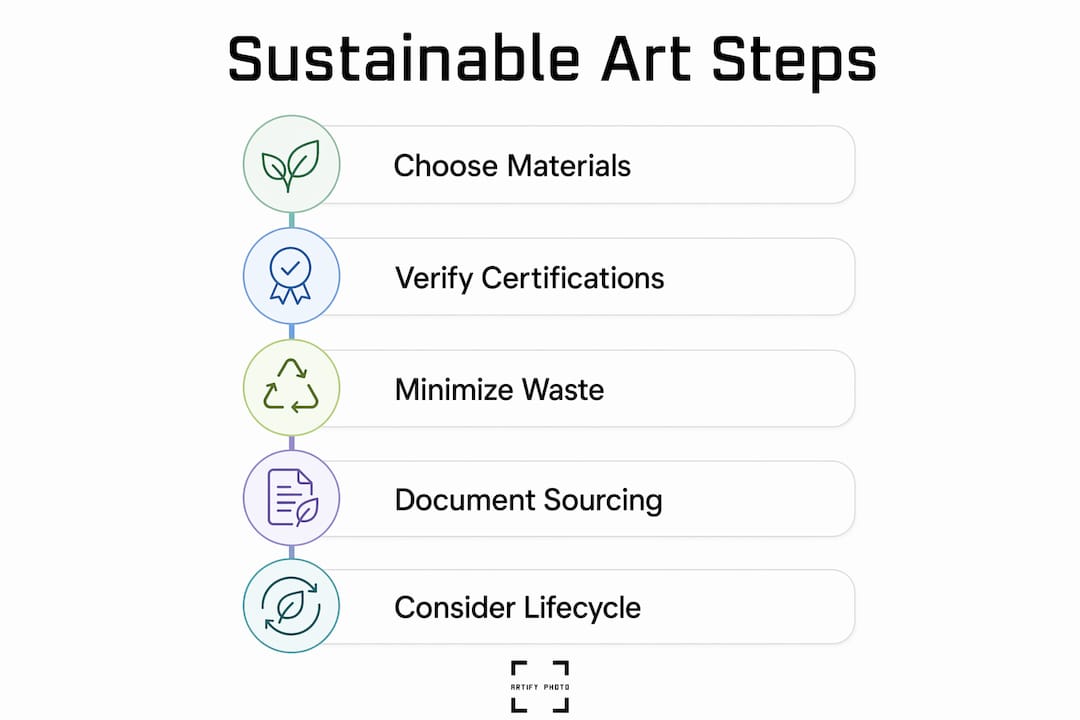
Certifications help you verify claims. The Forest Stewardship Council (FSC) label confirms responsible wood sourcing. The Global Organic Textile Standard (GOTS) certifies organic fiber processing. Verifying these certifications and requesting chain-of-custody documentation from suppliers is the most reliable way to avoid greenwashing.

Pro Tip: Ask your supplier for a written chain-of-custody document before purchasing. If they cannot provide one, treat any sustainability claim as unverified.
How does eco-friendly art relate to environmental and ecological art?
These three terms overlap but are not interchangeable. Understanding the differences helps you engage with each movement on its own terms.
Environmental art broadly engages with nature and ecological themes. It reflects on the relationship between humans and the natural world. Land art, nature photography, and sculpture made from found natural objects all fall under this umbrella. The work does not need to use sustainable materials to qualify. Its subject matter and intent define it.
Ecological art goes further. It is interventionist and activist. Ecological artists actively work to remediate damaged ecosystems, restore habitats, or engage communities in environmental repair. A project that plants native species in a degraded urban lot while documenting the process as art is ecological art. The work produces a measurable environmental outcome, not just a reflection on one.
Eco-friendly art focuses on the materials and processes used to create the work. It is defined by how the art is made, not necessarily what it depicts. An abstract painting made entirely from plant-based pigments on recycled canvas is eco-friendly art even if its subject has nothing to do with nature.
“All eco-art is environmental art, but not all environmental art is ecological art. Ecological art specifically restores or remediates environments, making it the most interventionist category of the three.”
The relationship between these movements also extends to what the Centre for Sustainable Practice in the Arts calls the “ecology of culture.” This concept holds that sustainability in art includes the environmental costs of transportation, exhibition logistics, and audience travel, not just the materials used to make the work. A sculpture built from recycled steel but shipped internationally by air freight carries a significant carbon cost that offsets its material sustainability.
Social dimensions matter too. Environmental justice, community engagement, and artist transparency about environmental footprints are now considered part of what makes a practice genuinely sustainable. Artists who publish their material sourcing decisions and carbon estimates build trust with audiences who are increasingly demanding that information.
What sustainable art practices can artists adopt right now?
Practical change in the studio does not require a complete overhaul. The most effective sustainable art practices address energy use, materials sourcing, cleaning products, and logistics in sequence.
Studio energy and climate:
- Replace incandescent and fluorescent bulbs with LED or CFL lighting. Visual Artists Ireland recommends LED lighting as one of the highest-impact changes a studio can make.
- Install a programmable thermostat to avoid heating or cooling an empty studio.
- Use natural light as the primary light source where your work allows it.
Materials and cleaning:
- Switch to natural or biodegradable cleaning products. Ecover and Seventh Generation are two widely available options that replace solvent-based studio cleaners.
- Source materials from suppliers who provide FSC or GOTS certification and chain-of-custody documentation.
- Repurpose offcuts, failed prints, and packaging materials before purchasing new stock.
Logistics and lifecycle thinking:
- Apply a Life Cycle Assessment mindset to each project. Ask where every material comes from, how much energy its production required, and where it goes when the work is retired.
- Source locally where quality allows. Reducing shipping distance cuts transport emissions directly.
- Consider recycled materials in design as a creative constraint rather than a limitation. Artists who work within material restrictions often produce more original work.
Artists who adopt these practices also gain a commercial advantage. Consumer demand increasingly favors artists who are transparent about their environmental footprints and committed to circular materials. Sustainability is now a market expectation in many segments of the art world, not a niche preference.
Pro Tip: Build a simple one-page material sourcing document for each body of work. List every material, its origin, and its certification. Share it with buyers. Transparency builds loyalty faster than any marketing claim.
What does eco-friendly art look like in practice?
Eco-friendly art takes many forms across media, scale, and intent. The table below shows how different approaches translate into specific project types.
| Art type | Materials used | Environmental approach |
|---|---|---|
| Recycled collage | Post-consumer paper, cardboard, found objects | Diverts waste from landfill; zero new material extraction |
| Plant-pigment painting | Mineral earth pigments, organic linseed oil | Eliminates synthetic chemical use; biodegradable media |
| Non-fired clay sculpture | Raw clay, natural oxides | Fully circular; material reused indefinitely after display |
| Land art installation | On-site natural materials, no adhesives | Zero transport footprint; work returns to environment |
| Cactus leather mixed media | Plant-based leather, recycled fabric | Replaces petroleum-based materials; low-carbon production |
Land art is one of the oldest forms of environmentally conscious art. Artists like Andy Goldsworthy have built careers on creating site-specific works from materials found at the location itself, leaving no permanent trace. That approach eliminates transport emissions and material extraction simultaneously.
Ecological restoration projects represent the most ambitious end of the spectrum. Artists collaborating with ecologists and community groups have used art projects to plant native meadows, clean waterways, and document biodiversity recovery over time. The artwork and the environmental outcome are inseparable.
Exhibitions and festivals dedicated to eco art are growing in number. Events like Eco Arts Festival 2026 bring together artists, scientists, and activists to present work that addresses environmental issues through creative practice. These gatherings also create markets for sustainable work and connect artists with buyers who prioritize responsible sourcing.
Artify supports artists working in this space by providing a platform where independent creators can present and sell their work directly. Artists interested in reaching buyers who value sustainability can join as an artist and connect with an audience that is actively seeking responsible art.
Key Takeaways
Eco-friendly art is defined by its materials, processes, and full lifecycle consideration, making it distinct from environmental and ecological art in both method and intent.
| Point | Details |
|---|---|
| Core definition | Eco-friendly art minimizes environmental harm through sustainable materials and Life Cycle Assessment across all production phases. |
| Material circularity | Non-fired clay and plant-based leathers go beyond recycling by enabling indefinite material reuse. |
| Certification matters | FSC and GOTS labels, plus chain-of-custody documents, are the reliable standard for avoiding greenwashing. |
| Three distinct movements | Eco-friendly art focuses on process; environmental art on themes; ecological art on active ecosystem restoration. |
| Full lifecycle thinking | Sustainability includes transportation, exhibition logistics, and end-of-life disposal, not just the materials used to make the work. |
Artify’s view on where eco-friendly art is heading
The most significant shift I see in the art world right now is not in materials. It is in expectations. Buyers are asking questions that did not come up five years ago: Where did this come from? What happens to it when I no longer want it? How far did it travel to reach me?
Artists who can answer those questions clearly are building something more durable than a portfolio. They are building trust. And trust, in a market saturated with sustainability claims, is genuinely rare.
The challenge is that full lifecycle thinking is hard. Most artists are trained to think about the finished object, not the chain of decisions that produced it. Adopting an LCA mindset means tracking impacts that feel invisible, like the carbon cost of shipping a single canvas or the chemical load of a cleaning solvent used once a week for ten years. That is uncomfortable work. It is also the work that separates a genuine practice from a marketing position.
The cultural role of eco-friendly art extends beyond the studio. Art that is made responsibly and displayed transparently shifts what audiences consider normal. It raises the baseline expectation for every artist in the room. That is a form of advocacy that does not require a protest sign or a manifesto. It just requires honesty about how the work was made.
The artists I find most compelling right now are the ones treating sustainability as a creative constraint rather than a compliance checkbox. The limitation of working only with circular materials, or only with locally sourced pigments, produces work that could not have been made any other way. That specificity is where the most interesting art is coming from.
— Artify
Artify and sustainable art collections
Artify connects buyers with independent artists who bring genuine creative vision to their work, including those committed to responsible materials and transparent practices.
Artify’s pre-made collections feature curated art from independent creators across a wide range of styles, giving buyers a direct path to work that reflects their values. For artists ready to reach an audience that cares about how art is made, the Artify gallery offers a platform built around independent creativity and direct artist support. Responsible art deserves an audience that recognizes it.
FAQ
What is the difference between eco-friendly art and environmental art?
Eco-friendly art is defined by how it is made, using sustainable materials and low-impact processes. Environmental art is defined by its subject matter, engaging with nature and ecological themes regardless of the materials used.
What materials qualify as eco-friendly art materials?
Eco-friendly art materials include recycled paper, mineral earth pigments, non-fired clay, plant-based leathers like cactus or mushroom leather, and natural fibers such as organic cotton and hemp. FSC and GOTS certifications confirm that wood and textile materials meet verified sustainability standards.
What is a Life Cycle Assessment in eco-friendly art?
A Life Cycle Assessment tracks the environmental impact of an artwork across every phase, from raw material extraction through production, distribution, and final disposal or reuse. Professional eco-friendly artists use LCA to identify and reduce the highest-impact stages of their practice.
How can I tell if an artist’s sustainability claims are genuine?
Request chain-of-custody documentation and look for recognized certifications like FSC for wood products and GOTS for textiles. Verified supplier documentation is the most reliable indicator that sustainability claims are backed by evidence rather than marketing language.
Does eco-friendly art include digital art?
Digital art eliminates material waste and physical transport, which reduces several categories of environmental impact. The full lifecycle of digital art still includes the energy cost of servers, devices, and data storage, so a complete sustainability assessment applies to digital practice as well.