


TL;DR:
- Nature-inspired art connects human creativity with ecological principles and uses sustainable materials. Various styles include hyper-realistic landscapes, abstract forms, and living installations that emphasize emotional and ecological connection. Contemporary techniques involve collaborating with natural organisms, shifting authorship from humans to nature, and producing works that reflect genuine ecological processes.
Nature-inspired art is defined as any creative work that draws from the natural world’s forms, patterns, and philosophies to evoke emotional connection and promote ecological awareness. The term covers a wide range of styles, from hyper-realistic landscapes to abstract pieces that mimic the dynamic energy of living systems. What is nature-inspired art at its core? It is not simply painting flowers or forests. It is a philosophy that connects human creativity to the biosphere, drawing on principles like biophilia, biomimicry, and cyclical ecological thinking. Artify curates collections rooted in exactly this tradition, making these works accessible for everyday spaces.
What is nature-inspired art, and what styles does it include?
Nature-inspired art covers a broader range of styles than most people expect. The category includes biophilic art, eco-art, and botanical illustration, each approaching the natural world from a different angle. What unites them is an emphasis on emotional connection over literal depiction.
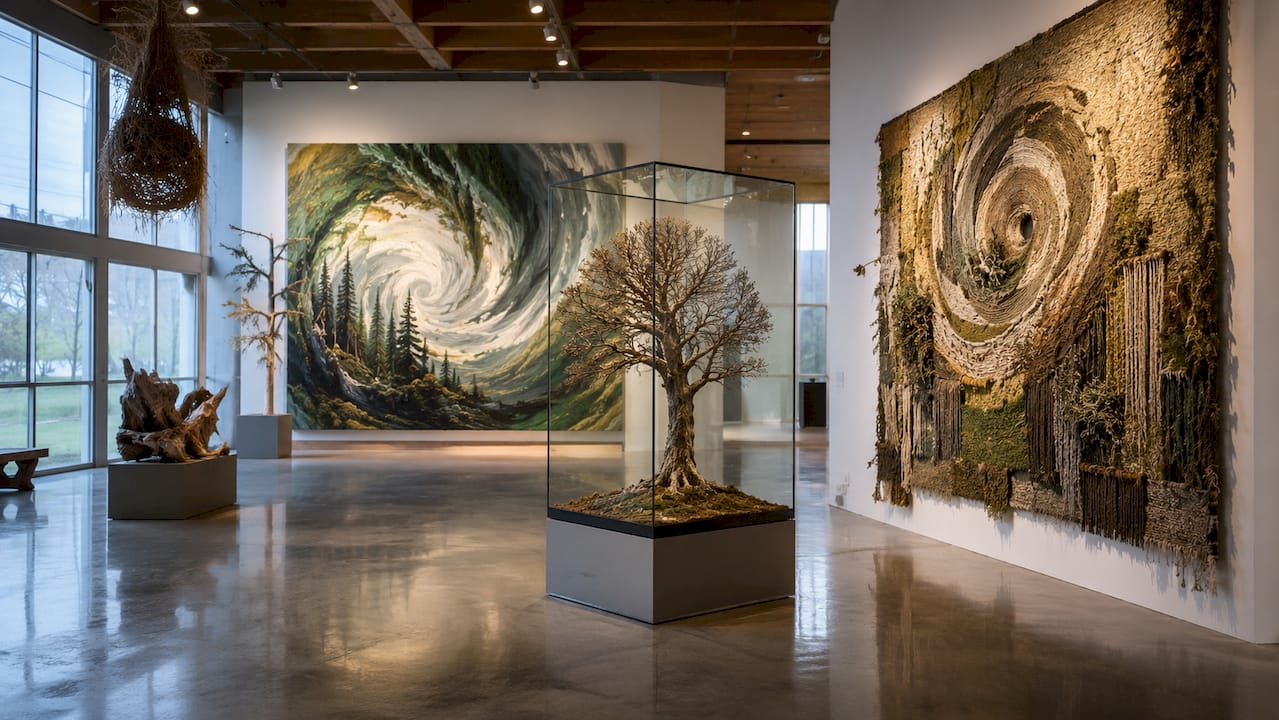
Hyper-realistic landscapes aim for photographic accuracy, capturing the texture of bark, the shimmer of water, or the weight of storm clouds. Botanical illustration, with roots in scientific documentation, brings a precise and intimate focus to plant life. These styles reward close attention. The more you look, the more you see.
Abstract nature-inspired art takes a different path. Rather than copying what nature looks like, it captures what nature feels like. Hans Arp viewed nature art as an imitation of life’s energy, not its surface. His work, and the broader tradition he influenced, conveys movement, growth, and adaptation through shape and color rather than recognizable imagery.
Living installations push the category further still. Artists build moss walls, root sculptures, and seed-based murals that change over time. Some works incorporate logarithmic spirals and other mathematical patterns found throughout nature, giving large-scale pieces a hidden structural logic. Alina Akhmetbek’s monumental paper quill mosaic, built over years using natural geometry, is one striking example of this approach.
The main styles within nature-inspired art include:
- Hyper-realistic landscapes: Detailed, accurate depictions of natural environments
- Botanical illustration: Close-up, precise studies of plant life
- Abstract organic art: Shapes and forms that evoke nature’s energy without literal imagery
- Biomimicry-inspired works: Designs and structures modeled on natural systems
- Living installations: Art made from or incorporating living organisms
- Eco-art: Works that use sustainable materials and raise ecological awareness
Pro Tip: When choosing nature-inspired art for a room, consider abstract organic pieces if you want emotional impact without a literal landscape. They trigger the same biophilic response with more visual flexibility.
Check out abstract wall art styles for a closer look at how organic forms translate into home decor.
How does nature-inspired art connect to sustainability?
The term “nature-inspired” carries more philosophical weight than it first appears. It signals a commitment to sustainability that goes well beyond choosing a forest as a subject. This philosophy draws from billions of years of evolutionary adaptation, applying principles of resilience, resourcefulness, and cyclical flow to human creative practice.
Biomimicry is often confused with nature-inspired philosophy, but the two are distinct. Biomimicry copies specific natural mechanisms, such as the way a lotus leaf repels water, and applies them to engineering or design. Nature-inspired philosophy is broader. It asks artists and makers to internalize how natural systems think: efficiently, cyclically, without waste.
Eco-conscious materials and ecological responsibility are central to this approach. A nature-inspired artist might use reclaimed wood, natural dyes, or biodegradable substrates not just for aesthetic reasons but as a statement about how art should exist in the world. This dual focus on aesthetics and ethics separates nature-inspired work from purely decorative art.
| Aspect | Traditional decorative art | Nature-inspired art |
|---|---|---|
| Primary goal | Visual appeal | Emotional and ecological connection |
| Materials | Conventional paints, canvas | Sustainable, natural, or reclaimed materials |
| Subject matter | Any theme | Natural forms, patterns, and systems |
| Philosophical basis | Aesthetic tradition | Ecological principles and biophilic thinking |
| Relationship to nature | Nature as backdrop | Nature as collaborator and teacher |
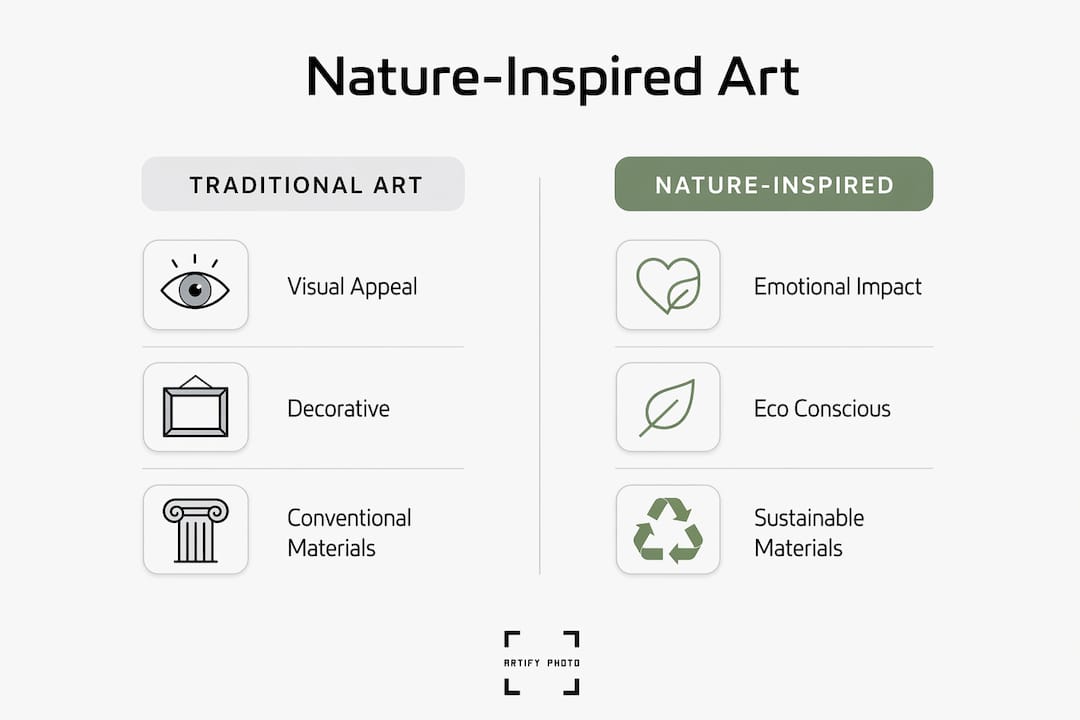
Pro Tip: If you want to understand whether a piece is genuinely nature-inspired or simply nature-themed, look at the materials and the intent. Eco-art makes a statement. Decorative florals do not.
For a deeper look at the sustainability side of this movement, the eco-friendly art guide from Artify covers the key distinctions clearly.
What are the most compelling contemporary techniques in nature-inspired art?
The frontier of nature-inspired art today involves giving up control. That is the part most people do not expect. Contemporary artists are collaborating with organisms like bees and hermit crabs, allowing biological processes to shape the final work in ways no human hand could predict.
Artist Ava Roth creates broken pottery and places it in beehives. The bees repair the cracks with wax and propolis, producing a result that echoes the Japanese Kintsugi tradition of honoring breakage. The bees are not tools. They are co-authors. The work could not exist without their decisions.
A parallel project places 3D-printed shells in tidal zones for hermit crabs to inhabit. The shells become moving architecture, carried through the environment by their occupants. The artist sets the parameters. Nature writes the outcome. This approach, yielding control to natural processes, contrasts sharply with traditional studio practice, where the artist controls every mark.
Other practitioners work with mud, rain, and forest debris, using the environment itself as a medium. A Malaysian photographer turned artist described the forest as a collaborator with its own voice, one that speaks through decay, growth, and seasonal change. The artist’s role shifts from creator to facilitator. The work evolves on biological time, not studio deadlines.
These techniques matter because they expand what authorship means. They also produce art that carries genuine ecological information, not just ecological imagery. A piece shaped by bees contains the logic of a hive. A shell inhabited by a crab carries the logic of survival. That depth is impossible to fake.
How can nature-inspired art enhance your space and well-being?
Biophilic art reduces stress and promotes tranquility in homes, offices, and healthcare environments. The mechanism behind this is the biophilic effect, which describes humans’ innate biological need to connect with the natural world. Critically, this effect does not require realistic imagery. Abstract textures, organic patterns, and natural color palettes all trigger the same psychological response.
This finding overturns a common assumption. Many people believe nature art only works if it shows a recognizable tree or mountain. Research on biophilic design principles shows that the brain responds to natural forms at a structural level, regardless of whether the image is literal or abstract. A swirling, earth-toned canvas can calm a room as effectively as a landscape photograph.
Practical ways to bring nature-inspired art into your space include:
- Botanical wall art: Framed prints of leaves, ferns, or flowers add organic detail without overwhelming a room
- Abstract organic canvases: Earth tones and flowing shapes work in living rooms, bedrooms, and offices
- Textured natural materials: Art made with wood, stone, or woven fibers adds tactile depth to flat walls
- Living installations: Moss panels and plant-based wall art bring the biophilic effect to its most direct form
- Nature-themed photography: Close-up shots of water, bark, or light through leaves create intimacy and calm
The 2026 home decor trends show a clear shift toward organic forms and natural palettes in interior design. Nature-inspired art sits at the center of this movement, not as a passing trend but as a response to a genuine psychological need.
Claude Monet’s Water Lilies series, nearly 250 paintings focused on water, light, and shadow, remains the most studied example of how nature-themed artwork shapes emotional experience in gallery and domestic settings alike. Its influence on how people respond to nature art in their own homes is still felt today.
Key Takeaways
Nature-inspired art is most effective when it channels the philosophy and energy of the natural world, not just its surface appearance.
| Point | Details |
|---|---|
| Definition goes beyond imagery | Nature-inspired art draws on ecological principles and biophilic thinking, not just natural subjects. |
| Styles range widely | From hyper-realistic landscapes to living installations, the category spans realistic, abstract, and collaborative forms. |
| Sustainability is central | Eco-conscious materials and ecological intent separate nature-inspired art from decorative nature themes. |
| Biophilic effect is real | Abstract textures and organic patterns trigger the same psychological calm as realistic nature scenes. |
| Collaboration expands authorship | Contemporary artists work with bees, crabs, and forest processes, sharing creative control with living systems. |
Artify’s take on nature-inspired art and why it matters now
Nature-inspired art is having a cultural moment, but the reasons go deeper than aesthetics. From where Artify sits, working with independent artists and art enthusiasts who want their walls to mean something, the shift toward nature-inspired work reflects a genuine hunger for connection. People are not just buying art. They are choosing what they want to feel when they walk into a room.
The most interesting development is not the style itself but the philosophy behind it. The idea that nature is a collaborator rather than a subject changes everything about how you approach a piece. A botanical print is not just decoration. It is a record of a living system. An abstract canvas with organic forms is not random. It carries the logic of growth and movement.
What strikes me most is how this philosophy challenges the assumption that great art requires total control. The artists working with bees and rain and forest debris are making some of the most compelling work being produced right now. They are not less skilled for sharing authorship. They are more honest about how creativity actually works, in response to forces larger than any single mind.
The future of nature-inspired art points toward deeper ecological integration. As sustainability becomes less of a trend and more of a baseline expectation, art that embodies ecological principles will carry more weight, not less. The pieces that will matter in twenty years are the ones being made with genuine ecological intent today.
— Artify
Bring nature-inspired art into your home with Artify
Artify’s curated gallery brings together independent artists working across the full range of nature-inspired styles, from botanical illustration to abstract organic forms.
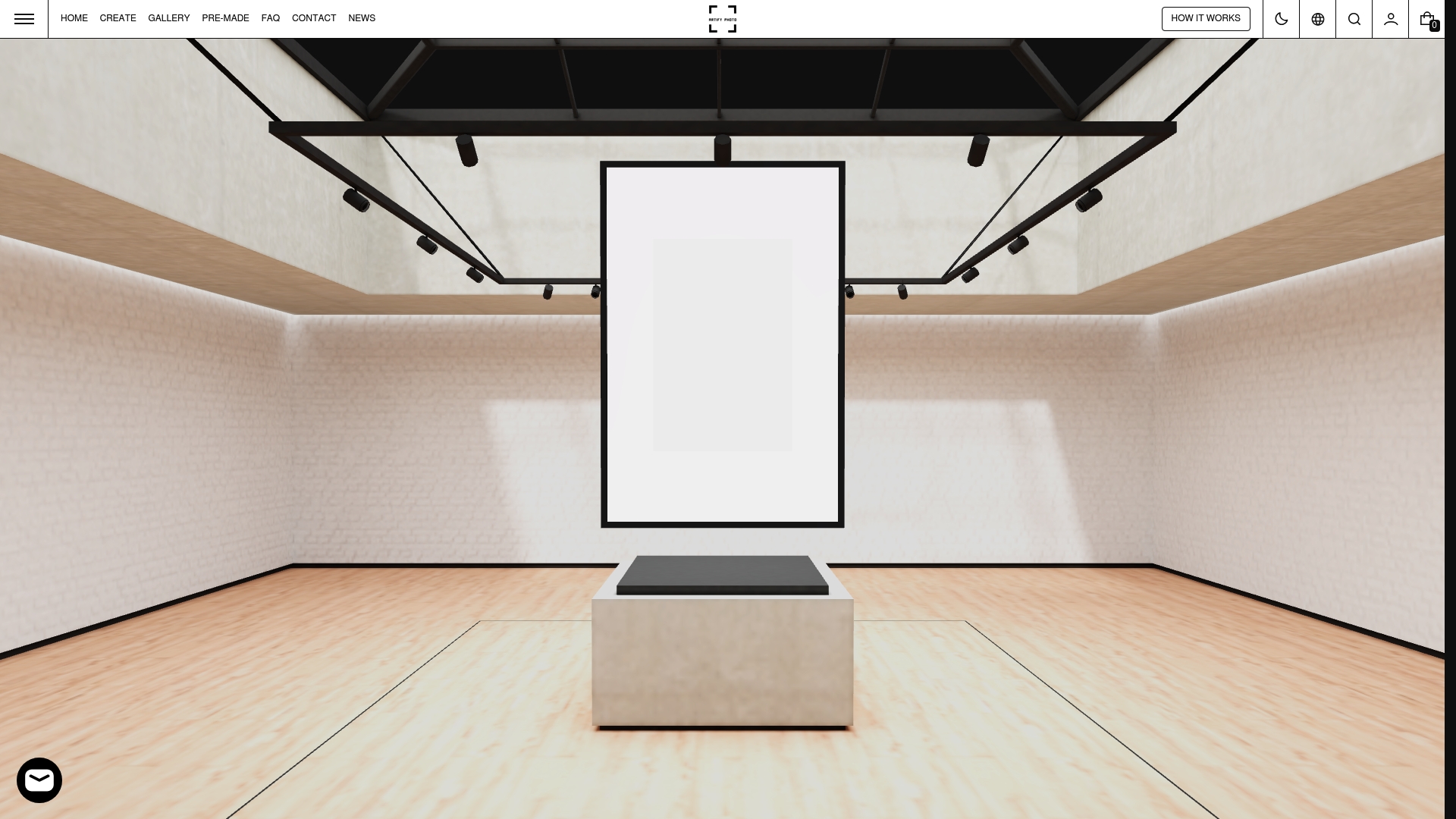
The pre-made collections include nature-themed artwork ready to print and frame, with 3D room previews so you can see exactly how a piece will look on your wall before you commit. Whether you want a calming botanical print for a bedroom or a bold abstract canvas for a living room, the gallery covers both. Browse the full gallery to find pieces that match your space and your sense of what nature-inspired art should feel like. Supporting independent artists is built into every purchase.
FAQ
What is the definition of nature-inspired art?
Nature-inspired art is any creative work that draws from the natural world’s forms, patterns, and philosophies to evoke emotional connection and ecological awareness. It includes styles from hyper-realistic landscapes to abstract organic forms and living installations.
How is nature-inspired art different from decorative nature art?
Nature-inspired art integrates ecological principles, sustainable materials, and biophilic intent, while decorative nature art uses natural subjects primarily for visual appeal. The difference lies in philosophy and purpose, not just subject matter.
What are the well-being benefits of nature-inspired art?
Biophilic art reduces stress and promotes tranquility in homes, offices, and healthcare environments by triggering the innate human need to connect with nature. Abstract textures and organic patterns produce the same psychological benefits as realistic nature scenes.
What are some examples of contemporary nature-inspired art techniques?
Contemporary techniques include interspecies collaboration, such as bees repairing pottery and hermit crabs inhabiting 3D-printed shells, as well as working with mud, rain, and forest materials to create evolving, process-driven works.
Can nature-inspired art work in any room style?
Nature-inspired art works across most interior styles because it spans realistic, abstract, and textural forms. Botanical prints suit traditional spaces, while abstract organic canvases fit modern and minimalist rooms equally well.