


TL;DR:
- Premium wall art is defined by archival-quality materials, intentional craftsmanship, and artistic authorship that ensure long-term value. It uses heavyweight, certified papers and pigment inks, with limited editions and authentic certificates to confirm legitimacy. Choosing art with emotional resonance, quality framing, and verified provenance creates a lasting aesthetic and cultural investment.
Premium wall art is defined by the combination of archival materials, intentional craftsmanship, artistic authorship, and emotional depth that separates it from mass-produced decor. Price alone does not make a piece premium. A $200 print on flimsy stock with no provenance is still generic decor. What makes premium wall art stand apart is the integrity behind every decision, from the paper weight and ink chemistry to the artist’s edition discipline and the emotional resonance the work carries into your space. Artify builds its entire catalog around these standards, connecting buyers to pieces that hold their value and their presence over time.
What materials and production standards define premium wall art?
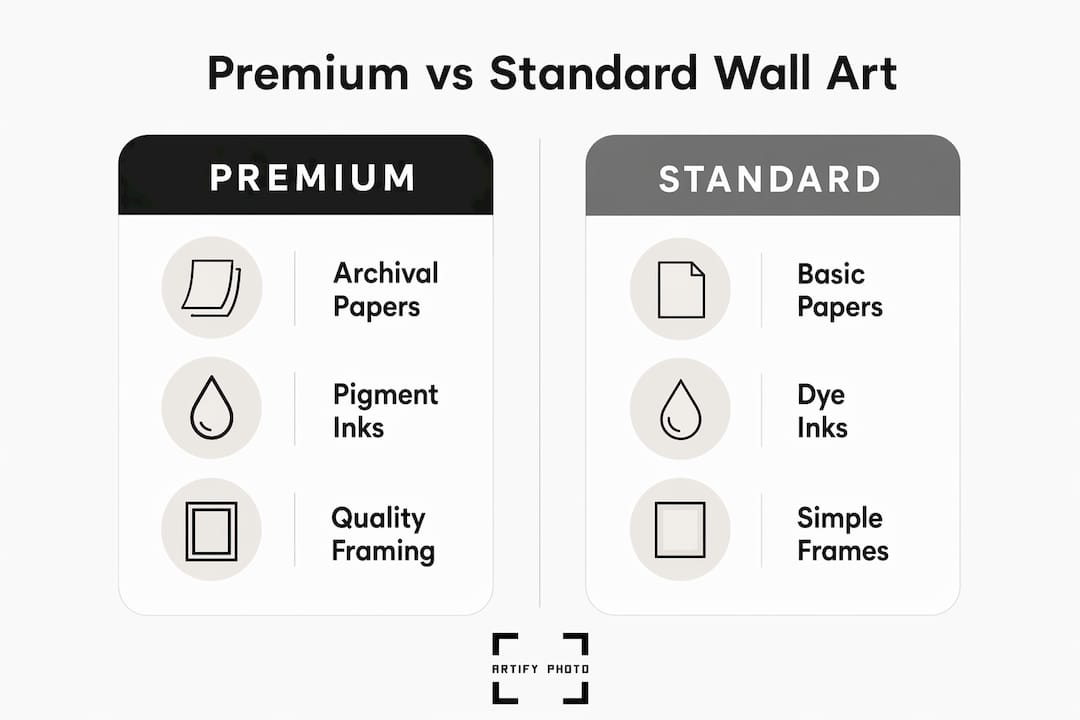
Premium prints use archival-grade papers rated for 75–100+ years of longevity, with paper weight classifications that signal quality at a glance. Standard decorative prints typically fall in the 170–200 GSM range. Premium prints land between 210–300 GSM. Museum-grade pieces exceed 300 GSM. That weight difference is not just about feel. Heavier substrates resist warping, absorb ink more evenly, and hold fine detail far longer than lighter stock.
Named archival papers set the benchmark in professional printing. Papers like Hahnemühle Photo Rag and German Etching are certified for longevity beyond 100 years and are the standard reference point for serious collectors and galleries. Breathing Color Elegance Velvet is another widely recognized option in fine art printing. These papers are not interchangeable with generic photo stock. Their fiber composition, surface texture, and coating chemistry are engineered specifically to work with archival pigment inks.
Ink type is the second major factor. Archival pigment inks bond with the paper substrate at a molecular level and resist UV degradation, humidity, and oxidation. Dye-based inks, which are common in lower-cost printing, fade noticeably within a few years under normal light exposure. The combination of archival paper and pigment ink is what gives a premium print its staying power.
| Paper weight | Classification | Typical use |
|---|---|---|
| 170–200 GSM | Standard | Decorative, short-term display |
| 210–300 GSM | Premium | Fine art prints, limited editions |
| 300+ GSM | Museum grade | Gallery and collector pieces |
Pro Tip: Always ask for the paper name and GSM weight before purchasing a print. If a seller cannot provide both, the piece is almost certainly not premium.
How does artistic authorship shape the value of fine art decor?
Premium art reflects a lineage of decisions, revisions, and a coherent artistic vision built over time. The difference between a premium piece and a trend-driven print is not always visible at first glance. It lives in the intentionality behind the work. An artist who has spent years developing a visual language brings something to a piece that a stock image generator or a generic design template cannot replicate.
Art experts define premium wall art by authorship and intentionality, not by price or fame. That means the work carries emotional presence that evolves with the owner over time. A piece you connect with deeply in year one will reveal new layers in year five. That quality is not accidental. It comes from an artist who made deliberate choices about composition, color, and meaning.
Formal market validation reinforces that authorship. The key indicators include:
- Limited edition size. Smaller editions signal rarity and protect collector value. An edition of 50 carries more weight than an open edition of 10,000.
- Certificate of authenticity. A signed, numbered certificate ties the physical print to the artist’s record and confirms the piece is not a reproduction of a reproduction.
- Edition discipline. Strict edition control protects both the artist’s reputation and the buyer’s investment by preventing market dilution.
- Licensing and provenance. Clear documentation of who created the work, when, and under what terms is a baseline requirement for any premium piece.
- Transparency in production. Premium sellers disclose their printing partners, paper sources, and finishing methods. Opacity about these details is a red flag.
Lower quality prints often lack paper weight disclosure, licensing documentation, and any provenance record. That absence is the fastest signal that a piece is mass-produced generic decor, regardless of how it looks in a product photo.
What are the visual and physical quality differences in luxury wall art?
Luxury wall art features premium substrates, quality framing, sharp resolution, and faithful color accuracy that create lasting visual impact. These qualities are perceptible the moment you stand in front of a piece. Color fidelity is the most immediate indicator. A premium print reproduces the artist’s original color palette with accuracy across the full tonal range, from deep shadows to bright highlights. A standard print compresses that range, making colors look flat or slightly off.
Surface finish matters more than most buyers realize. A matte fine art finish absorbs light and creates depth. A gloss or satin finish intensifies color saturation and adds a sense of clarity. Neither is universally better. The right finish depends on the artwork and the lighting in your space. What separates premium from standard is that the finish is chosen deliberately to serve the image, not applied as a default.
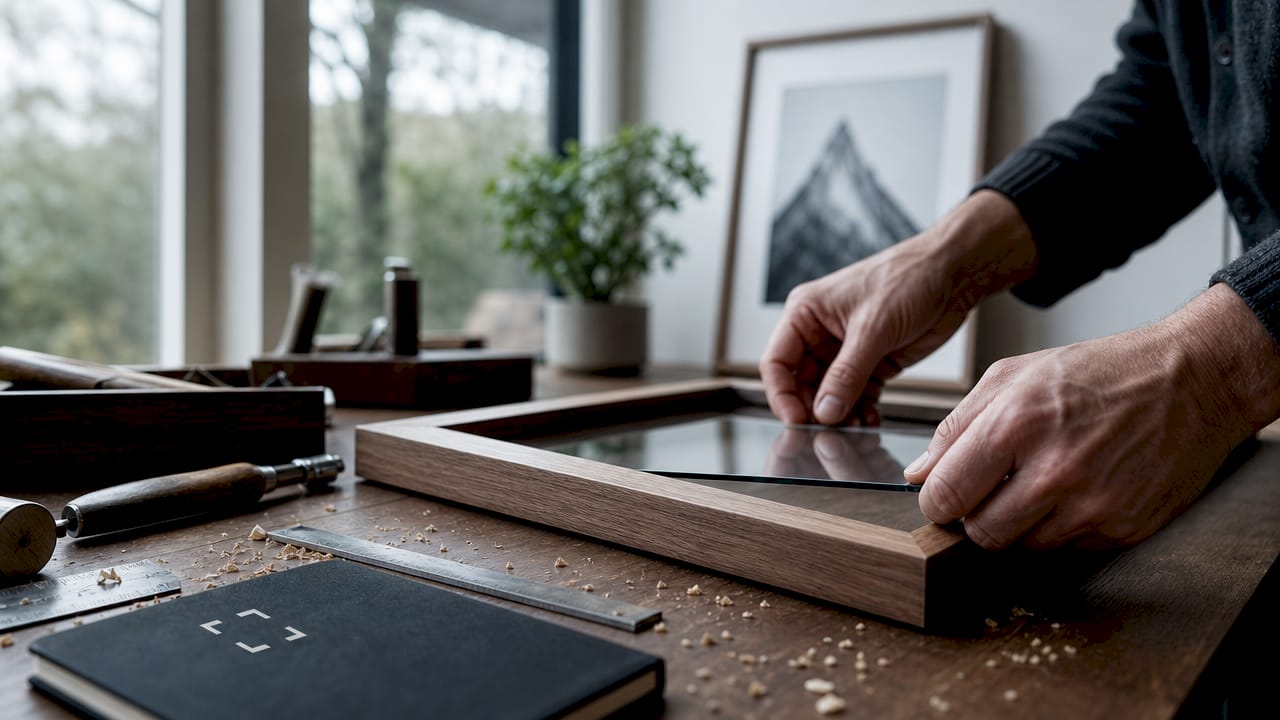
Framing is the physical anchor of the entire piece. Quality framing uses solid wood or metal with UV-protective glazing to prevent fading and physical damage over time. Cheap frames use MDF or hollow composite materials that warp with humidity changes. The glass or acrylic matters too. Museum-grade acrylic blocks up to 99% of UV light, which is the primary cause of color fading in displayed prints.
Pro Tip: Hold a framed print at an angle to the light. Premium assembly shows clean, flush joins and even spacing between the print and the mat. Gaps, bubbles, or misalignment are signs of rushed production.
| Quality factor | Premium standard | Standard decor |
|---|---|---|
| Color accuracy | Full tonal range, faithful to original | Compressed range, slight color shift |
| Surface finish | Chosen to serve the image | Default coating applied |
| Frame material | Solid wood or metal, UV glazing | MDF or composite, standard glass |
| Assembly | Flush joins, even mat spacing | Visible gaps or misalignment |
Fine materials, expert printing, and quality framing work together to create a finished piece that looks considered and genuinely elevated. No single element carries the whole result. All three must be present.
How to choose and invest in premium wall art for your home
Choosing premium art starts with verifiable material specifications. Before you commit to a purchase, confirm the paper name and GSM weight, the ink type, and whether the piece carries archival certification. Premium licensed reproductions typically retail between $30–$150 and include formal documentation like certificates of authenticity and edition size information. If a seller at that price point cannot provide documentation, walk away.
Follow this process when evaluating any piece:
- Check the paper weight and name. Ask for the specific substrate. Anything below 210 GSM is not premium. Named papers like Hahnemühle or equivalent certified stocks confirm professional production.
- Verify the ink type. Archival pigment inks are the standard for fine art printing. Dye-based inks are not. This detail should be stated clearly in the product description.
- Confirm edition size and certification. A certificate of authenticity with the edition number and artist signature is non-negotiable for any piece marketed as premium or collectible.
- Assess the framing. If the piece comes framed, ask about the frame material and glazing type. UV-protective glazing is a baseline requirement for long-term display.
- Test your emotional response. Art collectors and interior designers emphasize choosing art that emotionally connects and reveals new layers over time. A piece that only matches your current color scheme will feel dated in three years. A piece that genuinely moves you will still hold its place in a decade.
- Consider scale and lighting. The same print can feel commanding or insignificant depending on wall size and light source. View the piece in context before committing, or use a platform that offers 3D room previews to test placement.
Artify’s museum-grade selection guide walks through these criteria in detail, with specific guidance on matching art to room conditions. The role of wall art in interior design goes deeper on how authorship and creative intent translate into lasting design value.
Pro Tip: Never buy premium art under poor lighting. Showroom and screen lighting are designed to flatter. View the piece under the same light conditions as your intended display space before deciding.
Key takeaways
Premium wall art requires archival materials, verified artistic authorship, and quality framing to deliver lasting visual impact and genuine long-term value.
| Point | Details |
|---|---|
| Paper weight signals quality | Premium prints use 210–300 GSM archival substrates; museum grade exceeds 300 GSM. |
| Archival inks prevent fading | Pigment-based archival inks resist UV and humidity for 75–100+ years of longevity. |
| Authorship defines premium status | Limited editions, certificates of authenticity, and edition discipline protect value and confirm legitimacy. |
| Framing completes the piece | Solid frames with UV-protective glazing prevent warping and color degradation over time. |
| Emotional connection matters | Art that resonates personally outlasts trend-driven decor and gains meaning over years. |
Why premium art is about more than what hangs on your wall
Artify’s perspective on premium wall art comes from working directly with independent artists and watching how the right piece changes a room over time. The most common mistake buyers make is treating art as a finishing touch, something to fill space after the furniture is in place. That approach almost always produces regret.
Luxury wall art shapes the feel of a room beyond filling space. It serves as a design anchor and a form of personal expression through visible craftsmanship. A piece with genuine artistic authorship carries history into your home. You are not just buying a print. You are buying the result of an artist’s years of practice, their specific way of seeing, and the material decisions that will keep that vision intact for decades.
The uncomfortable truth about most decorative wall art is that it is designed to look good in a product photo, not to hold up in a real room under real light over real time. Premium art is designed for the opposite condition. It is made to be lived with. The qualities of luxury wall art that matter most, archival materials, edition discipline, and emotional depth, are exactly the qualities that make a piece feel more significant the longer it stays on your wall.
Investing in premium work also supports the artists who make it. When you buy a limited edition print with a certificate of authenticity from an independent artist, you are sustaining a practice. That matters beyond the transaction. Art’s cultural value depends on artists being able to continue making it. Choosing premium is a choice about what kind of creative ecosystem you want to support.
— Artify
Artify’s approach to premium wall art for your space
Artify brings archival quality and independent artistry together in one place, whether you want a ready-to-hang piece or something built from your own photographs.
Artify’s curated collections are produced on archival substrates with pigment inks and quality framing options, meeting the material standards that define genuine premium art. Every piece in the catalog comes from an independent artist with a documented creative practice. If you want something personal, Artify’s custom art creation tools let you turn your own photographs into gallery-quality prints with full control over size, finish, and framing. A 3D room preview shows exactly how your chosen piece will look before you order. Browse the full artwork catalog to find pieces that meet both your aesthetic standards and your quality requirements.
FAQ
What paper weight qualifies as premium for wall art prints?
Paper weights between 210–300 GSM are classified as premium, while anything above 300 GSM reaches museum grade. Anything below 210 GSM falls into standard decorative territory and lacks the durability of a genuine fine art print.
How do I know if a wall art print is truly archival?
Look for named archival papers such as Hahnemühle Photo Rag or German Etching, combined with pigment-based inks certified for 75–100+ years of longevity. A seller who cannot name the paper and ink type is almost certainly not offering archival quality.
Why do limited editions matter when buying premium art?
Limited editions with certificates of authenticity protect both the buyer’s investment and the artist’s reputation by preventing market dilution. Strict edition control is a core indicator of a premium print’s legitimacy and long-term collector value.
What is the difference between premium and standard wall art framing?
Premium framing uses solid wood or metal with UV-protective glazing that blocks the light wavelengths responsible for color fading. Standard frames use composite materials and basic glass that offer no meaningful protection against degradation over time.
How do I choose wall art that holds its value over time?
Choose pieces with verified archival materials, documented artistic authorship, and a genuine emotional connection to you personally. Art that reveals new layers over time outlasts trend-driven decor and continues to feel relevant regardless of shifting interior design fashions.