


TL;DR:
- Art gifts combine personal meaning, visual beauty, and emotional resonance, making them popular for many occasions. Personalization enhances emotional attachment by connecting the gift to shared memories and individual personalities. Handmade and original art pieces offer uniqueness and lasting value that mass-produced items cannot match.
Art gifts are defined by their ability to combine personal meaning, visual beauty, and lasting emotional resonance in a single object. That combination is exactly why art gifts are popular across every gifting occasion, from birthdays to anniversaries to milestone celebrations. Personalization drives this appeal: 73% of gift-givers in 2026 say personalization is worth a premium because recipients keep and value personalized art longer than generic presents. Art gifts are not just objects. They are relationship artifacts that carry memory, identity, and story into everyday life.
Why art gifts are popular: the personalization effect
Personalization is the single strongest driver of emotional attachment in gift-giving. When you customize a piece of art around a shared memory, a recipient’s personality, or a meaningful moment, you signal that you truly know and see that person. That signal is far more powerful than any price tag.
Emotional attachment to art gifts is more influenced by perceived thoughtfulness and giver effort than by monetary value. A high-priced generic artwork often fails to evoke gratitude if it carries no personal relevance. Emotional fit consistently outweighs cost as the deciding factor in whether a gift lands.
The benefits of giving art gifts through personalization go beyond the moment of unwrapping. Personalized art functions as an ongoing cue for relationship memory. Every time a recipient sees the piece on their wall, they recall the giver, the occasion, and the feeling behind it. That kind of sustained emotional return is something a gift card or store-bought item simply cannot replicate.
Personalized art options include:
- Photo-to-art conversions: A favorite photograph rendered in watercolor, oil, or pop-art style becomes a one-of-a-kind portrait.
- Custom themes: Art built around a recipient’s passions, such as a cityscape of a meaningful location or a portrait of a beloved pet.
- Commemorative pieces: Art tied to a specific date, milestone, or shared experience, like a wedding venue or a childhood home.
- Style-matched prints: Artwork selected to match the recipient’s home aesthetic, making the gift both personal and immediately usable.
Pro Tip: When you give personalized art, write a short note explaining why you chose that specific image or style. A 2024 University of Bath study found that communicating your effort generates “vicarious pride” in recipients, deepening their emotional attachment to the piece.
What makes handmade and original art gifts so special?
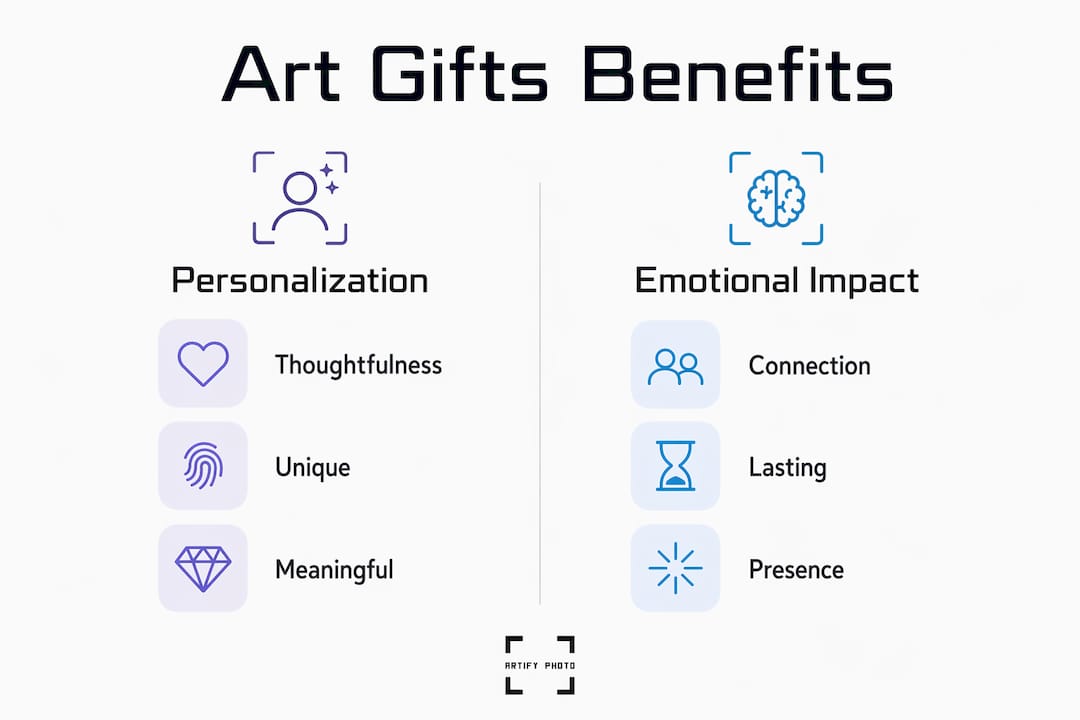
Uniqueness is a core reason people choose art as gifts. A handmade or original artwork cannot be replicated on a shelf at a chain retailer. That irreplaceability signals something important: the giver cared enough to find or commission something that exists nowhere else in the world.
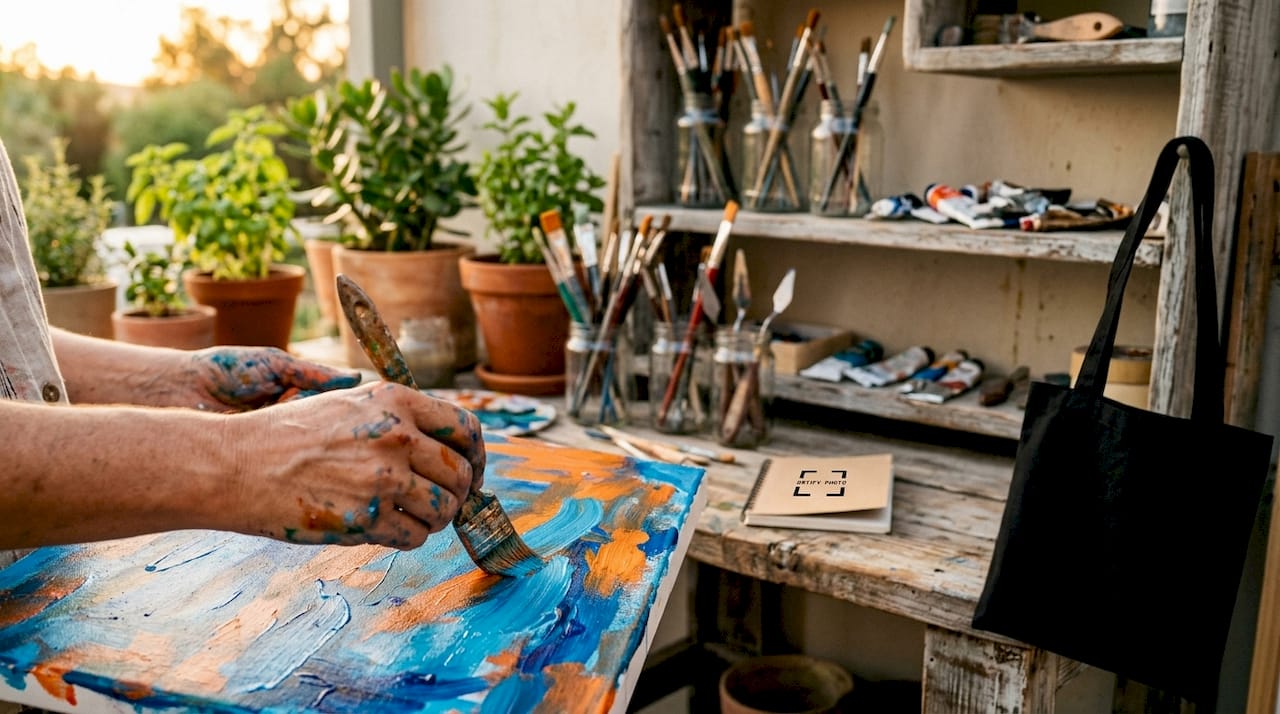
Handmade and original art gifts are valued for their craftsmanship and uniqueness in ways mass-produced items simply are not. The visible hand of an artist, the texture of a canvas, the deliberate choices in color and composition all communicate care. Recipients recognize that care immediately, even if they cannot articulate why the piece feels different.
Owning a unique piece of art also changes how people relate to their living space. A custom portrait or an original print becomes a conversation piece. Guests ask about it. The recipient tells the story behind it. That storytelling loop reinforces the emotional bond between giver and recipient every time it happens.
There is also a long-term value dimension to original art. Unlike a bottle of wine or a box of chocolates, a quality art piece can be passed down. It becomes part of a family’s visual history. That heritage potential is a quiet but real reason why unique art gift ideas consistently outperform generic alternatives in recipient satisfaction.
| Feature | Original or handmade art | Mass-produced gift |
|---|---|---|
| Uniqueness | One of a kind | Widely available |
| Emotional signal | Deep care and effort | Convenience |
| Longevity | Decades, potentially heirloom | Often discarded or forgotten |
| Conversation value | High, sparks storytelling | Low |
| Personalization potential | Very high | Limited or none |
Pro Tip: If you are ordering custom wall art for someone, ask the artist or platform about framing options. A well-framed piece signals that you thought about how it will live in the recipient’s home, not just what it depicts.
How art gifts become everyday emotional experiences
Art gifts do something most presents cannot: they stay visible. A piece of wall art is not tucked in a drawer or forgotten in a closet. It lives in the recipient’s daily environment, triggering memory and emotion on a recurring basis.
Custom artwork creates ongoing meaningful home décor that sparks conversation and recalls meaningful moments continuously. That ongoing emotional return is what separates art from transient gifts. A scented candle burns out. A piece of art endures.
The psychological effect of viewing personally meaningful art is real. Seeing an image tied to a happy memory or a loved one activates the brain’s reward pathways, producing a mild but consistent positive emotional response. That effect compounds over time. The more a recipient sees the piece, the more deeply it becomes associated with warmth and connection.
Here are four ways art gifts integrate into daily life as lasting emotional anchors:
- Wall art as a memory trigger. A custom portrait of a family vacation or a pet transforms a blank wall into a daily reminder of joy. The recipient does not need to think about the memory. The art surfaces it automatically.
- Conversation starter in shared spaces. Art displayed in a living room or hallway invites guests to ask questions. That question gives the recipient a chance to share the story behind the gift, reinforcing its meaning.
- Aesthetic engagement over time. Unlike a gift that is consumed or used up, art rewards repeated viewing. Recipients notice new details, appreciate the composition differently across seasons and moods.
- Identity expression in the home. Art in the home signals who the resident is and what they value. A gift that fits that identity feels like recognition, not just generosity.
How to match art style to the person you are gifting
Choosing the right art style is as important as choosing the right subject. The design and style of art gifts directly influence emotional tone and how well the recipient connects with the piece. A joyful, vibrant pop-art print lands differently than a quiet, reflective watercolor, even if both depict the same subject.
Art gifts allow eudaimonic gifting, a term from psychology that describes gifts focused on identity and meaning rather than instant pleasure. Eudaimonic gifts resonate more deeply over time because they reflect who the recipient is, not just what they enjoy in the moment. Art is one of the few gift categories that naturally operates at this level.
Practical guidance for gift-givers choosing art styles:
- Match the emotional tone. A celebratory occasion calls for bold colors and dynamic composition. A sentimental gift suits softer palettes and quieter imagery.
- Consider the recipient’s existing space. Wall art trends in 2026 lean toward earthy tones and organic textures. A piece that fits the recipient’s home feels intentional rather than random.
- Use the story to guide the style. If the memory you want to honor is playful, choose a style that reflects that energy. If it is tender and quiet, choose accordingly.
- Ask about the recipient’s taste. Subtle research, a glance at their home, a casual conversation about art they admire, gives you the information to choose a style that genuinely fits.
- Pair the art with an interpretation prompt. Art gifts reach full impact when the giver explains the story behind the subject or the reason for the style choice. That explanation transforms the piece from décor into a relationship artifact.
The narrative behind the gift matters as much as the artwork itself. Gifting art creates dialogue, legacy, and ongoing emotional connection in ways that transient gifts cannot. When you tell the recipient why you chose a particular scene, style, or subject, you give them a story to carry and retell. That story is the real gift.
Key takeaways
Art gifts are popular because they combine personalization, uniqueness, and daily emotional presence in ways no generic present can match.
| Point | Details |
|---|---|
| Personalization drives retention | 73% of gift-givers say personalized art is worth a premium because recipients keep it longer. |
| Effort signals care | Communicating why you chose specific art details amplifies the recipient’s emotional attachment. |
| Uniqueness sets art apart | Handmade and original pieces signal deep care and carry heritage potential that mass-produced gifts lack. |
| Art stays visible daily | Wall art triggers memory and positive emotion on a recurring basis, unlike gifts that are consumed or stored. |
| Style matching improves reception | Aligning art style and emotional tone to the recipient’s personality increases how meaningful the gift feels. |
What I have learned from watching people receive art gifts
The most common mistake I see gift-givers make is treating price as a proxy for meaning. A beautifully framed print that costs $40 and depicts a place the recipient loves will outlast a $200 generic sculpture every time. Relevance beats expense. That is not a theory. It is what I observe repeatedly when people open art gifts.
The second mistake is silence. Givers hand over the piece without explaining the thought behind it. That silence leaves the recipient guessing. When you say, “I chose this because I remembered how much you loved that trip,” you do not just explain the art. You remind the recipient that they are known and remembered. That moment of recognition is what makes art gifts land so differently from other presents.
The gifts I have seen create the strongest emotional responses share one quality: they are specific. Not “a landscape” but “the exact coastline where you got engaged.” Not “a pet portrait” but “your dog in the style of a Renaissance painting because you always joke she thinks she is royalty.” Specificity is the mechanism. The art is the vehicle.
If you are choosing art for someone you love, start with the story you want to tell about them. The style, the medium, and the format will follow naturally from there.
— Artify
Artify makes personalized art gifts genuinely easy
Finding art that is both beautiful and personally meaningful used to require knowing the right artist or spending hours searching. Artify changes that by combining a curated gallery of independent artist work with the ability to transform your own photographs into gallery-quality wall art.
Whether you want to browse ready-made pieces or create something entirely your own, Artify’s pre-made collections offer a strong starting point for any gifting occasion. Each collection is built around a distinct visual theme, making it straightforward to find something that fits the recipient’s taste and your story. Artify also offers 3D room previews and personalized framing options, so you can see exactly how the piece will look before it arrives. For gift-givers who want to understand the full creation process, Artify walks you through every step from photo upload to finished print.
FAQ
Why are art gifts more meaningful than generic presents?
Art gifts are more meaningful because they combine personalization, visual presence, and storytelling in a single object. Emotional fit outweighs monetary value as the primary driver of gift satisfaction, and art is uniquely suited to deliver that fit.
What occasions work best for giving art as a gift?
Art gifts suit any occasion where the relationship matters more than the transaction, including birthdays, anniversaries, housewarmings, and memorials. Their displayability makes them especially fitting for milestone events where the recipient wants a lasting reminder.
Does the style of art affect how well a gift is received?
Yes. Matching art style to emotional tone and the recipient’s personality directly improves how connected they feel to the piece. A joyful occasion calls for bold, vibrant work; a sentimental gift suits softer, quieter imagery.
Is a handmade art gift better than a print?
Handmade and original art gifts signal deeper care because of their uniqueness and craftsmanship. Prints can be equally meaningful when they are personalized and paired with a strong story about why that image or style was chosen.
How do I make an art gift feel personal?
Choose a subject tied to a specific shared memory, match the style to the recipient’s taste, and explain your choices when you give the gift. Communicating the effort behind your selection generates vicarious pride in the recipient and deepens their attachment to the piece.