


The best approach to custom wall art printing comes down to three things: print quality that holds up over years, customization tools that let you see exactly what you’re getting before you order, and a provider that stands behind the finished product. Skip any one of those, and you’ll end up with a muted canvas that sags off the wall in two years.
Before placing an order, check these factors:
- Color accuracy: Does the printer retain shadow detail without oversaturation?
- Frame material: Solid hardwood bars hold tension; pressed wood warps.
- Packaging: Foam corner protectors and braced boxes prevent transit damage.
- Technology: Real-time previews and AI layout tools reduce costly mistakes.
- Provider credibility: Look for satisfaction guarantees, proofs, and post-delivery follow-up.
Artify.photo checks all five, combining AI-driven design tools, curated artist collections, and gallery-quality materials into one platform built for personalized home decor.
Table of Contents
- What makes a wall art print actually worth hanging?
- How AI tools and real-time previews are changing the experience
- Pricing and value: what you actually get for your money
- How to choose a wall art printing provider you can trust
- Why Artify stands out for personalized wall art
- Artify turns your photos into gallery-quality wall art
- FAQ
- Key Takeaways
What makes a wall art print actually worth hanging?
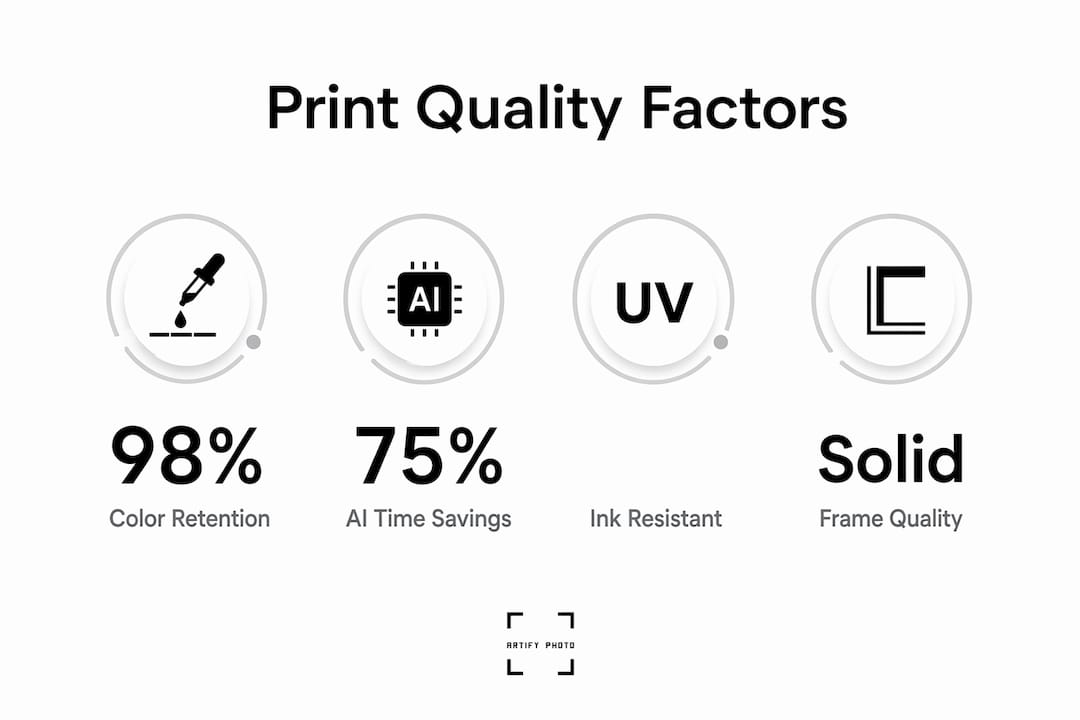
Color accuracy is the single most important quality factor, and it’s where budget services fall short most visibly. Poor color reproduction leads to unnatural skin tones and flattened landscape vibrancy, turning a meaningful photo into something that looks like a photocopy. A good printer holds shadow detail and avoids the oversaturation that makes skies look fake.
Frame construction is the detail most buyers overlook until it’s too late. Pressed wood stretcher bars are cheaper to produce but warp over time and lose canvas tension, causing that hollow, saggy feel when you tap the surface. Solid hardwood bars, by contrast, maintain tension for years.
Packaging matters as much as the print itself. Protective wrapping, foam corner protectors, and reinforced boxes dramatically reduce the chance of corner dents and creasing during shipping. A print that travels 1,200 miles in a thin cardboard box with no padding is gambling with your money.
Longevity comes down to ink chemistry. Metal prints retain 98% of original color for 100+ years under harsh lighting conditions when produced with archival inks. Canvas and fine art paper with UV-resistant pigment inks perform similarly well indoors, resisting fading for decades.
Pro Tip: Tap the center of a canvas when it arrives. A tight, well-stretched canvas produces a solid sound. A hollow thud means the tension is already failing, and it will only get worse.
How AI tools and real-time previews are changing the experience
Modern printing platforms have moved well past the “upload and hope” model. Real-time preview interfaces are now standard features, letting you crop, edit, and visualize the final product before committing to a purchase. What You See Is What You Get (WYSIWYG) tools eliminate the guesswork that used to make online printing feel like a gamble.
AI design assistance goes further. AI-powered tools reduce photo book creation time by up to 75% by automatically grouping photos by theme, suggesting balanced layouts, and flagging low-resolution images before they become blurry prints. That same logic applies to wall art: AI catches problems a customer would never notice until the box arrives.
Customization options have expanded alongside the technology. Canvas, metal, and acrylic each produce a different mood from the same photo. Canvas reads warm and textured, suited to portraits and family images. Metal delivers sharp, high-contrast color that works well for landscapes and modern spaces. Acrylic adds a glossy depth-of-field effect that makes photos look like gallery exhibits. Artify’s 3D room preview tool takes this further, letting you see how a specific piece looks on your actual wall before ordering.
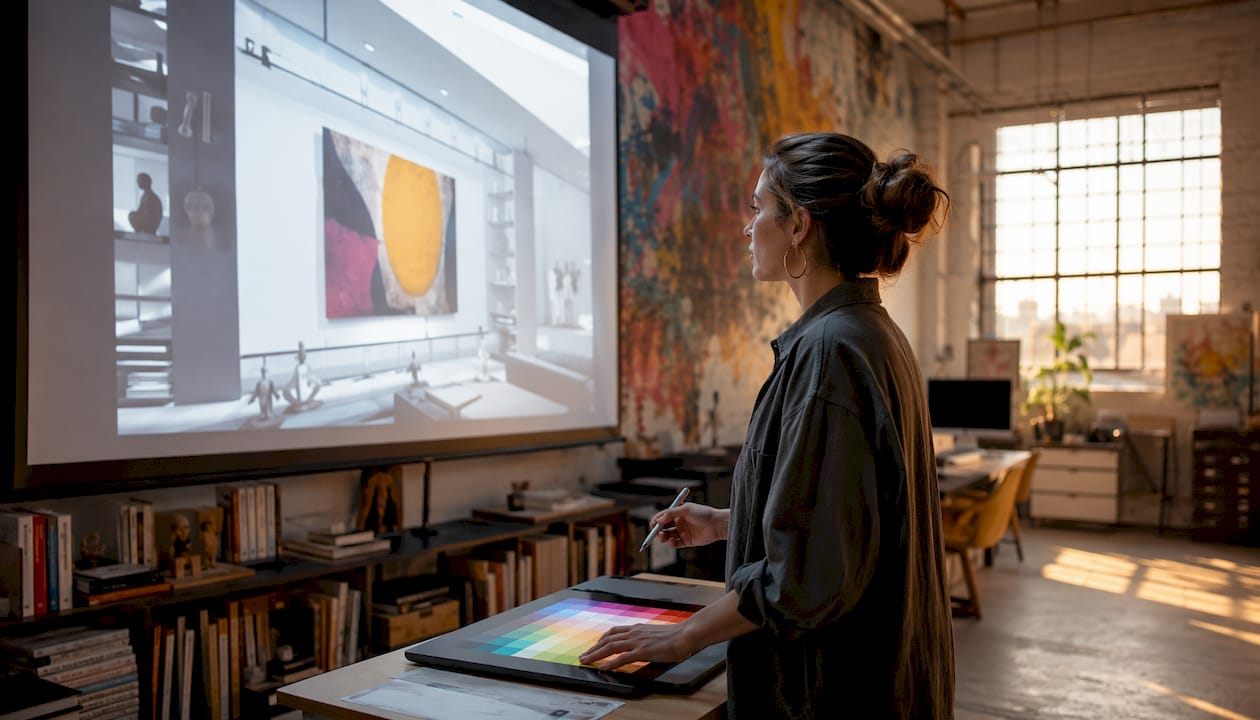
Advanced color calibration and UV-resistant inks, now common at quality-tier providers, mean the print you see on screen closely matches what arrives at your door.
Pricing and value: what you actually get for your money
Price and print quality are not the same thing, and the gap between them is where most buyers get burned. Expert photographers note that efficient print-on-demand fulfillment allows some labs to deliver premium quality at mid-range prices, disproving the assumption that spending more always means getting more.
Here’s how the tiers generally break down:
- Budget services: Canvas prints often start under $40 for a 16×20, but polyester canvas, pressed wood frames, and minimal packaging are the norm.
- Mid-tier providers: A 16×20 canvas at $63 and a metal print at $149 can rival premium labs charging $250+ for comparable output, when the lab optimizes its process.
- Premium labs: $200+ for canvas, $250–$350 for metal. Quality is often excellent, but the price excludes everyday buyers.
Discount framing deserves scrutiny. Some services advertise steep savings measured against inflated “regular” prices that nobody actually pays. The real question is whether the promotional price you pay reflects fair value for the materials you receive, not how large the stated discount appears.
Pro Tip: Before ordering, search the provider’s base price without any coupon applied. If the “sale” price is always the same as the listed price, the discount is marketing theater, not a real saving.
How to choose a wall art printing provider you can trust
The criteria that separate reliable providers from risky ones are specific and testable.
- Free proofs and image correction: Providers offering professional image correction increase trust by validating files before printing, catching resolution issues and color problems before they become expensive mistakes.
- Packaging quality: Free, carefully braced, and taped shipping yields far fewer damaged arrivals than prints loose in a box. Ask specifically about corner protection and internal bracing.
- Frame specs: Request the stretcher bar material. Solid hardwood is the standard for any print you expect to last.
- Satisfaction guarantee: The strongest providers back their work with a clear reprint or return policy.
- Post-delivery follow-up: Proactive customer satisfaction surveys after delivery are rare, but they signal a provider treating you as a long-term customer rather than a one-time transaction.
- Transparent pricing: Shipping costs should be shown upfront. In one secret-shopper shootout, shipping alone ranged from free to a moderate charge across three comparable services, quietly breaking a tight budget.
- Real customer reviews: Look for patterns across multiple reviews, not just the rating average. Consistent complaints about color or packaging are more telling than a single bad experience.
Why Artify stands out for personalized wall art
Most wall art platforms give you a template and a print. Artify.photo gives you something closer to a collaboration. The platform is built around the idea that your photos deserve the same treatment a gallery gives to original artwork, and the technology reflects that.
The AI-driven design tools and 3D room preview system let you see your finished piece in context before you order, which removes the single biggest source of disappointment in online printing. Artify also curates collections from independent artists, so if you want something beyond your own photos, you’re browsing work from real creators rather than stock imagery.
The commitment to archival-quality materials, including UV-resistant inks and durable framing, means the prints are built to last. The ordering process is transparent, and the digital printing approach Artify uses reflects the same standards applied in gallery and museum contexts. For anyone who wants personalized wall art that actually looks like it belongs on the wall, rather than something that arrived in a box, Artify is worth a close look.
Artify turns your photos into gallery-quality wall art
If you’ve read this far, you already know what separates a print worth keeping from one that ends up in a closet. Artify.photo is built around exactly those standards: archival inks, real framing materials, AI-assisted design tools, and a 3D preview so you know what you’re getting before you order.
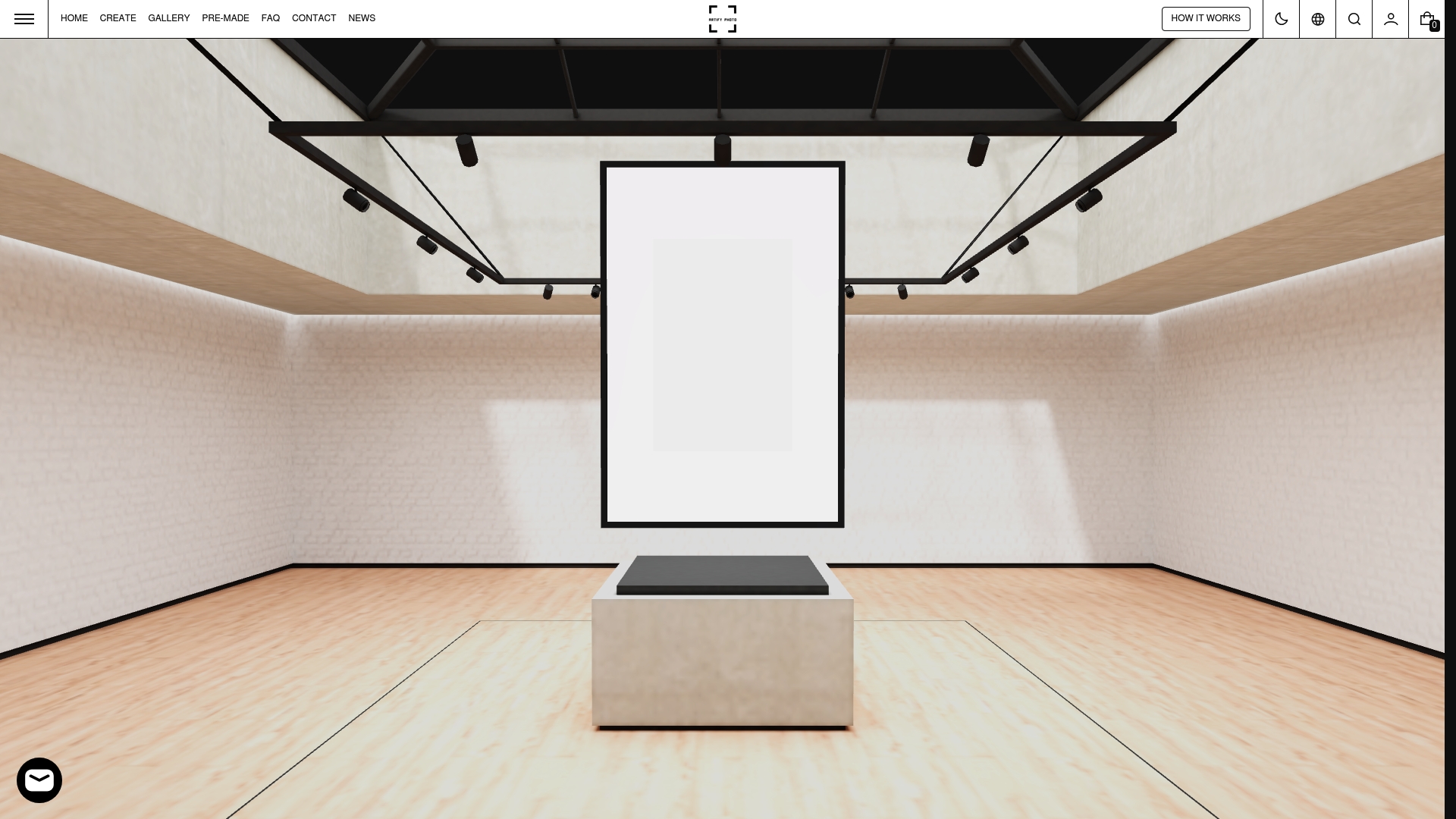
The platform suits anyone who wants personalized home decor that reflects something real, whether that’s a travel photo, a family portrait, or a piece from Artify’s curated independent artist collections. Browse the pre-made collections to see what’s possible, or upload your own photo and use the how it works guide to start your first order today.
FAQ
What is the most important quality factor in wall art printing?
Color accuracy comes first. A quality printer holds shadow detail and avoids oversaturation, producing a print that faithfully represents the original photo.
How do I know if a canvas print will last?
Look for solid hardwood stretcher bars, UV-resistant archival inks, and a poly-cotton canvas blend. Metal prints with dye-sublimation infusion offer the longest color retention, with documented performance exceeding 100 years indoors.
Are expensive wall art prints always better quality?
Not necessarily. Expert photographers confirm that efficient print-on-demand labs can deliver gallery-quality output at mid-range prices, making cost a poor proxy for quality on its own.
What does Artify offer for custom wall art?
Artify.photo transforms personal photos into gallery-quality prints using AI-driven design tools, 3D room previews, and curated collections from independent artists, with archival materials and transparent ordering.
How can I avoid a damaged print on delivery?
Choose a provider that uses foam corner protectors, internal bracing, and reinforced boxes. Packaging quality directly determines whether your print arrives in perfect condition or with corner dents and creasing.
Key Takeaways
The most reliable wall art prints combine solid hardwood framing, UV-resistant archival inks, and a provider that validates your file before printing.
| Point | Details |
|---|---|
| Color accuracy is the top priority | Poor color reproduction flattens landscapes and distorts skin tones; always verify a provider’s color calibration standards. |
| Frame material determines longevity | Solid hardwood stretcher bars maintain canvas tension for years; pressed wood warps and sags over time. |
| AI tools reduce costly errors | Real-time previews and AI layout assistance catch resolution and composition problems before the print runs. |
| Mid-tier pricing can match premium quality | Efficient print labs deliver gallery-level output at accessible prices; high cost does not guarantee better results. |
| Artify combines AI tools with gallery standards | Artify.photo uses 3D room previews, archival inks, and independent artist collections for personalized, lasting wall art. |